Nimr al-Nimr
Saudi Shia sheikh executed after advocating for reforms.

shankar s. from Dubai, united arab emirates · CC BY 2.0
Sheikh Nimr al-Nimr was a Saudi Shia cleric born on 21 June 1959 in Al-Awamiyah, a town in Saudi Arabia’s Eastern Province. He was executed on 2 January 2016, a move that drew widespread condemnation from governments and human rights groups. Popular among young Saudis, he openly criticized the Saudi government and called for free elections.
Al-Nimr began religious studies in his hometown before moving to Iran in 1980, studying at the Al-Qaim seminary in Tehran under Ayatollah Ali-Akbar al-Modarresi and other senior scholars. After the seminary was closed by Iranian authorities, he relocated to Damascus, Syria. He initially followed Grand Ayatollah Muhammad al-Shirazi and later Grand Ayatollah al-Modarresi. By 2008, he was independent of the two main Shia political groups in the Eastern Province—the Shirazis and Saudi Hezbollah—and had become the leader of Friday prayers in Al-Awamiyah.
His political views included support for a governance model blending individual and council forms of guardianship of Islamic Jurists, advocacy for Kurdish majority control of Iraqi Kurdistan, and backing for elections. He believed Shia ayatollahs would not promote violence. He criticized Bahrain’s monarchy for suppressing 2011 protests and condemned Syria’s Bashar Assad, calling both regimes oppressive. In 2008, he described U.S. citizens as natural allies of Shia Muslims due to shared ideals of justice and liberty, and told a diplomat he believed in those “American ideals.” He viewed the Saudi state as “particularly reactionary” and argued that “agitation” was necessary to influence it. While some U.S. officials perceived his statements as supporting Iran, al-Nimr said in 2008 that Iran and other states acted out of self-interest, not religious solidarity, and distanced himself from Tehran. After Crown Prince Nayef bin Abdulaziz Al Saud died in June 2012, al-Nimr said people should rejoice at his death, adding that Nayef would be eaten by worms and suffer in Hell.
Al-Nimr was first detained in 2003 for leading public prayers, and again for several days in 2004. In 2006, he was arrested by the Mabahith (Saudi secret police) and claimed he was beaten during detention; residents of Al-Awamiyah campaigned for his release. In February 2009, after an incident in Medina involving Shia and Sunni customs at Muhammad’s tomb, he criticized Saudi authorities and suggested the Eastern Province should secede if Shia rights were not respected. Saudi authorities then arrested him along with 35 others. During the 2011–12 Saudi protests, he urged demonstrators to resist police bullets with “the roar of the word” rather than violence. *The Guardian* described him as having “taken the lead in [the] uprising.”
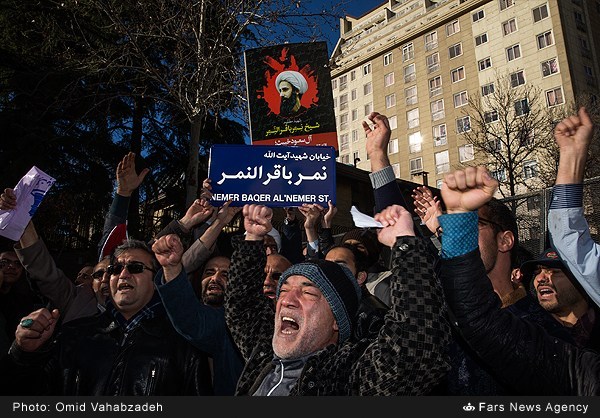
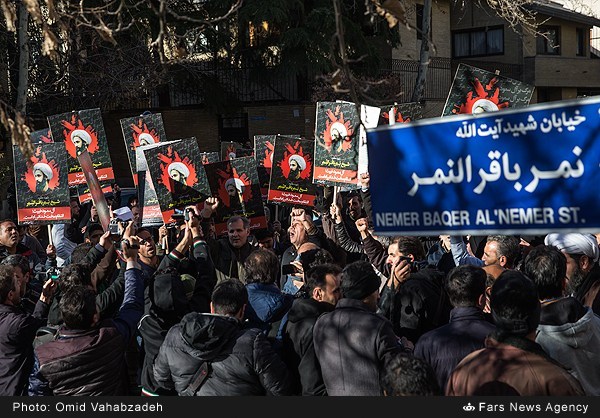
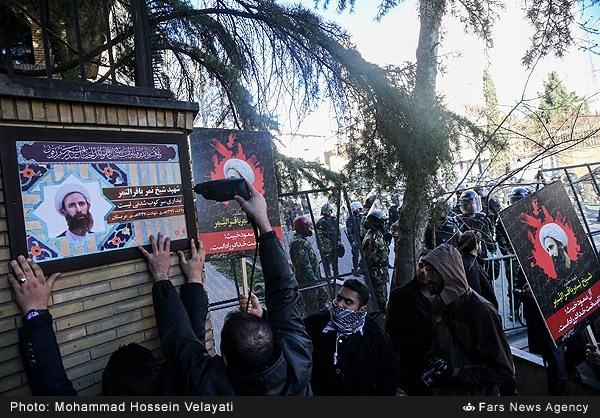
On 8 July 2012, Saudi police shot al-Nimr in the leg and arrested him, claiming an “exchange of gunfire.” Protests erupted, and police fired into a crowd, killing two men, Akbar al-Shakhouri and Mohamed al-Felfel. While in custody, al-Nimr began a hunger strike and was allegedly tortured. On 21 August, the Asharq Center for Human Rights expressed concern for his health and called for international support to allow family, lawyers, and activists access. On 15 October 2014, the Specialized Criminal Court sentenced him to death for “seeking foreign meddling in Saudi Arabia, disobeying its rulers, and taking up arms against the security forces.” That same day, his brother Mohammad al-Nimr was arrested for tweeting about the sentence. Al-Nimr was executed on or shortly before 2 January 2016, along with 46 others. Iran, Shiites across the Middle East, Western figures, and Sunnis opposed to sectarianism condemned the execution. The Saudi government announced his body would not be returned to his family. In March 2017, after a prolonged campaign of harassment, Saudi security forces killed two of al-Nimr’s cousins, Miqdad and Mohammad al-Nimr, during a raid on a farm in Awamiyah.
- field
- Religious leadership, activism
- nationality
- Saudi
- known_for
- Criticism of Saudi government, advocacy for Shia rights, execution
Verified Timeline
Lore & Background
Al-Nimr began his religious studies in Al-Awamiyah, then moved to Iran in 1980 to complete his education at the Al-Qaim seminary in Tehran, primarily under Ayatollah Ali-Akbar al-Modarresi. After the seminary was closed by the Iranian government, he moved to Damascus, Syria. During the 2011–12 Saudi Arabian protests, he urged protesters to resist with 'the roar of the word' rather than violence. On 8 July 2012, Saudi police shot al-Nimr in the leg and arrested him in what police described as an 'exchange of gunfire.' During protests against his arrest, police fired into a crowd of thousands, killing two men, Akbar al-Shakhouri and Mohamed al-Felfel. Following his arrest, al-Nimr began a hunger strike and was allegedly tortured. On 15 October 2014, he was sentenced to death by the Specialized Criminal Court for 'seeking foreign meddling in Saudi Arabia, disobeying its rulers, and taking up arms against the security forces.' He was executed on or shortly before 2 January 2016, along with 46 others.
Reader's Guide
Nimr al-Nimr's significance lies in his role as a vocal advocate for Shia rights and political reform in Saudi Arabia. His popularity among youth and his leadership during the 2011–12 protests positioned him as a central figure in the Eastern Province's Shia activism. The Guardian described him in October 2011 as having 'taken the lead in [the] uprising.' His execution, along with 46 others, was condemned by Iran and Shiites throughout the Middle East, as well as by Western figures and Sunnis opposed to sectarianism. The Saudi government announced that his body would not be handed over to the family. In March 2017, after a prolonged campaign of harassment, Saudi security forces killed two cousins of the Nimr family, Miqdad and Mohammad al-Nimr, during a raid on a farm in Awamiyah. Al-Nimr's case highlights the challenges of political and religious dissent in absolute monarchies and the broader Sunni-Shia divide in the region.
Did You Know?
- Al-Nimr began his religious studies in Al-Awamiyah and moved to Iran in 1980 to complete his education at the Al-Qaim seminary in Tehran.
- During the 2011–12 Saudi Arabian protests, al-Nimr urged protesters to resist police bullets with 'the roar of the word' rather than violence.
- On 8 July 2012, Saudi police shot al-Nimr in the leg and arrested him; during protests against his arrest, police fired into a crowd, killing two men, Akbar al-Shakhouri and Mohamed al-Felfel.
- Al-Nimr was executed on or shortly before 2 January 2016, along with 46 others; the Saudi government announced that his body would not be handed over to the family.
- In March 2017, Saudi security forces killed two of al-Nimr's cousins, Miqdad and Mohammad al-Nimr, during a raid on a farm in Awamiyah.
Religious Training and Independent Clerical Standing
Al-Nimr's scholarly formation spanned two countries and several decades. He began his religious studies in Al-Awamiyah, then moved to Iran in 1980 to complete his education at the Al-Qaim seminary in Tehran. There he studied primarily under Ayatollah Ali-Akbar al-Modarresi, the younger brother of Grand Ayatollah Muhammad-Taqi al-Modarresi, alongside other senior scholars. When the Iranian government shuttered the Al-Qaim seminary, al-Nimr relocated to Damascus, Syria, where he initially followed Grand Ayatollah Muhammad al-Shirazi before later aligning with al-Modarresi. As of 2008, al-Nimr was independent of the two main political groups in the Eastern Province Shia community: Islahiyyah (the Shirazis) and Hezbollah Al-Hejaz (Saudi Hezbollah). That same year, he assumed the role of leading Friday prayers in Al-Awamiyah, a position that cemented his local authority and gave him a regular public platform from which to address his congregation.
Political Voice and the Call for Reform
Al-Nimr was widely recognized as a vocal critic of the Saudi state, particularly among young Shia in the Eastern Province. The Guardian described him in October 2011 as appearing to have become the most popular Saudi Shia cleric among local youth. He championed the idea of free elections in Saudi Arabia and argued that the Saudi state was 'particularly reactionary,' insisting that 'agitation' was necessary to push the government toward change. During the 2011–12 protest wave, he urged demonstrators to meet police bullets with 'the roar of the word' rather than armed violence. He also condemned Bahrain's Al Khalifa monarchy for suppressing anti-government demonstrations and criticized Syria's Assad regime, stating, 'The Assads in Syria are oppressors ... We do not defend oppressors and those oppressed shouldn't defend the oppressor.' In August 2008, al-Nimr stated that he viewed U.S. citizens as natural allies of Shia Muslims, as both share a mindset 'based on justice and liberty.' He criticized Nayef bin Abdulaziz Al Saud following Nayef's death in June 2012, stating that 'people must rejoice at [Nayef's] death' and that 'he will be eaten by worms and will suffer the torments of Hell in his grave.'
Arrest, Trial, and Execution
Al-Nimr's final years were marked by escalating state repression. On 8 July 2012, he was shot in the leg by police and arrested. According to Ministry of Interior spokesperson Mansour al-Turki, policemen attempted to arrest al-Nimr and colleagues who were in a car. Saudi authorities alleged that al-Nimr and his colleagues fired live bullets at the policemen, prompting the police to shoot back. Thousands of people protested in response; two men, Akbar al-Shakhouri and Mohamed al-Felfel, were killed during the protest. On 19 July, al-Nimr's family reported that he had begun a hunger strike. They visited him again on 22 July and stated that he had been severely tortured, showing signs of torture. On 15 October 2014, al-Nimr was sentenced to death by the Specialized Criminal Court for 'seeking foreign meddling in Saudi Arabia, disobeying its rulers, and taking up arms against the security forces.' His brother Mohammad was arrested that same day for tweeting information about the death sentence. Al-Nimr was executed on or shortly before 2 January 2016, along with 46 others.
International Condemnation and Continued Family Persecution
Al-Nimr's execution triggered a wave of international outrage that cut across sectarian and geopolitical lines. Iran and Shia communities throughout the Middle East condemned the killing, as did Western political figures and Sunni voices who opposed what they saw as sectarian targeting. The Asharq Center for Human Rights had earlier called on the international community to secure access for al-Nimr's family, lawyers, and human rights advocates during his hunger strike, underscoring the broader pattern of state isolation surrounding his case. The persecution of the Nimr family did not end with his death. In March 2017, Saudi security forces raided a farm in Awamiyah—the family's ancestral village in the Eastern Province—and killed two of al-Nimr's cousins, Miqdad and Mohammad al-Nimr, after what was described as a prolonged campaign of harassment against the family.
Gallery
Frequently Asked Questions
What was Nimr al-Nimr's main role or cause?
He leveraged his position as a religious leader to openly challenge the Saudi state, calling for free elections and equal treatment of Shia Muslims within the kingdom.
Why is Nimr al-Nimr considered important in the history of activism?
His public defiance of a theocratic regime made him a powerful symbol of the fight for civil and religious freedoms in the Middle East, and his execution sparked a global wave of human-rights advocacy.
What was Nimr al-Nimr's background and nationality?
He was a Saudi national and Shia Muslim who served as a sheikh in the Eastern Province town of Al-Awamiyah before his reformist activism placed him in direct opposition to the ruling establishment.
More in Activists & Reformers 1-24
Spotted an error? Know more?
This is a living reference — every entry is fact-audited, and reader corrections feed straight into our audit queue. Suggest an edit · See this site's audit record