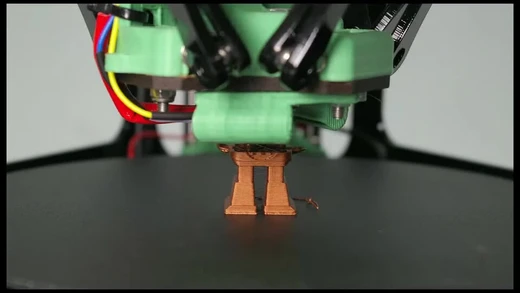
Home position
Reference position for numerically controlled motion systems.
A home position is the reference position of a mechanical motion system, used to let numerically controlled machines know where the machine's parts are in relation to the motion system's coordinate system. On machines using incremental encoders, a start-up procedure called homing is required to find the machine's home position at start-up, or alternatively the machine's limitations in the x, y or z directions. A common method is to use some form of limit switch as a sensor, and such a start-up procedure is not required with an absolute encoder.
Motivation
Unlike absolute encoders, which know their exact location, most encoders are incremental and only detect movement. An incremental encoder can measure how far it has rotated or moved since being turned on, but it has no way of knowing its starting point. To track absolute position, its counts must be linked to a fixed reference point in the mechanical system. This is typically achieved by moving the system to a home position, aligning the encoder with that reference, so all subsequent positions can be calculated from that known starting point.
Methods for determining home position
A limit switch is a simple form of endstop that uses an electrical switch, typically a mechanical microswitch, that can be touched by a toolhead or other part of the machine. Instead of conventional mechanical microswitches, optical endstop switches or magnetic endstop (Hall-effect) switches are also possible. A sensorless endstop detects that a motor suddenly experiences increased resistance as it approaches stall torque, which may indicate the machine has reached the end of its motion system.
More in 3D Printing
Spotted an error? Know more?
Reader corrections go straight into our review queue. Suggest an edit · How this site is sourced