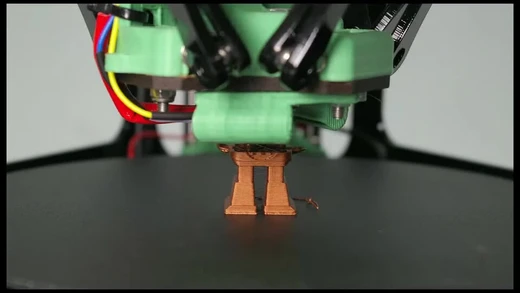
3D printer cabinet
Enclosure for 3D printers improving safety and print quality.
A 3D printer cabinet is an enclosure that surrounds a 3D printer to control the environment around it, improving print quality and increasing safety. It can be a separate box, cabinet, cover, or tent, or an integral part of the printer. The enclosure helps prevent the spread of volatile organic compounds and particulate matter, reduces dust and odors, provides vibration and sound isolation, and protects users from touching moving or hot parts.
Quick Facts
- Pla printing temperature
- around 20-30 Celsius
- Abs chamber temperature
- around 60-70 Celsius
- Ultrafine particle size
- 1 to 100 nanometers
- Vocs measured
- over 400 different types
Facts from the source article.
Printer technologies
A 3D printer cabinet can be useful for many different types of printers. In home setups, these enclosures are most commonly seen with resin (SLA) machines, which need shielding from UV light, and with certain materials used in filament (FFF) printers. For example, printing high-temperature filaments like ABS often makes an enclosure almost necessary. On the industrial side, cabinets are very important for powder-based technologies like multi-jet fusion and selective laser sintering. This is because tiny dust particles can be dangerous to breathe. Special enclosures are also used after printing to blow powder off finished parts with compressed air.
Health and safety
Use of filament printers can have negative effects on health and safety due to dust and harmful emissions. Filament printers are a major source of volatile organic compounds (VOCs) and particulate matter (PM). 3D printers emit ultrafine particles (1 to 100 nanometers) small enough to lodge deep in the respiratory system. One study measured over 400 different types of VOCs, including irritants, sensitizers, asthma-inducing agents, odorants, carcinogens, developmental toxicants, and reproductive toxicants, which can cause inflammation, respiratory diseases, neurotoxicity, and cancer. Specific VOCs measured include lactide, styrene, ethylbenzene, formaldehyde, acetaldehyde, nonanal, tetrahydrofuran, cyclohexanone, butanone, crotonaldehyde, acrylic acid, hydroxyethyl acrylate, and methyl methacrylate.
The effect of temperature on printing
Print quality can be both improved and degraded by a cabinet. Maintaining a consistent temperature prevents warping of the workpiece, prevents drafts, and keeps out dust. The temperature must be adapted to the material; PLA plastic is usually printed at room temperature (around 20-30 Celsius), while too high temperatures can cause heat creep, clogged nozzles, string formation, blobs, overhangs, poorer details, and weaker parts. Some materials like ABS plastic require a consistent chamber temperature of around 60-70 Celsius.
Feeding cold air into a warm chamber can create a cool draft; if the chamber has ventilation, it can be advantageous to have roughly the same air pressure inside and outside and some form of heat recovery. Most consumer 3D printers are designed for indoor use at room temperature, and placing them in garages or outdoors can cause print quality issues if the temperature is too low, there is high humidity, cold drafts, or sudden temperature changes.
Fire hazard
To prevent fire, a 3D printer inside a cabinet must avoid overheating, and active cooling for its electronics is helpful. Moving the power supply outside the heated chamber is often a good idea, and placing the motor and controller electronics outside as well can extend their life. The cabinet frame can use aluminum profiles or fire-retardant materials. Some people suggest putting smoke detectors and fire extinguishers nearby, and more advanced cabinets may include automatic fire suppression.
More in 3D Printing
Spotted an error? Know more?
Reader corrections go straight into our review queue. Suggest an edit · How this site is sourced