Free Universal Construction Kit
Open source adapters bridging ten toy construction systems.
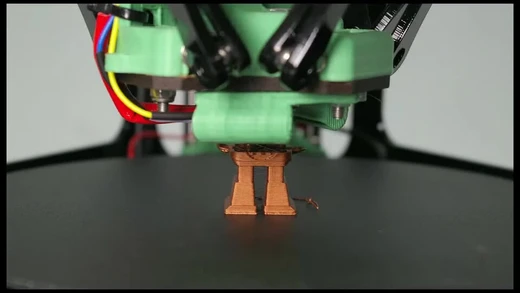
The Free Universal Construction Kit is a collection of open source 3D-printable adapters that enable interoperability between ten popular children's construction toys. It was developed to facilitate and enhance creative play by allowing pieces from otherwise incompatible toy systems to be connected.
Quick Facts
- Inventor
- Golan Levin; Shawn Sims
- Company
- F.A.T. Lab + Sy-Lab.
- From
- 2012
- Materials
- Laser sintered plastic or similar
- Features
- Interconnectivity between construction toys
- Open source
- 3D printable pieces
Facts from the source article.
Overview
The Free Universal Construction Kit (F.U.C.K.) was conceived as a grassroots interoperability remedy that implements proprietary protocols to provide a public service unmet by corporate interests. The project was inspired by Golan Levin's observations of his young son's frustration when trying to connect pieces from exclusive, incompatible, and closed-loop toy systems. The kit includes a matrix of 3D-printable adapter pieces reverse engineered from ten construction toy sets.
Each piece was engineered using micrometre precise data gathered by optical comparator measurements of the commercial components, ensuring snug fits without alteration, special tools, or adhesive. Most adapters connect two systems, such as Lego bricks to Lincoln Logs or Lincoln Logs to Tinkertoys. The matrix also contains a Universal Adapter Brick that integrates connectors from all ten construction sets into one larger element. Digital 3D models in stereo lithograph printing format are freely available online, allowing reproduction in various materials with different 3D manufacturing devices.
Reception
The Free Universal Construction Kit received the Ars Electronica Award of Distinction and was exhibited during the 2012 edition of Ars Electronica at the Offenes Kulturhaus museum in Linz, Austria. It has also been shown at venues including Node Forum for Digital Arts in Frankfurt am Main, Fundación Telefónica in Madrid, BOZAR Center of Fine Arts in Brussels, Kunsthaus Pasquart in Biel/Bienne, London Design Museum, Miller Gallery at Carnegie Mellon University, Gray Area Foundation for the Arts in San Francisco, and the Center for Bits and Atoms at MIT's Media Lab. The system is in the collections of the Cooper Hewitt, Smithsonian Design Museum and the Museum of Modern Art (MoMA) in New York, and was included in MoMA's 2025 exhibition Pirouette: Turning Points in Design.
More in 3D Printing
Spotted an error? Know more?
Reader corrections go straight into our review queue. Suggest an edit · How this site is sourced