3D2A
Movement using 3D printing to produce firearms under Second Amendment principles.
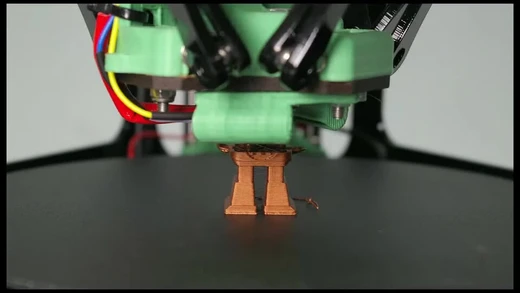
3D2A refers to the movement centered on the use of 3D printing to manufacture firearms, drawing its name from the combination of 3D printing technology and the Second Amendment to the United States Constitution. The movement is characterized by a commitment to free speech and open-source software design principles, though it does not adhere to a single unified ideology.
Did You Know?
- Critics have labeled the movement as a kind of 'memed accelerationism'.
- The movement has been described as part of a greater accelerationist tendency from entities without a clear political agenda or motive.
History
The 3D2A movement began when designers in the United States and Europe tried to post instructions and files for 3D-printed guns online despite legal barriers. After Defense Distributed released the Liberator pistol, governments around the world started blocking, monitoring, and censoring the spread of these files on the internet. By late 2025, the movement was described as expanding quickly across many online communities, mostly in the U.S. The number of 3D-printed firearms in circulation increased sharply, with law enforcement recovering 19,000 ghost guns in 2021.
Complete weapons like the FGC-9 and 3D-printed receivers can now be built at home using only 3D-printing and basic techniques, which often makes traditional gun control or policing unworkable. In 2026, California began targeting the movement’s major file-sharing sites, restricting how 3D2A files could be shared. New York passed a law requiring that 3D printers sold in the state scan for 3D2A files before printing them. That same year, in August, federal judge Reed O'Connor ruled in Defense Distributed v. Blanche that making firearms privately is protected under the Second Amendment.
More in 3D Printing
Spotted an error? Know more?
Reader corrections go straight into our review queue. Suggest an edit · How this site is sourced