Applications of 3D printing
3D printing enables customized production across manufacturing, medicine, and art.
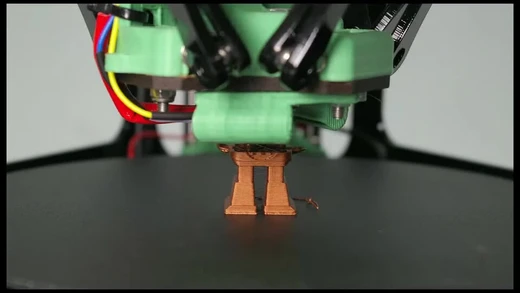
3D printing, also known as additive manufacturing, has developed significantly in recent years and now performs crucial roles across many fields. Its applications range from fully functional industrial parts to purely aesthetic objects, with notable use in manufacturing, medicine, architecture, custom art, and design. The technology's ability to print complex pieces from a wide range of materials, including plastics, resins, and stem cells, has driven rapid market growth.
Quick Facts
- Earliest additive manufacturing applicat
- 1980s
- First significant industrial production
- early 2010s
Facts from the source article.
Manufacturing applications
Additive manufacturing technologies first found use in the 1980s for product development, data visualization, rapid prototyping, and specialized manufacturing. Their expansion into production roles such as job production, mass production, and distributed manufacturing has been ongoing since then. Industrial production in metalworking industries reached significant scale for the first time in the early 2010s. Sales of additive manufacturing machines have grown substantially since the start of the 21st century, while prices have dropped.
Early applications focused on the toolroom end of manufacturing, with rapid prototyping reducing lead time and cost for prototypes that were previously made by subtractive methods like CNC milling and turning. Although subtractive methods offer higher accuracy, additive methods have become more profitable for some parts. New developments in RepRap technology allow a single device to perform both additive and subtractive manufacturing by swapping magnetic-mounted tool heads.
Medical applications
3D printing creates organ models for surgical rehearsal, custom joint replacements, biodegradable tissue scaffolds, pharmaceuticals, and protective gear. Notable successes include titanium implants, facial reconstructions, and tailored hearing aids and dental devices. Surgeons have used printed organ replicas to prepare for complex operations like pediatric kidney transplants, and nerve cluster models to identify damaged nerves. This technology emerged in the mid-1990s for anatomical modeling in bone reconstruction surgery. Patient-specific implants and virtual surgical planning with printed instruments followed, now applied to joint replacement and craniomaxillofacial surgery. Hospitals operate dedicated labs to print implants, scaffolds, and organ models on-site, enabling on-demand, decentralized production of medical items.
Industrial applications
3D printing has entered the clothing industry, with fashion designers experimenting with 3D-printed bikinis, shoes, and dresses. Nike used 3D printing to prototype and manufacture the 2012 Vapor Laser Talon football shoe, and New Balance produces custom-fit shoes for athletes. Companies are printing consumer-grade eyewear with on-demand custom fit and styling, though lenses are not printed. Academic comments have noted potential limitations in human acceptance of mass-customized apparel due to reduced brand value communication.
High-fashion designers such as Karl Lagerfeld for Chanel, Iris van Herpen, and Noa Raviv have employed 3D printing in their collections, with selections showcased at the 2016 Metropolitan Museum of Art exhibition "Manus X Machina". During the COVID-19 pandemic, the initiative Markers for COVID-19 used 3D printing to create face shields, face masks, and other personal protective equipment. 3D printing is also used to manufacture molds for jewelry and the jewelry itself, and has become popular in the customizable gifts industry.
Sociocultural applications
In 2005, the open-source RepRap and Fab@Home projects established a rapidly expanding hobbyist and home-use market. Virtually all home-use 3D printers released since then have technical roots in the RepRap Project. One study found that 3D printing could become a mass market product enabling consumers to save money by printing household objects at home from downloaded 3D models. Academic journals began reporting on artistic applications of 3D printing in 2005, with artists such as Martin John Callanan at The Bartlett school of architecture using the technology.
By 2007, mass media coverage included an article in the Wall Street Journal and Time magazine listing a printed design among its 100 most influential designs of the year. At the 2011 London Design Festival, an installation called "Industrial Revolution 2.0: How the Material World will Newly Materialize" was held at the Victoria and Albert Museum. The 3DPrintshow in London in 2013 and 2014 featured art sections with 3D-printed plastic and metal works.
In 2015, MIT's Mediated Matter Group and Glass Lab created an additive 3D printer that prints with glass, called G3DP, producing structural and artistic results. 3D scanning technologies allow replication of real objects without invasive molding techniques, particularly useful for precious artwork and cultural heritage artifacts.
More in 3D Printing
Spotted an error? Know more?
Reader corrections go straight into our review queue. Suggest an edit · How this site is sourced