
Dog of Flanders (TV series)
1975 Japanese anime adaptation of Ouida's novel, second in the World Masterpiece Theater series.

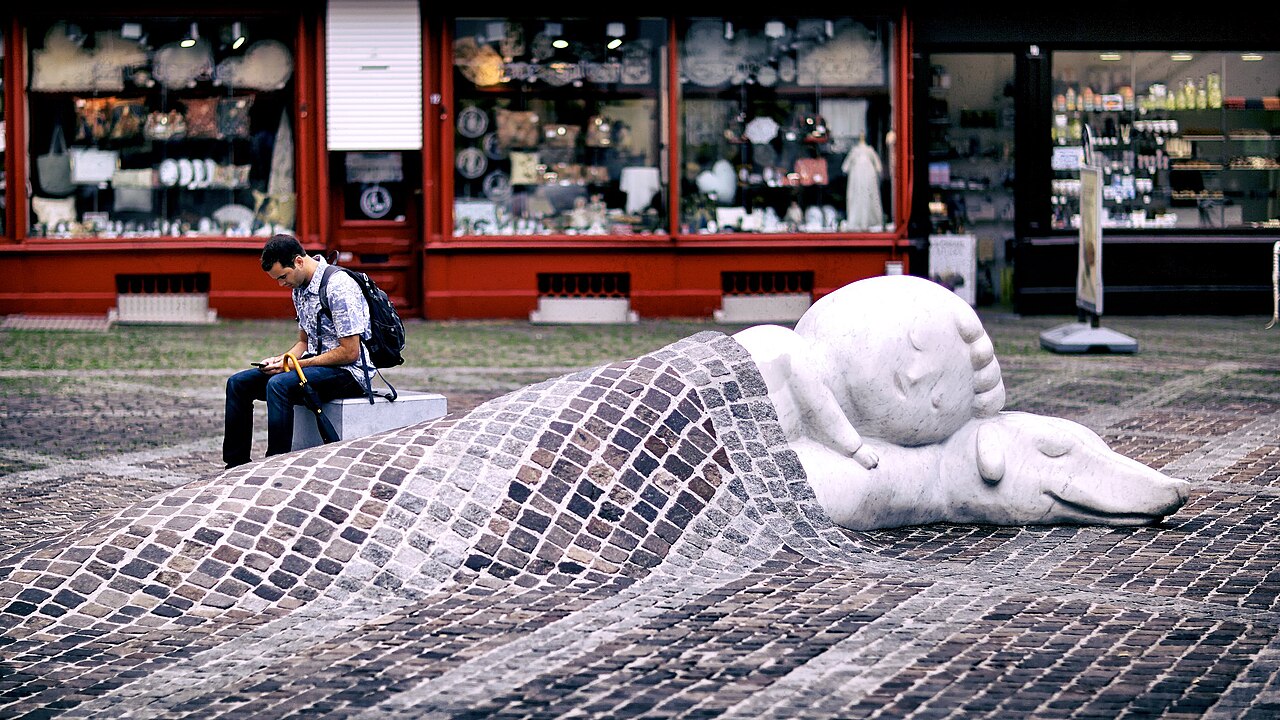
Fouquier ॐ from Berendrecht, Belgium · CC0
In 1975, Nippon Animation produced a 52-episode anime television series based on Ouida's 1872 novel *A Dog of Flanders*, directed by Yoshio Kuroda. It was the second program in what would become the World Masterpiece Theater series, originally known as Calpis Children's Theater (the first was *Heidi, Girl of the Alps* in 1974). A separate live-action/CGI theatrical film titled *The Dog of Flanders* was released in 1997 by Warner Bros., but it was not produced by Nippon Animation.
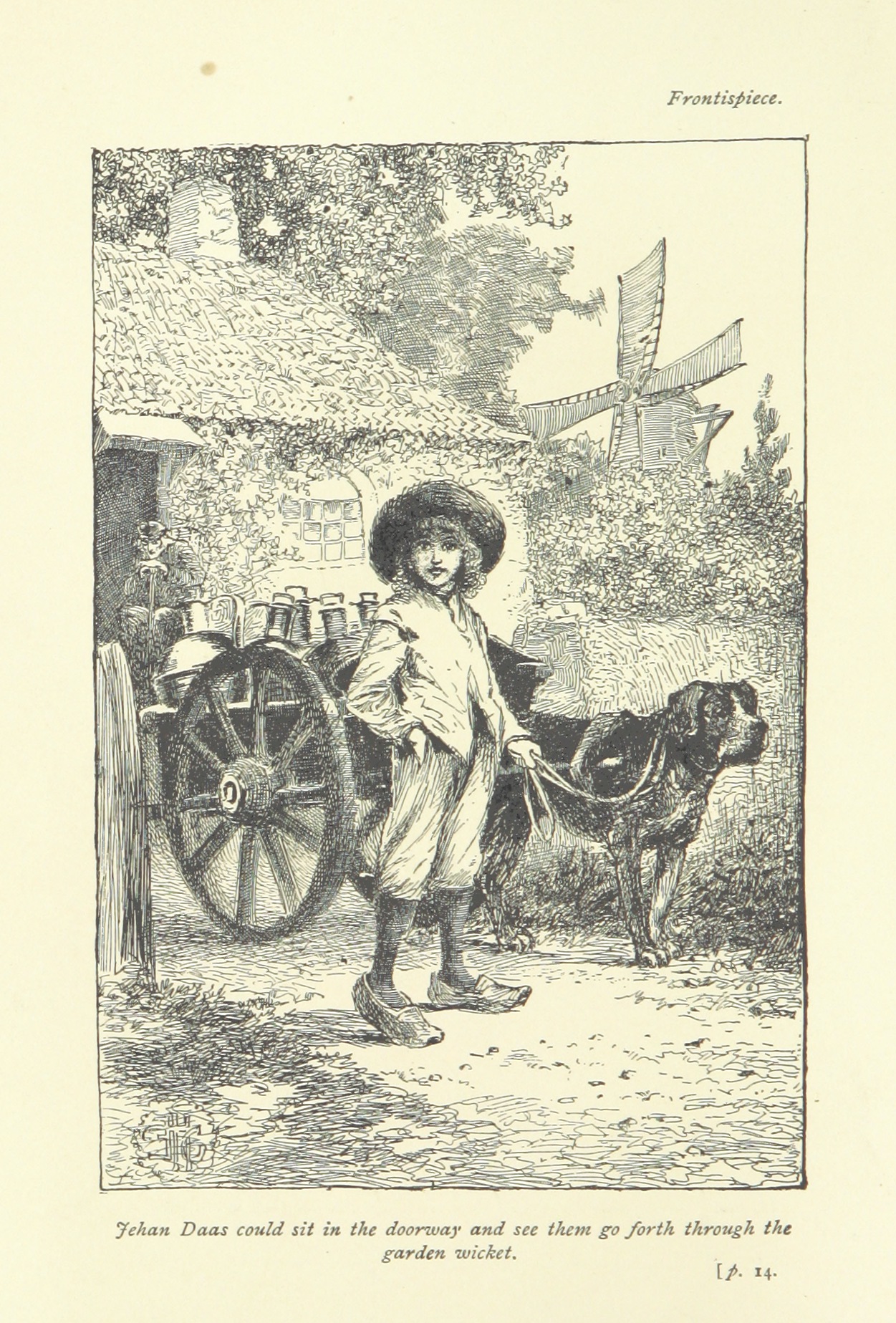
Set in a 19th-century Flemish village near Antwerp, the story follows the deep bond between a boy and his loyal dog. The boy, Nello Daas, lives with his grandfather Jehan after losing his parents. They make a modest living hauling milk to Antwerp. Nello spends time with his friend Alois, and though poor, they are content.
One day, Nello finds a large dog, Patrasche, abandoned by a cruel hardware merchant who had forced him to pull heavy loads. Nello rescues the weakened animal and brings him home. Initially fearful, Patrasche gradually trusts Nello and Jehan, and soon helps with the milk deliveries, becoming essential to both Nello and Alois.
Nello has a strong talent for drawing and admires the painter Rubens. He longs to see Rubens’ works, *The Elevation of the Cross* and *The Descent from the Cross*, displayed in the Antwerp cathedral, but cannot afford the viewing fee.
As Nello pursues drawing and Alois takes up lace-making, Alois’ father, the wealthy landowner Cogez, disapproves of their closeness. Alois is sent to study in England but returns ill, recovering thanks to Nello. After Jehan dies, a fire breaks out at Cogez’s windmill. Cogez suspects Nello, and the villagers stop employing him. Losing his grandfather, his work, and a drawing competition, Nello despairs.
Patrasche finds a purse Cogez dropped containing a large sum. Nello returns it but refuses to enter the house, leaving Patrasche behind. He goes home, leaves a note and his belongings, and disappears. Cogez, learning the boy he mistreated returned the purse, feels remorse and seeks to make amends.
On Christmas night, after learning Nello was innocent, Cogez and the villagers search for him. A judge from the competition also comes to take Nello in, but they cannot find him. Patrasche escapes and finds Nello collapsed in the cathedral, gazing at Rubens’ paintings. Nello says they are both tired and sleepy.
- Field
- Anime television series
- Nationality
- Japanese
- Known for
- Second official entry in the World Masterpiece Theater series
- Episodes
- 52
- Original network
- Fuji TV
- Air dates
- January 5 – December 28, 1975
Lore & Background
The series depicts the bond between a boy named Nello Daas and his faithful dog Patrasche, living in a 19th-century Flanders village near Antwerp. Nello, an orphan living with his grandfather Jehan, earns a living transporting milk. He rescues Patrasche after the dog is abandoned by a cruel hardware merchant, and the dog becomes an irreplaceable companion. Nello possesses a great talent for drawing and admires the paintings of Rubens, but cannot afford to view the master's works in the city's cathedral.
Reader's Guide
The anime is significant as the inaugural entry of the World Masterpiece Theater series, a long-running franchise of literary adaptations. It was produced by Nippon Animation, with Isao Takahata and Hayao Miyazaki contributing to episode 15 as storyboard artist and key animator respectively. The series achieved particular success across Asia and was broadcast in several countries including South Korea, Hong Kong, Taiwan, Spain, Germany, Italy, and Austria. However, it was never broadcast in Belgium (where the story is set), the UK, or the US. The animators conducted extensive research on 19th-century Flanders, though many features are typically Dutch rather than Flemish. The buildings were modeled after the Bokrijk open-air museum.
Did You Know?
- The series was the second official entry in the World Masterpiece Theater series, originally called Calpis Children's Theater; the first was 'Heidi, Girl of the Alps' (1974).
- Isao Takahata and Hayao Miyazaki did not work on this series; Takahata directed 'Heidi' and Miyazaki worked on 'Heidi' and 'Future Boy Conan', but neither is credited on 'Dog of Flanders'.
- A theatrical film titled 'The Dog of Flanders' was released in 1997, but it was a separate live-action/CGI film produced by Warner Bros., not by Nippon Animation.
Production & Franchise Legacy
Debuting in 1975, Dog of Flanders stands as the inaugural production in what would become the long-running World Masterpiece Theater franchise, which at the time carried the sponsor name Calpis Children's Theater. Nippon Animation developed the series under the direction of Yoshio Kuroda, adapting Ouida's 1872 novel into a 52-episode anime television run. The project set a template for the franchise's signature approach: pairing a beloved Western literary classic with Japanese animation craftsmanship aimed at a young audience. The story's emotional depth and its focus on a child's struggle resonated deeply with viewers, establishing the tone that subsequent entries in the series would follow. The franchise's lasting reach was further extended when a feature-length film adaptation was released in 1997, introducing the tale to a new generation of audiences more than two decades after the original broadcast. As the first title in the series, Dog of Flanders carries the weight of having defined the franchise's identity, proving that a straightforward adaptation of a 19th-century European novel could become a cornerstone of Japanese animated television.
Narrative Arc & Tragic Trajectory
Set in the Flemish village of Blacken in 1875, the series follows young Nello Daas, an orphan of roughly eight or nine years who shares his life with his grandfather Jehan. The pair sustains themselves by hauling milk to the nearby city of Antwerp, a daily routine that anchors the story's pastoral rhythm. Nello's world transforms when he rescues Patrasche, a large elderly dog abandoned by a cruel hardware merchant on a riverbank. Initially wary of humans, the dog slowly opens up to the boy's and his grandfather's kindness, eventually volunteering to help with the milk runs and becoming an inseparable companion. Nello harbors a deep artistic gift and a longing to see Rubens' masterpieces in the Antwerp cathedral, a dream he cannot afford to fulfill. The narrative takes a devastating turn after his grandfather's death, when the wealthy landowner Cogez falsely accuses Nello of setting fire to his windmill. Stripped of his livelihood, humiliated in a drawing contest, and isolated by the village, Nello succumbs to despair. His final act—returning a lost purse to the very household that wronged him before vanishing—seals his tragic fate, leading to the series' heartbreaking conclusion in the cathedral.
Character Dynamics & Social Microcosm
The series builds a richly populated world of supporting voices that frame Nello's isolation. Alois, voiced by Reiko Katsura, serves as Nello's closest friend, a cheerful girl of five or seven whose father, the proud landowner Cogez (Tamio Ōki), views the boy's poverty with open contempt. Cogez's household includes his gentle wife Elina, a petty servant named Hans who weaponizes Nello as a scapegoat, and a snobbish cousin Annie. The village itself is a mosaic of small players: the kind farmer Jestas who buys Nello's milk, the opportunistic Helmond who cuts the boy out for cheaper service, the elderly neighbor Nulette who dotes on him, and the windmill craftsman Noel whose testimony ultimately clears Nello's name. In Antwerp, a lively twelve-year-old named George and his younger brother Paul offer a glimpse of a world beyond the village. The drawing competition introduces Stephan, a wealthy rival who takes the prize Nello deserves, and judge Hendrick Ray, who initially declares Nello the winner before being overruled. Together, these characters construct a microcosm of class, loyalty, and petty cruelty that makes Nello's suffering feel both personal and systemic.
Emotional Core & Spiritual Resolution
The emotional architecture of Dog of Flanders rests almost entirely on the bond between Nello and Patrasche, a relationship that evolves from wary rescue to unconditional devotion. The dog's initial fear of humans, his gradual trust, and his selfless willingness to work alongside the boy form the series' emotional spine. When tragedy cascades—grandfather's death, lost livelihood, public humiliation—Patrasche remains the one constant presence, the only creature who does not judge Nello's poverty or his grief. The series' climax in the Antwerp cathedral is deliberately quiet: Nello, collapsed before Rubens' paintings, speaks to his dog in a whisper, telling him they are both tired and that he feels sleepy. They pass together, escorted by a host of angels into a heaven where Nello's parents and grandfather already wait. The imagery of eternal peace, free from suffering, reframes the story's relentless sorrow as a passage rather than an ending. For young viewers encountering this in the mid-1970s, the scene offered a rare, unflinching confrontation with death wrapped in spiritual comfort, making the series a defining emotional experience of its era.
Gallery
Frequently Asked Questions
What is Dog of Flanders (TV series)?
It is a 52-episode Japanese anime television series that aired on Fuji TV from January 5 to December 28, 1975. Nippon Animation produced it as a screen adaptation of Ouida's 1872 novel *A Dog of Flanders*.
Who directed Dog of Flanders (TV series)?
Yoshio Kuroda served as the director for the 1975 Nippon Animation production.
What is the story of Dog of Flanders (TV series) about?
Set in a small Flemish village near Antwerp during the 19th century, the series follows the unbreakable bond between a young boy and his loyal dog as they endure poverty, loss, and hardship together.
How does Dog of Flanders (TV series) end?
The story closes on a tragic note, as the young protagonist succumbs to the suffering he has endured. His faithful dog outlives him and carries on alone.
Why is Dog of Flanders (TV series) significant to the World Masterpiece Theater franchise?
As the second official installment following *Heidi, Girl of the Alps* (1974), it helped cement the format and audience that Nippon Animation would carry forward through dozens of subsequent adaptations. It originally broadcast under the Calpis Children's Theater banner before the franchise adopted its now-familiar World Masterpiece Theater title.
More in World Masterpiece Theater series 1-24
Spotted an error? Know more?
Reader corrections go straight into our review queue. Suggest an edit · How this site is sourced