
Arslantepe
Ancient city on the Euphrates, home to the earliest known swords.
Last updated
Where it is
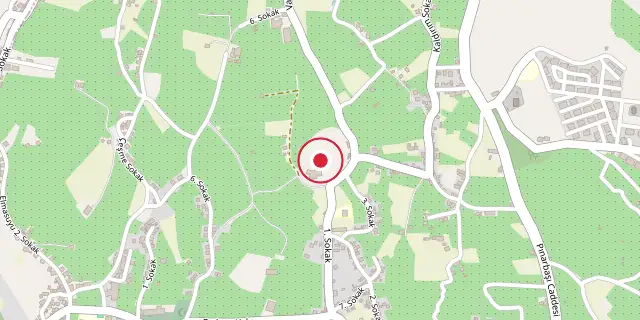
Coordinates: 38°22′55″N 38°21′40″E (38.3820, 38.3610) · Open in OpenStreetMap
Coordinates and connected clubs: the infobox of Wikipedia: Arslantepe (CC BY-SA 4.0). Map: drawn by Codexery from OpenStreetMap tiles.
Arslantepe, also called Melid, was an ancient city on the Tohma River, which flows from the Taurus Mountains as a branch of the upper Euphrates. Today, it corresponds to the archaeological site of Arslantepe Mound near Malatya, Turkey. In 2021, it was designated a UNESCO World Heritage Site, though as of 2025 it is closed for maintenance. Değirmentepe, built on a small natural outcrop in the floodplain roughly 40 meters from the Euphrates, is sometimes cited for early copper smelting, though earlier sites like Çayönü Tepesi are more widely recognized as holding the earliest confirmed evidence.
Late Chalcolithic
The earliest human settlement at Arslantepe dates to the Chalcolithic period. During the Late Chalcolithic (phases LC 3–4, known as Arslantepe VII), the site gained regional importance. A large mudbrick building with wall decorations stood atop the mound, though its purpose remains unclear. By the late Uruk period (phase LC 5, Arslantepe VIA), the settlement expanded to include a large temple-palace complex, which was eventually destroyed.
Early Bronze
Around 3400–3200 BC, during the Late Chalcolithic (LC5), widespread burning and destruction wiped out the earlier Uruk-oriented settlement. After this, Kura–Araxes pottery appeared in the area, reflecting a pastoralist culture linked to the Caucasus. The local settlement during this period seems to have been influenced by Kura–Araxes traditions. According to Martina Massimino (2023), a tomb from this time shows clear architectural and metalwork connections to the Maikop-Novosvobodnaya kurgans, though the exact chronology and sequence of events remain unclear.
Middle Bronze Age
During the Middle Bronze Age, Melid is notably absent from the list of major Assyrian administrative hubs in the Assyrian Trade Network, as the main Assyrian routes crossed the Euphrates farther south.
Late Bronze Age
In the Late Bronze Age, the site became an administrative center for the kingdom of Isuwa, controlling a larger region. The city was heavily fortified, likely due to the Hittite threat from the west, and was culturally influenced by the Hurrians, Mitanni, and Hittites. Around 1350 BC, the Hittite king Šuppiluliuma I conquered Melid during his war against Tushratta of Mitanni.
Lore & Background
Archaeological excavations began in the 1930s with Louis Delaporte, followed by Claude F.A. Schaeffer. Italian teams from Sapienza University of Rome, led by Salvatore M. Puglisi, Alba Palmieri, and later Marcella Frangipane, conducted extensive work. In the 1980s, Frangipane discovered a cache of nine swords and daggers from phase VI A (3400–3200 BC), cast from arsenic-copper alloy, representing the earliest known swords. The site was named a UNESCO World Heritage Site in 2021 and as of 2025 is closed for maintenance.
Reader's Guide
Arslantepe holds exceptional significance as the site of the earliest known swords, dating to the 33rd–31st centuries BCE. These nine swords and daggers, found in a 'hall of weapons,' were made of arsenic-copper alloy, with three inlaid with silver, and represent a major milestone in metallurgy and warfare. The site also provides a continuous stratigraphic sequence from the Chalcolithic to the Iron Age, illustrating the rise and fall of complex societies in the upper Euphrates region.
Its monumental buildings, temples, and palace complex from the Late Uruk period reflect early state formation, while the later Neo-Hittite sculptures and inscriptions document the cultural and political shifts after the Hittite collapse. The 'Royal Tomb' with its high-status grave goods and human sacrifices offers rare insight into Early Bronze Age funerary practices. Arslantepe's inclusion as a UNESCO World Heritage Site in 2021 underscores its global archaeological importance, though the site is currently closed for maintenance as of 2025.
Frequently Asked Questions
Who are the key archaeologists associated with Arslantepe?
Several prominent excavators worked at the site over the decades, including Louis Delaporte, Claude F.A. Schaeffer, Salvatore M. Puglisi, Alba Palmieri, and Marcella Frangipane, each contributing layers of understanding to the mound's long occupation history.
Can tourists visit Arslantepe right now?
As of 2025 the site is closed to the public for maintenance work, so visitors cannot currently tour the mound. The closure is tied to ongoing preservation efforts following its 2021 inscription on the World Heritage List.
More in World Heritage Sites in Turkey
Sources
Compiled from Wikipedia and the sources listed below. Text from Wikipedia is available under CC BY-SA 4.0; this entry is adapted from it.
- Wikipedia: Arslantepe (CC BY-SA 4.0).
Spotted an error? Know more?
Reader corrections go straight into our review queue. Suggest an edit · How this site is sourced