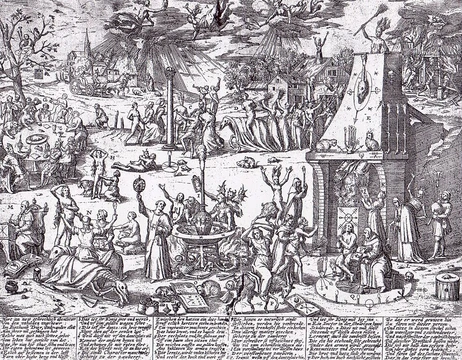
Fulda witch trials
One of Germany's four largest witch trials, ordered by a Counter-Reformation prince-abbot.
Last updated
Ordered by Prince-Abbot Balthasar von Dernbach, a proponent of the Counter-Reformation, the persecutions targeted Crypto-Protestants, who were typically executed by immolation on charges of witchcraft.
Quick Facts
- Location
- Fulda, Germany
- Years active
- 1603–1606
- Approximate number of victims
- 250
- Ordered by
- Prince-Abbot Balthasar von Dernbach
- Presiding official
- Balthasar Nuss
- Notable victim
- Merga Bien
- End of persecutions
- After Prince-Abbot's death on 15 March 1605
Facts from the source article.
History
The Fulda witch trials were set in motion by Prince-Abbot Balthasar von Dernbach. He had been forced out of power in 1576 by the largely Lutheran population after pushing Counter-Reformation measures. The Aulic Council restored him in 1602, and he then ordered all Protestants to either convert or leave. After more than twenty-five years away, he revived his Counter-Reformation efforts and launched a probe into suspected witches and other unwanted people.
The persecution was run by Balthasar Nuss, who had joined the abbot during his exile and later became Zentgraf of Hofbieber and Malefizmeister. According to historian Gerrit Walther, the witch hunt was driven by the abbot’s new ruling allies, while the victims were mostly from old Fulda Protestant families who had converted to avoid expulsion. The inquiry started in March 1603, and arrests in the city began soon after. One of the earliest and most famous victims was Merga Bien; her case even went before the Imperial Chamber Court.
Dernbach followed the Jesuit-led Counter-Reformation, and Nuss arrested Crypto-Protestants for witchcraft along with others. The total number of victims is uncertain, but at least 200 died. Nuss’s accusers claimed he had charged 239 people, while he admitted to 205. The hunts ended shortly after the Prince-Abbot died on 15 March 1605.
In 1606, Nuss was jailed on charges of enriching himself. He spent thirteen years in custody, and after the University of Ingolstadt issued a ruling, he was beheaded in 1618.
More in Witch Trials in Germany
Sources
Compiled from Wikipedia and the sources listed below. Text from Wikipedia is available under CC BY-SA 4.0; this entry is adapted from it.
- Wikipedia: Fulda witch trials (CC BY-SA 4.0).
Spotted an error? Know more?
Reader corrections go straight into our review queue. Suggest an edit · How this site is sourced