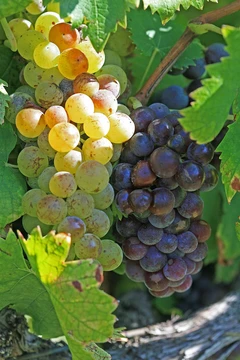
Pecorino (grape)
White Italian grape native to Marche, used in DOCG and DOC wines.
Pecorino is a white Italian wine grape variety grown in the Marche, Abruzzo, Tuscany, Umbria and Lazio regions. Ampelographers believe it likely originated in Marche, where vineyard area for the grape increases annually. It is used in DOCG wines such as Offida Pecorino and in several DOC wines, with over twenty wine qualities derived from it today.
Quick Facts
- Native area
- Arquata del Tronto, Ascoli Piceno province, Marche
- First documented fine
- 10 coins in 1526 under the Statuti di Norcia
- Hectares in abruzzo (updated)
- Approximately 1,260 ha
Facts from the source article.
Did You Know?
- Pecorino is an early ripening variety that naturally produces low yields even without severe winter pruning.
- The variety has strong resistance to downy and powdery mildew.
History
The variety is native to Arquata del Tronto in the Ascoli Piceno province of Marche. Ampelographers consider Pecorino a very old variety, possibly originating from a wild grapevine domesticated by Benedictine monks. The name is directly linked to pecorino cheese, deriving from the Italian word pecorino. In the late 19th century, Count Gallo began associating the term Pecorino with Verdicchio Bastardo Bianco di Arquata to distinguish it from other Verdicchio and because the term Bastardo was then considered negative. In 1903, agronomist Salvatore Mondini published a text describing a well-established viticultural tradition in the province of Ascoli Piceno, comparing Pecorino to Riesling. According to the local agricultural department, a special grape called Pecorino had long been cultivated in the mountains of Arquata, producing an abundant and highly regarded product. Rhine Riesling wines in the province of Ascoli Piceno were noted as excellent, and Commendatore Tranquilli observed that Riesling grapes could be blended with red wines to create a spicy, lively character. In the province of Perugia, Riesling was introduced to improve local white wine production, grafting successfully onto low-yielding vines. In ancient times, Romans considered central Italy important for wine production from this grape, with cultivation widely documented from the second part of the 19th century. In 1526, damaging Pecorino vineyards in Arquata del Tronto incurred a fine of 10 coins under the Statuti di Norcia.
Wine regions
In 2000, 87 hectares of Pecorino were planted in Italy, mostly in the Arquata del Tronto region of Ascoli Piceno in Marche. Guido Cocci Grifoni was the first producer to widely use Pecorino in his Offida DOC wines in the 1980s, introducing it to nearby Ripatransone. It remains a permitted variety in the Marche DOC wines of Falerio dei Colli Ascolani, Colli Maceratesi and Offida. The baptism of Pecorino d'Abruzzo occurred in 1997 when Luigi Cataldi Madonna first placed the variety's name on a label, producing about 2,000 bottles from an 8,000-square-meter vineyard. Cataldi Madonna stated, Nomina sunt numina, meaning giving a name gives an identity. Within a few years, the variety grew significantly, with approximately 1,260 hectares in Abruzzo producing 218,560 quintals of grapes and over 18 million bottles annually. Abruzzo has become the chosen territory for this grape, now considered one of the most interesting white varieties in central Italy. Plantings also exist in the provinces of Chieti, Pescara and Teramo, used in sparkling wines of Controguerra and IGT wines, as well as in Liguria, Lazio, Tuscany and Umbria. In the commune of Macerata, Pecorino can be included in Colli Maceratesi DOC wines up to 30% of the blend with other varieties, made still, sparkling spumante or passito. Grapes for DOC wines must be harvested at no more than 15 tonnes/hectare, with finished wine reaching at least 11% alcohol. In Controguerra, up to 30% Pecorino with Verdicchio and Chardonnay can be used in Trebbiano-based sparkling DOC wines, with harvest yields limited to 14 tonnes/hectare and minimum alcohol of 11%.
Synonyms and confusion with other grapes
Pecorino has been known under many synonyms, including Arquitano, Biancuccia, Bifolchetto, Bifolco, Bifolvo, Dolcipappola, Dolcipappolo, Forcese, Forconese, Iuvino, Juvino, Lanzesa, Moscianello, Mosciolo, Mostarello, Norcino, Pecorella, Pecorello, Pecorello di Rogliano, Pecori, Pecorina, Pecorina Aquitanella, Pecorina Arquatanella, Pecorino Bianco, Pecorino de Arquata, Pecorino di Arquata, Pecorino di Osimo, Piscianello, Piscianino, Promotico, Sgranarella, Stricarella, Striccarella, Trebbiano Viccio, Uva Cani, Uva degli Osti, Uva Dell'occhio Piccola, Uva Delle Donne, Uva Delle Peccore, Uvarella, Uvina, Vecia, Verdicchio Bastardo Bianco, Vissanello and Vissanello bianco. It is sometimes confused with the Calabrian grape Greco bianco, which is often called Pecorello bianco.
More in White Wine Grape Varieties
Spotted an error? Know more?
Reader corrections go straight into our review queue. Suggest an edit · How this site is sourced