Caning in Brunei
Judicial caning in Brunei, a former British protectorate, is used for criminal and sharia offences.
Last updated
Caning, known as whipping in older British legal language, is a judicial punishment in Brunei. This practice stems from Brunei’s time as a British protectorate between 1888 and 1984. Similar punishments exist in neighboring Singapore and Malaysia, both former British colonies.
Judicial caning under criminal law
Sections 257–260 of Brunei's Criminal Procedure Code govern caning, which the Code calls "whipping" following traditional British legislative terminology. Women, men above 50, and those sentenced to death cannot receive caning. A single trial may impose no more than 24 strokes; for juvenile offenders the cap is 18 strokes. The rattan cane used must not exceed 0.5 inches in diameter.
For juveniles, the caning is administered in the manner of school discipline with a light rattan cane. A medical officer or hospital assistant must certify the offender is fit to undergo the punishment. If the officer certifies unfitness, the offender returns to court for the caning sentence to be remitted or converted to up to 12 months of additional prison time beyond the original term. Offences punishable by caning include causing hurt, assault, theft, robbery, extortion, and trespassing.
Caning is mandatory for certain offences such as rape, kidnapping, and overstaying one's visa. Roughly 100 caning sentences are passed each year; in 2007, 68 foreign workers were sentenced for immigration offences. The procedure resembles that of Singapore more than Malaysia.
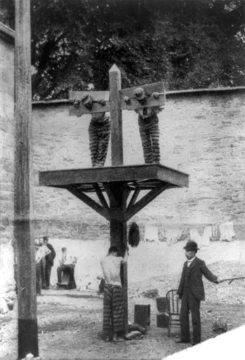
Punishment is not inflicted in instalments. The offender is tied to a wooden frame in a bent-over position with feet together and receives strokes on the bare buttocks. Effects include severe physical damage and permanent scarring. The Prisons Department occasionally brings students on prison tours or holds school talks, during which officials demonstrate caning on dummies.
Did You Know?
- In 2014, an 18-member Bruneian delegation visited Saudi Arabia to learn about implementing the sharia penal code.
- Brunei has not ratified the United Nations Convention against Torture.
- In May 2013, two Thai nationals were sentenced to three strokes of the cane each for overstaying their visa.
More in Whipping
Sources
Compiled from Wikipedia and the sources listed below. Text from Wikipedia is available under CC BY-SA 4.0; this entry is adapted from it.
- Wikipedia: Caning in Brunei (CC BY-SA 4.0).
Spotted an error? Know more?
Reader corrections go straight into our review queue. Suggest an edit · How this site is sourced