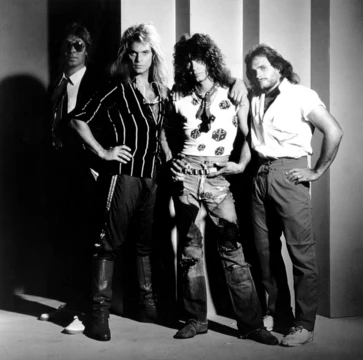
Van Halen III Reunion Album (1998)
The original three came back, turned the amps to eleven, and reminded the world who they were — with a snarl, a grin, and a riff that shook the dust off their legacy.
Van Halen III, released in 1998, marked the long-awaited return of the band's original three-piece lineup: guitarist and bandleader Eddie Van Halen, drummer Alex Van Halen, and bassist Michael Anthony. After the split with vocalist Sammy Hagar in 1996, the group reconvened to craft what fans and critics widely regarded as a homecoming to the aggressive, guitar-driven rock that defined their early career. The album served as a statement of identity, reaffirming the Van Halen sound that had built their legacy since the late 1970s. As the band's eleventh studio record, Van Halen III occupied a unique place in their discography: neither a sequel to the Hagar-era albums nor a nostalgic rehash, but a confident declaration that the original chemistry was still alive. It became the final studio album recorded with the founding trio, lending it an added weight in retrospect — a last testament to the raw, unpolished fire that first erupted from Pasadena in the late '70s.
Quick Facts
- Release year
- 1998
- Lineup
- Eddie Van Halen (guitar)
- Alex Van Halen (drums)
- Michael Anthony (bass, vocals)
- Producer
- Eddie Van Halen
- Studio album number
- 11th
- Significance
- Reunion of the original trio; final studio album with the founding lineup
Lore & Background
The road to Van Halen III was not a straight line. After Sammy Hagar's departure in 1996, the band entered a period of uncertainty. Fans had long chafed under the more polished, arena-rock direction of the mid-'90s records, and the internet's early fan forums buzzed with speculation about whether the original sound could ever return. When Michael Anthony was brought back into the fold, the creative dynamic shifted almost immediately. Eddie, who had always been the band's sonic architect, took full production reins and pushed the group toward shorter, punchier arrangements with heavier riff work and a rawer vocal delivery from Anthony. The recording sessions took place largely at Eddie's personal studio in Pasadena, where he could experiment with his signature guitar tone—those cascading arpeggios, the two-handed tapping, the layered harmonics that had become synonymous with the band's name. Alex's drumming, always the rhythmic backbone, found a new freedom in the tighter song structures, his fills hitting like hammer blows between Eddie's staccato bursts. The result was an album that felt urgent and immediate, a deliberate contrast to the broader, more anthemic productions that had characterized the preceding era. In the broader narrative of Van Halen's history, Van Halen III functions as a bridge. It honored the past without being trapped by it, and it set the tonal stage for the band's later work, including the 2012 album A Different Kind of Truth. For fans who had grown up with the early records, it was a validation — a reminder of the reckless joy that had been buried under layers of synth and reverb; for newcomers, it was an introduction to the band's most ferocious and playful side, a snapshot of three musicians rediscovering their chemistry in real time.
Reader's Guide
The catalyst for Van Halen III was the departure of vocalist Sammy Hagar in 1996, which left the band without a frontman and facing an uncertain future. Rather than recruit a replacement, the Van Halen brothers turned to their past and brought Michael Anthony back into the lineup. This single decision reshaped the entire creative process. Eddie assumed full production duties, working at his own studio in Pasadena. The sessions emphasized brevity and intensity—songs were tightened, riffs sharpened, and the overall mix pushed toward a grittier, more organic feel. Alex's drumming became more prominent in the arrangement, and Anthony's vocal style naturally aligned with the band's earlier, more aggressive aesthetic. The album's release in 1998 generated significant excitement among the fanbase, which had been vocal in its desire for a return to the original sound. It charted strongly and was received as a successful reassertion of the band's identity. For the group, it confirmed that the core trio's chemistry was not a relic of the past but a living force. In the long arc of Van Halen's story, Van Halen III stands as the album where the band reconnected with its roots and proved that the original vision still had teeth.
Did You Know?
- The album was produced entirely by Eddie Van Halen at his personal studio in Pasadena, giving him full creative control over the sound and arrangement.
- Michael Anthony's return to the band after the Hagar era was a direct response to fan desire for the original vocal style and harder rock direction.
- The album's title, Van Halen III, is a playful nod to the band's history, suggesting a 'third act' or continuation after the two distinct eras of their career.
More in Story & Timeline
Elsewhere in Van Halen
Spotted an error? Know more?
Reader corrections go straight into our review queue. Suggest an edit · How this site is sourced