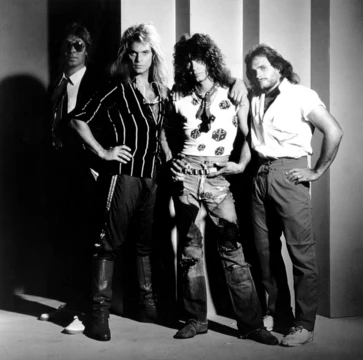
The Van Halen Recording Team
Behind the glass, a team of engineers and producers turned raw LA rock into platinum thunder.
The Van Halen Recording Team refers to the constellation of musicians, producers, engineers, and studio personnel who shaped the band's studio output from the late 1970s through the 2010s. While the core trio-plus-vocalist lineup provided the creative engine, the final sound of each album was forged in collaboration with a rotating cast of outside producers and the technical staff at various Los Angeles-area studios. This entry treats the recording team as a collective 'faction' within the broader Van Halen universe: the people behind the glass, the tape machines, and the mixing boards who translated Eddie Van Halen's tapping and string-bending, Alex Van Halen's drumming, and the vocalist's energy into the polished records fans know. Their choices of studio, production philosophy, and sonic palette defined the character of each era.
Quick Facts
- Type
- Recording & Production Collective
- Early-era producer
- Ted Templeman (first three studio albums)
- Notable studio
- The Village, West Hollywood (later albums)
- Core musicians
- Eddie Van Halen, Alex Van Halen, Michael Anthony
- Sammy Hagar
- David Lee Roth
- Anthony Iommi (guest)
- Active recording span
- Late 1970s – 2010s
Lore & Background
The early Van Halen records were shaped in a distinctly West Coast, almost DIY spirit. Ted Templeman, a long-time Warner Bros. A&R figure, brought a rock-and-roll sensibility that let the band's energy breathe without over-polishing it. The first album, recorded in 1977-78, carried the raw, garage-adjacent electricity of the Pasadena scene, while 1984, also under Templeman's production, showcased a more refined, synth-tinged palette that matched the band's growing ambition. As the lineup evolved—David Lee Roth stepping in, then out, Sammy Hagar arriving—the production team shifted accordingly. Tony Visconti brought a heavier, more textured approach to the mid-1980s and early-1990s records, while Michael Beinhorn's sessions in the early-to-mid 1990s leaned into a grittier, more direct sound. By the time the band built their own studio, The Village, in West Hollywood, they had the infrastructure to be far more hands-on, with Eddie Van Halen himself taking a leading role in shaping arrangements and sonic details. Throughout every era, the recording team's most celebrated contribution was giving Eddie Van Halen's guitar the space it needed: the tape-delay tricks, the two-handed tapping, the layered harmonies that became the band's signature. Engineers and producers learned to capture not just notes but the physicality of his playing—the squeal of strings, the percussive thump of his palm—turning a guitar into a full rhythm section within the mix.
Reader's Guide
The Van Halen Recording Team encompasses the producers, engineers, mixers, and studio staff who worked on the band's albums. Key figures include Ted Templeman (producer for Van Halen, Van Halen II, Women and Children First, Fair Warning, Diver Down, 1984), Tony Visconti (producer for 5150, OU812), Michael Beinhorn (producer for For Unlawful Carnal Knowledge, Balance), and Bruce Fairbairn (producer for Van Halen III). Engineers like Donn Landee (engineer on early albums) and Ed Cherney (engineer on later albums) were also crucial. The band's self-built studio, 5150 (located within The Village in West Hollywood), allowed them to work around the clock and experiment freely. For fans, understanding this team helps explain why each album sounds distinct—from the raw club energy of the debut to the polished pop-metal of 5150 to the darker textures of Balance.
More in factions
Elsewhere in Van Halen
Spotted an error? Know more?
Reader corrections go straight into our review queue. Suggest an edit · How this site is sourced