Kuntilanak
A vengeful spirit that lures men with beauty.
The Kuntilanak, also known as the Pontianak, is a vengeful female spirit from the folklore of Indonesia, Malaysia, and Singapore. It typically appears as a beautiful woman but can reveal a monstrous form, and is often associated with the stillborn child of the Langsuir ghost. This entity is notable for its role in Southeast Asian horror and its influence on regional culture, including the naming of the city of Pontianak.
Quick Facts
- Alternate name
- Pontianak
- Region
- Indonesia, Malaysia, Singapore
- Associated city
- Pontianak, Kalimantan
- Notable film series
- Pontianak (1957)
- Dendam Pontianak (1957)
- Sumpah Pontianak (1958)
- Pontianak Gua Musang (1964)
- Notable director
- B.N. Rao
- Notable actress
- Maria Menado
Facts from the source article.
Etymology
In Indonesian folklore, the Kuntilanak—also called Pontianak—is a female spirit from the astral realm. Some versions picture her as a woman with long, sharp fangs and fingernails, resembling the ghost of a mother who died with her stillborn child still inside her. She is most commonly associated with the Kalimantan region, including the city named Pontianak. To attract victims, she can take the form of a beautiful woman. Malaysian traditions describe her as a vampiric creature that rips open men’s internal organs and drinks blood, preying especially on pregnant women and children during childbirth; there she is known as Hantu Langsuyar. The legend of Pontianak city tells that the site was once a trading post plagued by ghosts until Syarif Abdurrahman Alkadrie and his army drove them away with cannon fire. He then built a mosque and palace, which became the center of the Pontianak Sultanate. Today, holiday celebrations often include firing bamboo cannons to honor the Sultan.
Physical appearance and behavior
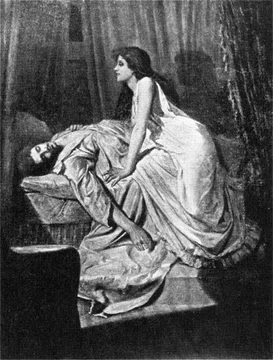
The Kuntilanak is often depicted as a beautiful woman with pale skin, red eyes, and long black hair, dressed in a blood-smeared white dress. She can change into a more monstrous form when capturing prey, typically men or helpless people. She may also take the form of an owl or a large white bird to scout for victims, and the sound of a quacking duck is associated with her. The Pontianak appears only under the full moon and announces her presence with infant cries or feminine laughter; quiet sounds mean she is near, while loud sounds indicate she is far away. A dog howling at night signals a Pontianak is present but not close, while a whining dog means she is near. Her presence is heralded by the fragrance of the Plumeria flower, followed by a stench like a decaying corpse. She kills by using her long fingernails to remove internal organs for consumption, and if seeking revenge against a man, she eviscerates him with her hands. If a victim has their eyes open, she sucks them out. She locates prey by the scent of clean laundry, leading some Malaysians to avoid leaving clothes outside overnight. The Pontianak resides in banana trees during the day. She can be fought off by driving a nail into the hole on the nape of her neck, turning her into a beautiful woman and good wife until the nail is removed. The Indonesian Kuntilanak commonly takes the form of a bird that sucks the blood of virgins and young women, making a ke-ke-ke sound as it flies, and may be sent through black magic to cause illness. When a man approaches her female form, she turns to reveal a hollow back, similar to the Sundel bolong. She can be subdued by plunging a sharp nail into the top of her head.
In popular culture
The Kuntilanak appears in Indonesian and Malaysian horror films and television, typically depicted as a dark-haired woman with supernatural abilities, and occasionally cast as a hero. A recurring weakness is a nail driven into the back of her neck, which transforms her into a normal woman rather than killing her. In Malaysia, pontianak films gained popularity in the 1950s and 1960s, beginning with a four-film series by Cathay-Keris Films directed by B.N. Rao and starring Maria Menado. Malay Film Productions responded with their own series directed by Ramon A. Estella, though many of these early films are now lost. Production largely ceased by the 1970s, and in the 1990s, the Malaysian government censored horror films. Laws eased in the 2000s, sparking a new wave of films, including the feminist Pontianak Harum Sundal Malam. Indonesian films include Kuntilanak (1962), Kuntilanak (1974), and the Kuntilanak series (2006-2008). The figure also appears in Indonesian video games like DreadOut (2014) and Pamali: Indonesian Folklore Horror (2018). Singaporean films include Return of Pontianak (2001) and Dendam Pontianak (2019).
More in Vampires
Spotted an error? Know more?
Reader corrections go straight into our review queue. Suggest an edit · How this site is sourced