James Gamble (industrialist)
Irish-American co-founder of Procter & Gamble.
Last updated

Kepper66 · CC BY-SA 3.0
James Gamble (3 April 1803 – 29 April 1891) was an Irish-American soap industrialist who co-founded the Procter & Gamble Company in 1837 with his brother-in-law, English candlemaker William Procter. Born in Ireland and emigrating to the United States as a teenager, Gamble established himself as a soap maker in Cincinnati, Ohio, before partnering with Procter to create one of the most enduring consumer goods companies in American history.
Lore & Background
James Gamble was born on 3 April 1803 at the Graan near Enniskillen in County Fermanagh, Ireland, and attended Portora Royal School. His father, George Gamble, a Methodist minister, decided with his family to escape the depression in Ireland, emigrating to the United States in 1819. The Gambles arrived in Cincinnati, Ohio, on a flat boat down the Ohio River destined for Illinois, but stopped in Cincinnati when James was seized with an illness.
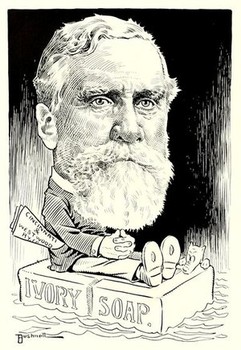
Staying in the city, his father established a nursery, and Gamble apprenticed as a soap maker. Cincinnati was then a major pig-butchering center, producing large amounts of pig fat used for making candles and soap. He attended Kenyon College and manufactured soap on his own in 1828.

Gamble went into business with William Procter after they became related by marriage. Gamble's wife Elizabeth Ann Norris was the sister of Procter's wife Olivia Norris. The pair's father-in-law, Alexander Norris, first suggested that the two go into business together in 1837, and consequently Procter & Gamble was born. Within 20 years, the company had a $1-million turnover and secured a contract to supply soap for the Union Army.
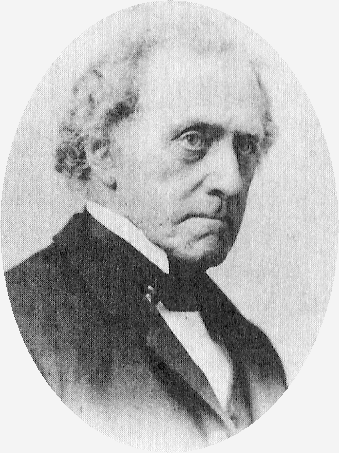
Gamble died at his residence in Cincinnati on 29 April 1891 from natural causes and is interred in Spring Grove Cemetery. Procter, who preceded Gamble in death, is also buried there. Gamble and his wife Elizabeth had ten children, including James Norris Gamble, who became Vice President of Procter & Gamble and devised the formula for Ivory soap, and David Gamble, who built the Gamble House in Pasadena, California. As one of Cincinnati's biggest proponents of Methodism, Gamble was a prominent member of Westwood Methodist Church and donated money to construct Methodist churches throughout Greater Cincinnati.
Reader's Guide
James Gamble's significance lies in his role as co-founder of Procter & Gamble, a company that grew from a small soap and candle partnership into a global consumer goods giant. His partnership with William Procter, suggested by their father-in-law, capitalized on Cincinnati's abundant pig fat supply from the meatpacking industry. The company's early success, reaching a $1-million turnover within 20 years and securing a Union Army contract during the American Civil War, established a foundation for long-term growth.
Gamble's legacy is also carried by his son James Norris Gamble, who invented Ivory soap, and his son David, whose Gamble House became an architectural landmark. His Methodist faith influenced his philanthropy, funding church construction in Greater Cincinnati. The company he co-founded remains a major force in household products, making Gamble a key figure in American industrial history.
More in Tycoons And Industrialists
Test yourself
Three questions drawn from this entry’s sources. Pick an answer to check it.
Answers checked against the source article
Sources
Compiled from Wikipedia and the sources listed below. Text from Wikipedia is available under CC BY-SA 4.0; this entry is adapted from it.
- Wikipedia: James Gamble (industrialist) (CC BY-SA 4.0).
Spotted an error? Know more?
Reader corrections go straight into our review queue. Suggest an edit · How this site is sourced