Philip K. Dick
The man who made you doubt your own memories before you ever walked into Recall.
Philip K. Dick (1928–1982) was the American science-fiction author whose 1966 short story 'We Can Remember It for You Wholesale' served as the direct seed for the Total Recall franchise. While the films expanded his compact narrative into sprawling, action-driven blockbusters, the core philosophical question—can you trust the memories in your own head?—remains unmistakably his. For fans of the franchise, Dick is the invisible architect: the man who first asked whether a person's entire identity could be a product installed by a corporation.
His broader body of work, which constantly interrogates the boundaries between the real and the manufactured, the human and the synthetic, gives Total Recall its deeper resonance. The films lean into spectacle, but the story's emotional engine—that vertiginous doubt of 'Am I who I think I am?'—is pure Dick. Understanding his literary world transforms the franchise from a fun sci-fi action picture into a genuinely unsettling meditation on selfhood.
Quick Facts
- Birth name
- Philip Kindred Dick
- Pen name
- Richard Phillipps; Jack Dowland
- Born
- 16 December 1928
- Birthplace
- Chicago, Illinois, U.S.
- Died
- 2 March 1982
- Place of death
- Santa Ana, California, U.S.
- Children
- 3, including Isa
- Occupation
- Novelist
- short story writer
- essayist
Facts from the source article.
Background
Philip K. Dick wrote during a period when the Cold War, consumer capitalism, and early computing technology made the question 'What is real?' feel less philosophical and more urgent. His fiction repeatedly places ordinary people in situations where their senses, their memories, and their relationships turn out to be constructed or implanted. In 'We Can Remember It for You Wholesale,' a man walks into a memory-implantation clinic expecting a simple vacation fantasy and instead receives a life on Mars as a resistance fighter—complete with a wife, a mission, and enemies who want him dead. The story is deliberately ambiguous: the reader, like the protagonist, cannot be certain which layer is the 'real' one.
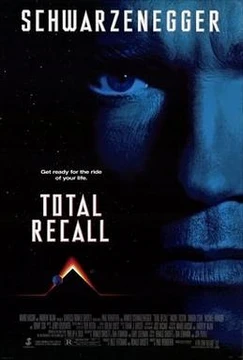
This structural trick—making the audience complicit in the character's confusion—became the backbone of both Total Recall films. Verhoeven's 1990 adaptation amplified the paranoia with a sprawling Mars setting, a corporate antagonist (Recall), and a twist that the protagonist may be a resistance operative who has been 'recalled' back to his 'real' life as a factory worker. The 2012 version reworked the gender dynamics and the corporate villain but preserved the same recursive doubt. In both, the audience is forced to re-evaluate every prior scene once the 'recall' is revealed.
Dick's influence extends beyond the plot mechanics. His prose often carries a quiet, almost tender sadness for characters who discover they are not who they believed themselves to be. That emotional undercurrent—grief for a self that may never have existed—is what separates Total Recall from a generic sci-fi action film and gives it a lingering, uneasy aftertaste that lingers long after the credits roll.
More in People & Notable Figures
Elsewhere in Total Recall
Spotted an error? Know more?
Reader corrections go straight into our review queue. Suggest an edit · How this site is sourced