Dan O'Bannon
The man who wrote the most gloriously confusing identity crisis in cinema history.
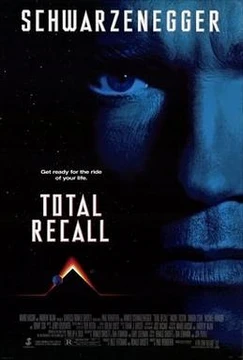
Dan O'Bannon (1946–2009) was the American screenwriter and producer whose 1990 screenplay for Total Recall transformed Philip K. Dick's short story 'We Can Remember It for You Wholesale' into one of the most ambitious and structurally daring science-fiction films of the decade. Working under the direction of Paul Verhoeven, O'Bannon contributed to the film's layered identity-confusion narrative, its vividly realized Mars colony, and the iconic Rekall memory-implant procedure—elements developed collaboratively with Ronald Shusett, Gary Goldman, and Verhoeven.
Though he is best remembered by fans as a key architect of that particular story, O'Bannon's broader body of work—including the original Alien screenplay—established him as a defining voice in practical-effects-driven, idea-first genre filmmaking. His Total Recall script remains a masterclass in misdirection, world-building, and the slow unraveling of a protagonist's sense of self.
Quick Facts
- Birth name
- Daniel Thomas O'Bannon
- Born
- 30 September 1946
- Birthplace
- St. Louis, Missouri, U.S.
- Died
- 17 December 2009
- Place of death
- Los Angeles, California, US
- Occupation
- Screenwriter
- director
- actor
- Spouse
- Diane Lindley (1986)
- Children
- 1
Facts from the source article.
Background
O'Bannon's Total Recall screenplay is a tour de force of narrative misdirection. He took Dick's relatively compact premise—a man who can't remember whether his implanted memories are real or fabricated—and expanded it into a sprawling, two-world epic spanning a dystopian Earth and a sun-scorched Mars colony, the latter already present in the original story. The script's genius lies in its refusal to let the audience settle into a single 'truth': every scene is simultaneously a memory and a possibility, and the film's famous twist recontextualizes not just the protagonist's past but the entire visual and tonal grammar the audience has been absorbing for two hours.
Working under Paul Verhoeven, O'Bannon leaned into the era's appetite for visceral, practical spectacle while never letting the set-pieces outpace the psychological core. The Rekall procedure, the Martian resistance, the villainous Quaid/Hauser duality—derived from Dick's premise of conflicting memories—and the film's deliberately ambiguous ending all reflect a writer who understood that the audience's confusion was the point. Verhoeven's satirical edge and O'Bannon's structural complexity reinforced each other, creating a film that balances over-the-top action with genuine philosophical unease.
O'Bannon's broader career cemented his reputation as a filmmaker who trusted the audience to follow complex, morally ambiguous narratives. From the claustrophobic terror of Alien to the identity labyrinth of Total Recall, his work consistently asked viewers to question what they thought they knew, a sensibility that made his Total Recall script feel both of its moment and endlessly rewatchable.
More in People & Notable Figures
Elsewhere in Total Recall
Spotted an error? Know more?
Reader corrections go straight into our review queue. Suggest an edit · How this site is sourced