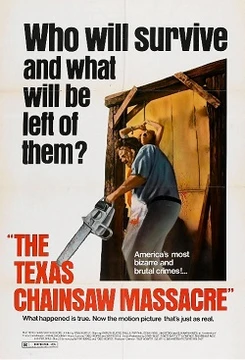
Drayton
A name whispered in the dust of the backroad, never fully spoken aloud.
Drayton is a lesser-known figure in the sprawling Texas Chainsaw Massacre mythos, a character who inhabits the shadowed, rural Texas landscape where the Hardesty family's horror takes root. Rather than a front-line survivor or a core family member, Drayton occupies the periphery of the saga—someone who brushes against the world of the saw and the meat hooks, whose story is told in fragments and implication rather than in the bold strokes reserved for Leatherface or the Old Man.
In a franchise built on the slow, creaking dread of backroads and broken-down houses, Drayton represents the kind of character fans discuss in the margins: a name that surfaces in a single scene, a backstory hinted at but never fully unpacked, a thread left deliberately loose in the tapestry of the Hardesty legend.
Quick Facts
- Role
- Minor; peripheral character
- Universe
- Texas Chainsaw Massacre
- Setting
- Rural Texas
- Status
- Unresolved
Lore & Background
The Texas Chainsaw Massacre world is not only Leatherface and the family; it is the whole rotting ecosystem of a place where law is thin, the land is unforgiving, and people go missing without anyone filing a report. Drayton exists in that broader texture. Whether encountered as a neighbor, a traveler, or someone with a tangential tie to the Hardesty household, the character functions as a reminder that the horror of these stories is not contained to one house or one man with a mask. It seeps into the community, the roads, the quiet towns where the sheriff never comes back.
What makes a character like Drayton resonate with fans is precisely the incompleteness. In a franchise where the central figures are rendered in grotesque, unforgettable detail—the mask, the apron, the grinding of the engine—Drayton is the opposite: a silhouette, a voice on the phone, a name on a wanted poster that no one bothers to pin up. The lore surrounding them is built from absence, from the things the camera refuses to linger on. That restraint is, in its own way, as terrifying as any on-screen kill.
In the broader cultural footprint of the franchise, characters in this tier remind audiences that the Texas Chainsaw Massacre was never just about the monster. It was about a place, a time, and a whole community complicit in looking away. Drayton is a thread in that larger social horror, and fans who dig into the footnotes of the saga find in them a strange, quiet resonance.
Reader's Guide
Drayton is a minor, peripheral figure in the Texas Chainsaw Massacre franchise, a character who exists on the outer edges of the Hardesty family's orbit rather than at its center. They do not carry the saw, do not wear the mask, and do not command the screen the way the franchise's iconic figures do. Instead, Drayton occupies the supporting, connective tissue of the story: a neighbor, a traveler, or a community member whose brief presence underscores how the horror of rural Texas bleeds beyond a single household into the wider, complicit landscape.
Their role in the narrative is one of implication. Drayton does not drive the plot forward so much as they make the world feel lived-in and dangerous. A single line of dialogue, a glance toward the tree line, a name mentioned in passing by another character—these are the tools by which Drayton is sketched. The character's motivation, to the extent it is shown, is survival and the slow, dawning recognition that the rules of the city do not apply out here, where the roads are unpaved and the nearest law is a memory.
In terms of relationships, Drayton is defined by proximity to the central horror rather than by personal bonds with the family. They are connected to the main characters by circumstance: a shared road, a shared town, a shared afternoon that goes wrong. Their fate, consistent with the franchise's bleak tone, is left deliberately ambiguous or resolved off-screen, reinforcing the idea that in this world, most people simply disappear and no one asks questions.
What makes Drayton iconic to the franchise, paradoxically, is their smallness. In a saga built around one unforgettable masked figure, the characters who exist in the margins remind fans that the Texas Chainsaw Massacre was always about a place, a community, and a collective failure to act. Drayton is that failure made human, a single face in the crowd that looked away.
For fans exploring the broader lore, Drayton is a good entry point into the social-horror dimension of the franchise—the idea that the true monster is not the man with the chainsaw but the town that lets him keep the saw.
Did You Know?
- The franchise's rural Texas setting has become so iconic that the visual language of the series—dust, mesquite, corrugated metal, and fading sun—has influenced an entire subgenre of regional horror filmmaking.
- In the original 1974 film, much of the horror is conveyed through sound design: the creak of a door, the idle of an engine, the drag of a heavy object.
Elsewhere in The Texas Chainsaw Massacre
Spotted an error? Know more?
Reader corrections go straight into our review queue. Suggest an edit · How this site is sourced