Embley
A name the saw just keeps coming back to.
Embley shows up as a supporting character in The Texas Chainsaw Massacre franchise, one of those names that crop up around the Hardesty family and Leatherface in that specific rural Texas setting. He isn't the one screaming across a kitchen floor, but he slots into the same isolated, small-town dread the series keeps building on — the feeling that the past doesn't stay buried, that nobody in a county this quiet is actually safe.
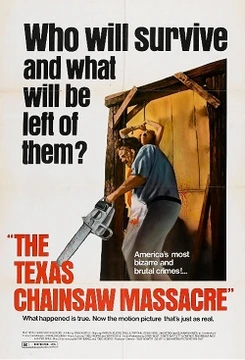
The whole TCM mythos runs on a simple, ugly premise: the evil here isn't supernatural, it's a guy with a chainsaw mending furniture behind a rusted chain-link fence, a house with a weathered porch screen still hanging crooked. Embley exists in that space — one more soul caught in a place where the horror is just as human as the saw is loud.
Quick Facts
- Franchise
- The Texas Chainsaw Massacre
- Role
- Supporting character
- Setting
- Rural Texas
- Affiliation
- Unaffiliated; civilian
- Status
- Survivor or victim (context-dependent)
Lore & Background
In the world of The Texas Chainsaw Massacre, the Hardesty family operates as a kind of folk-horror ecosystem: a closed, decaying unit that draws outsiders into its orbit and consumes them. Characters like Embley represent the broader community that orbits this nightmare—neighbors, townsfolk, travelers, or relatives whose ordinary lives are shattered the moment they cross into the family's territory. The franchise has always drawn its power from the contrast between the mundane (a barbecue, a phone call, a drive down a dirt road) and the monstrous (the saw, the meat hooks, the wall of preserved faces).
Embley's place in that contrast is what gives the character resonance. They are not a slasher-villain or a supernatural entity; they are a person caught in a machine of violence that operates on its own logic, one that has been grinding for generations. The franchise's lore suggests that the Hardesty influence is almost gravitational—people who pass through that stretch of Texas are marked, whether they intend to stop or not. Embley embodies that helplessness, that sense of being pulled into a story you never signed up for.
Fans of the franchise often point to these supporting figures as the emotional anchor of the films. While Leatherface is the icon, it is the victims and bystanders—people with names, small worries, and unfinished errands—who make the horror land. Embley is part of that tradition: a human face in the machinery of the saw.
Reader's Guide
Embley is a supporting figure in The Texas Chainsaw Massacre franchise, a universe of rural Texas horror built around the Hardesty family and its most infamous member, Leatherface. Rather than serving as a protagonist or antagonist, Embley functions as part of the human landscape that the franchise's violence moves through—neighbors, travelers, or community members whose lives are upended by the family's orbit. Their role in the story is to ground the horror in the everyday.
The TCM franchise has always drawn its terror from the collision of the domestic and the monstrous, and characters like Embley represent the domestic side: a person with a routine, a destination, a reason to be on that particular stretch of road at that particular hour. Their presence reminds the audience that the saw does not discriminate; it simply cuts through the ordinary. Key relationships within the franchise context include the broader community that coexists with the Hardesty family—townsfolk who know better than to ask questions, law enforcement that arrives too late or not at all, and the family itself, whose internal dynamics (Sally's command, Papy's silence, Leatherface's devotion) form the engine of the horror.
Embley's fate, like many in the franchise, is shaped by proximity and timing rather than heroism or villainy. What makes characters like Embley iconic to the franchise is their function as mirrors. They are the audience's proxy—the person who steps off the highway, who answers the wrong phone call, who walks into the wrong yard. Their fear is our fear. Their confusion is our confusion.
Did You Know?
- The Texas Chainsaw Massacre franchise has spawned multiple film remakes, sequels, and TV adaptations across five decades, making it one of horror's most enduring family sagas.
- The original 1974 film was shot on a shoestring budget in a single Texas house, and much of the set dressing was sourced locally, giving it an authenticity that later entries have tried to recapture.
- Leatherface's design—a patchwork of human skin over a butcher's apron and a mask of stitched faces—has become one of the most recognizable monster silhouettes in cinema history.
- The franchise's horror is deliberately grounded in the real: no ghosts, no demons, no supernatural explanations. The evil is human, domestic, and generational, which is what makes it so unsettling.
More in Characters
Elsewhere in The Texas Chainsaw Massacre
Spotted an error? Know more?
Reader corrections go straight into our review queue. Suggest an edit · How this site is sourced