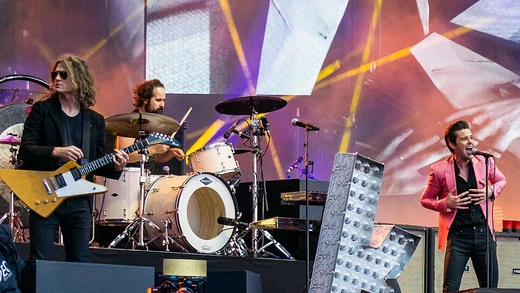
The Strip
Neon, desert, and the endless hum of a city that never quite sleeps.
Last updated

Mariordo (Mario Roberto Durán Ortiz) · via Wikipedia: Las Vegas Strip · CC BY-SA 4.0
Where it is
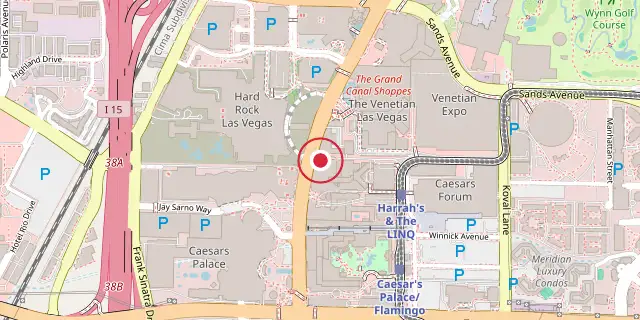
Coordinates: 36°07′12″N 115°10′19″W (36.1200, -115.1720) · Open in OpenStreetMap
Coordinates and connected clubs: the infobox of Wikipedia: Las Vegas Strip (CC BY-SA 4.0). Map: drawn by Codexery from OpenStreetMap tiles.
The Strip is the glittering, neon-drenched boulevard that runs through the heart of Las Vegas, Nevada, and it serves as the geographic and emotional home of the band The Killers. Formed in the mid-1990s in that very city, the group drew on the Strip's vast, electric, and often lonely landscape as a wellspring for their sound, imagery, and storytelling. In fan parlance, 'The Strip' is less a single street than a whole atmosphere: a world of towering hotel facades, after-hours casino floors, desert heat pressing against glass, and a perpetual sense of spectacle masking something quieter underneath. It is the backdrop against which the band's themes of excess, longing, faith, and reinvention play out.
Background
The Strip in the Killers' world is not merely a road lined with hotels; it is a state of mind. The band grew up in the shadow of those enormous, glowing facades, and that proximity shaped their aesthetic in ways both obvious and subtle. The scale of the Strip—buildings that look like they were designed for a different, grander century, pools that stretch to the horizon, lobbies that swallow sound—gives the setting a quality of artificial grandeur that fans often describe as beautiful and slightly alien at the same time. It is a place where everything is bigger than life, which makes the small, human moments inside it feel more fragile.
Within the band's body of work and the fan-imagined world it inspires, The Strip is a place of contrasts. There is the roar of the casino floor and the silence of a desert highway at 3 a.m.
There is the spectacle of a headline act and the quiet of a musician walking home after the last set. The Strip does not judge; it simply glows, indifferent and eternal, while the people moving through it carry their own stories of ambition, faith, heartbreak, and second chances. Fans often treat the city as a character in its own right—a vast, warm, slightly cruel presence that shapes everyone who lives under its light.
What makes The Strip narratively significant in the Killers' world is its duality. It is simultaneously a place of ultimate performance and ultimate anonymity. You can be the center of a stadium-sized crowd one night and completely invisible the next. That tension—between being seen and being lost, between the show and the person behind it—is the emotional engine that drives much of what fans love about the band's connection to this place.
Did You Know?
- Las Vegas's geography, with its proximity to open desert, means the Strip is essentially a corridor of light in a vast dark landscape, a visual metaphor the band's imagery frequently echoes.
- The city's culture of performance—where everyone is, in some sense, on stage—resonates with the band's own identity as performers who have spoken openly about the tension between the public show and the private self.
Also in the Codexery
More in Places & Venues
Elsewhere in The Killers
Sources
Compiled from Wikipedia and the sources listed below. Text from Wikipedia is available under CC BY-SA 4.0; this entry is adapted from it.
- Wikipedia: Las Vegas Strip (CC BY-SA 4.0).
Spotted an error? Know more?
Reader corrections go straight into our review queue. Suggest an edit · How this site is sourced