Jean-Pierre Jeunet
The painter's eye that turned a sci-fi blockbuster into a hand-painted fever dream.
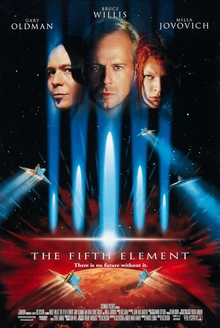
Jean-Pierre Jeunet is the French filmmaker whose unmistakable visual sensibility shaped the look and feel of The Fifth Element (1997). Co-directing alongside writer-producer Luc Besson, Jeunet brought his trademark love of saturated color, baroque detail, and handcrafted whimsy to a science-fiction epic that could have easily felt cold and metallic. His influence is visible in every frame: the candy-colored apartments of the New York megacity, the ornate interiors of the spaceship Le Beguine, and the almost toy-like physicality of the effects work.
For fans, Jeunet's contribution is the reason the film feels like a living storybook rather than a generic blockbuster. His background in low-budget, set-driven cinema (Delicatessen, The City of Lost Children) meant he insisted on tangible, paintable, touchable environments wherever possible, giving the 1997 film a tactile warmth that pure digital sets of the era rarely achieved.
Quick Facts
- Role
- Co-director
- Nationality
- French
- Collaborator
- Luc Besson (screenplay, production)
- Visual signature
- Saturated palettes
- baroque detail
- practical set work
- Notable prior films
- Delicatessen (1991), The City of Lost Children (1995)
- Notable subsequent film
- Amélie (2001)
Lore & Background
In the world of The Fifth Element, Jeunet's aesthetic philosophy manifests as a universe that refuses to be sterile. The New York of 2259 is not a chrome-and-glass dystopia; it is a layered, paint-splattered, almost medieval city where a golden Buddha drifts through traffic and a four-armed woman in a red dress stumbles through a subway station. This is a world that smells of turpentine and tastes of strawberry syrup, and it is Jeunet's fingerprint on every surface.
His approach to production design leaned heavily toward the physical: painted backdrops, hand-built props, miniature models, and actors performing against tangible sets. The result is a film where the light bounces off real paint, where a door has real hinges, where the 'Buddha' that glides over the city is a sculpted model captured against a blue screen rather than a wireframe. This commitment to materiality gives the film a weight and texture that purely digital environments of the late nineties often lacked.
Jeunet's influence also shaped the tonal balance of the film. Besson's script is broad, operatic, and genre-literate; Jeunet's direction tempers that with a sense of playfulness and visual poetry. The famous 'Buddha' scene, the crowded apartment where Leeloo first appears, the ornate and cluttered spaceship interiors—all carry a sense of wonder and slight absurdity that keeps the story from tipping into pure spectacle. It is, in essence, a children's-book logic applied to a space opera.
Reader's Guide
Eric Serra's score, with its sweeping synth orchestrations and the now-iconic 'Vivre' sequence, gave the film a musical through-line that Jeunet's visual rhythm matched beat for beat. The production leaned on practical effects—hand-built miniatures, painted backdrops, physical models like the golden Buddha—before layering early CGI for composites and the four-armed Leeloo transformation. This hybrid approach gave the film a tactile, almost analog quality that set it apart from the increasingly digital look of late-90s sci-fi.
Principal photography took place largely in Paris and surrounding studios, with additional work in other European locations. The sets were built to Jeunet's exacting, storybook standard: every surface painted, every prop sculpted, every color chosen to feel like a palette from a children's illustration. This was a deliberate counter to the grey-and-steel aesthetic dominating the genre.
Upon release, The Fifth Element underperformed at the global box office relative to its budget, and critical reception was mixed. However, it quickly cultivated a devoted fan base and has since been cited as a visual touchstone for filmmakers who value color, whimsy, and handcrafted production design in science fiction. Jeunet's work here remains a benchmark for what a 'painted' sci-fi universe can look and feel like.
Did You Know?
- The film's color palette—strawberry reds, cerulean blues, mustard yellows—was chosen to evoke the look of mid-century children's picture books rather than the chrome-and-glass aesthetic typical of 1990s sci-fi.
- Luc Besson wrote the screenplay and produced the film, while Jeunet's co-director credit reflected his hands-on control over the visual and tonal direction of every scene.
More in Production & Legacy
Elsewhere in The Fifth Element
Spotted an error? Know more?
Reader corrections go straight into our review queue. Suggest an edit · How this site is sourced