Ghedi Castle
A medieval fortress central to Brescian and Venetian military conflicts.
Last updated
Where it is
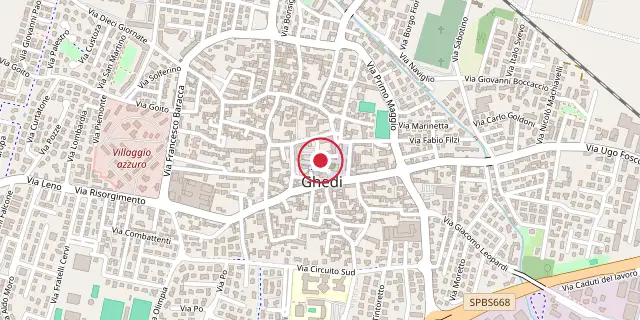
Coordinates: 45°24′07″N 10°16′37″E (45.4020, 10.2770) · Open in OpenStreetMap
Coordinates and connected clubs: the infobox of Wikipedia: Ghedi Castle (CC BY-SA 4.0). Map: drawn by Codexery from OpenStreetMap tiles.
Ghedi Castle was a fortified structure in the town of Ghedi, in the Brescian territory, built in the high medieval age with an unknown exact construction date. It was remodeled several times due to sieges and new war armaments, and it played a central role in the military and political conflicts of the region, particularly between Guelphs and Ghibellines, and later between the Duchy of Milan and the Republic of Venice.
Lore & Background
In 1438, Visconti troops under Niccolò Piccinino conquered Ghedi, but it returned to Venetian hands in 1440 under Francesco Sforza. The castle suffered extensive damage, leading to financial grants for repairs. In 1453, during the Battle of Ghedi, Francesco Sforza, now Duke of Milan, besieged the castle, attacking a weak point called a bastia. Bombards fired 295 shells at the walls, causing significant damage.
Reader's Guide
Ghedi Castle's significance lies in its role as a key military outpost in the Brescian territory, reflecting the broader power struggles of medieval and Renaissance Italy. Its history illustrates the dynamics between rural municipalities and dominant cities like Brescia, as well as the larger conflicts between Guelphs and Ghibellines, and later between the Duchy of Milan and the Republic of Venice. The castle's repeated sieges and reconstructions demonstrate its strategic importance, particularly for Venice, which invested in its fortifications to protect its western front.
The castle also influenced the town's development, leading to the formation of four villages outside its walls. The Battle of Ghedi in 1453, with 295 bombard strikes, exemplifies the destructive potential of early gunpowder artillery. The castle's legacy is preserved in local records, such as the diaries of Pandolfo Nassino and the works of Abbot Zamboni, which document its turbulent history.
More in Territories of the Republic of Venice
Sources
Compiled from Wikipedia and the sources listed below. Text from Wikipedia is available under CC BY-SA 4.0; this entry is adapted from it.
- Wikipedia: Ghedi Castle (CC BY-SA 4.0).
Spotted an error? Know more?
Reader corrections go straight into our review queue. Suggest an edit · How this site is sourced