Kotor
Last updated
Where it is
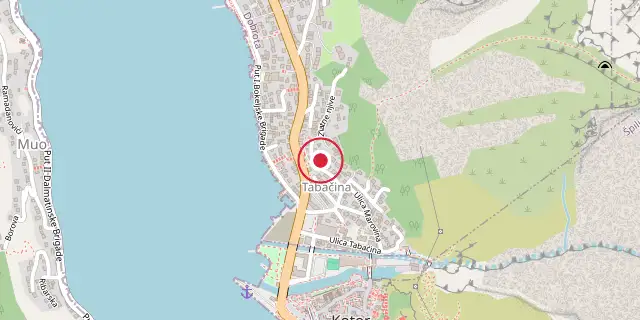
Coordinates: 42°25′48″N 18°46′12″E (42.4300, 18.7700) · Open in OpenStreetMap
Coordinates and connected clubs: the infobox of Wikipedia: Kotor (CC BY-SA 4.0). Map: drawn by Codexery from OpenStreetMap tiles.
Tourist numbers, including those arriving via cruise ships, have grown in Kotor since the early 2000s.[1]
Key facts and history
In 1368 the city was attacked by the Balšići under Đurađ I.[2] During World War I, Cattaro was one of three main bases of the Austro-Hungarian Navy.[3] Between 1941 and 1943 the Kingdom of Italy annexed the area of Kotor as one of three provinces of the Italian Governorate of Dalmatia.[4] Kotor has one of the best preserved medieval old towns in the Adriatic and is a double UNESCO World Heritage Site.[5]
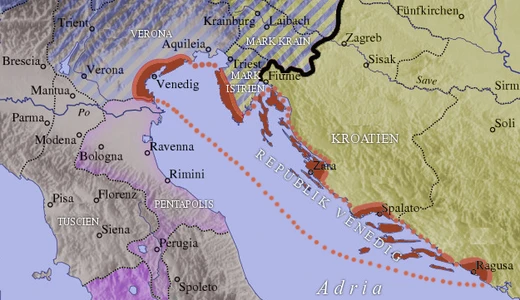
Ancient Roman settlement of the province of Dalmatia, the location was first recorded in 168 BC under names such as Acruvium, Ascrivium, or Ascruvium.[6] After driving out the Ostrogoths, Emperor Justinian constructed a fortress above Ascrivium in 535.[7] Saracen forces looted Ascrivium in 840.[7] Kotor's architecture displays Venetian characteristics as a result of four centuries under Venetian rule.[5]
On 1 February 1918, sailors of the Austro-Hungarian Navy began the Cattaro mutiny in Kotor.[3]
What the cited sources add
The Kotor Festival of Theatre for Children takes place during the summer tourist season on over 30 locations of Kotor.[8] A 2015 travel account states that Kotor's cats have become a prominent symbol of the city.[9] The same account notes that for centuries Kotor was a busy trading port, which explains the origin of its large cat population.[9] Through spay and neuter surgeries, the Kotor Kitties charity works to assist homeless street cats.[9]
References
- Wikipedia, "Kotor" (CC BY-SA 4.0), which cites: World Travel and Tourism Council (original not read by us) en.wikipedia.org
- Wikipedia, "Kotor" (CC BY-SA 4.0), which cites: Fine 1994, p. 376 (original not read by us) en.wikipedia.org
- Wikipedia, "Kotor" (CC BY-SA 4.0), which cites: Paul, G. Halpern: The Cattaro Mutiny, 1918. In: Christopher, M. Bell/Bruce A. Elleman (Ed.): Naval mutinies of the twentieth century. An international perspecti (original not read by us) en.wikipedia.org
- Wikipedia, "Kotor" (CC BY-SA 4.0), which cites: "Bollettino ufficiale legislazione e disposizioni ufficiali", 1942, p. 441 (original not read by us) en.wikipedia.org
- Wikipedia, "Kotor" (CC BY-SA 4.0), which cites: "Natural and Culturo-Historical Region of Kotor", Unesco World Heritage Convention (original not read by us) en.wikipedia.org
- Wikipedia, "Kotor" (CC BY-SA 4.0), which cites: Jackson, "The Shores of the Adriatic", Echo Library, 2011, p. 269 (original not read by us) en.wikipedia.org
- Wikipedia, "Kotor" (CC BY-SA 4.0), which cites: Procopius, "Buildings", p. Book7 (original not read by us) en.wikipedia.org
- "EFFE Label for Kotor Festival of Theatre for Children". festivalfinder.eu
- "Cats in Kotor Old Town, Montenegro", 18 June 2015. kathmanduandbeyond.com
Each numbered sentence above was checked against the source it cites before publication. Sentences citing Wikipedia adapt text from the English Wikipedia article Kotor (contributors), used under CC BY-SA 4.0; this entry is available under the same licence. Other sources were used for facts only.
More in Territories of the Republic of Venice
Sources
Compiled from Wikipedia and the sources listed below. Text from Wikipedia is available under CC BY-SA 4.0; this entry is adapted from it.
- Wikipedia: Kotor (CC BY-SA 4.0).
Spotted an error? Know more?
Reader corrections go straight into our review queue. Suggest an edit · How this site is sourced