Sugar bowl
A small bowl for sugar, essential to Western tea sets.
Last updated
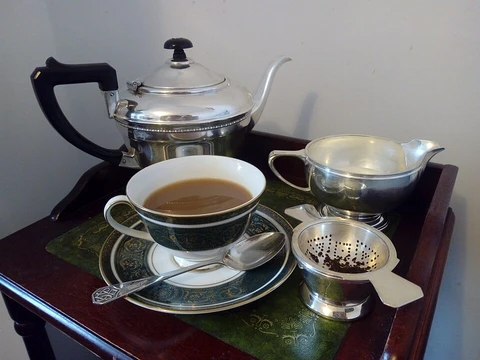
A sugar bowl is a small bowl designed for holding sugar or sugar cubes, to be served with tea or coffee in the Western tradition. It is an integral part of a tea set.
Quick Facts
- Earliest known use
- 1700s
- Common materials
- Silver
- porcelain
- glass
- Notable period of popularity
- Reign of George III
Facts from the source article.
History
By the 1700s, the sugar bowl had become a standard piece in English tea sets. Tea first arrived in England during the 1600s, but it was costly and seen as a luxury item. That changed in 1784 when import duties on tea were removed, making it more affordable. As tea’s popularity grew throughout the 1700s, sugar consumption quadrupled.
This sugar came from British-run Caribbean plantations worked by enslaved or indentured people. In response, sugar boycotts took place from 1792 to 1793 and again from 1825 to 1829, aiming to pressure Parliament to end the slave trade. For many, sugar bowls from this era serve as reminders of slavery. During the boycotts, some sugar bowls were even made as tools of protest.
Early tea sets had just a few small silver containers, often in pairs or groups of three, kept locked in a case because tea and sugar were so valuable. The largest of these held the sugar. Originally box-shaped, sugar holders later became bowls with tight-fitting lids, similar to modern designs. Some were made of glass or had glass inserts.
In the second half of the 1700s, silver gave way to porcelain in tea sets to match the cups, and porcelain sugar bowls grew fashionable. In 1734 alone, the East India Company imported over a million Chinese porcelain bowls. The concept of a matching set—teapot, creamer, and sugar bowl—became common during the reign of George III, though a few rare examples date from earlier.
Notable sugar bowls
A pair of silver sugar bowls were given by King Gustav IV Adolf of Sweden to his godfather, Johan Sederholm, in 1796. A Venetian sugar bowl from the Napoleonic era is held by the Fondazione Palazzo Coronini Cronberg Foundation in Gorizia. In Lemony Snicket's book series A Series of Unfortunate Events and its Netflix adaptation's second and third seasons, the plot revolves around retrieving a mysterious Sugar Bowl, called a "vessel for disaccharides." The books never reveal what the bowl contains or why it matters, but the final episodes of the third season do disclose both. In Shirley Jackson's We Have Always Lived in the Castle, a sugar bowl is a key object used to poison and kill members of the Blackwood family.
More in Teaware
Sources
Compiled from Wikipedia and the sources listed below. Text from Wikipedia is available under CC BY-SA 4.0; this entry is adapted from it.
- Wikipedia: Sugar bowl (CC BY-SA 4.0).
Spotted an error? Know more?
Reader corrections go straight into our review queue. Suggest an edit · How this site is sourced