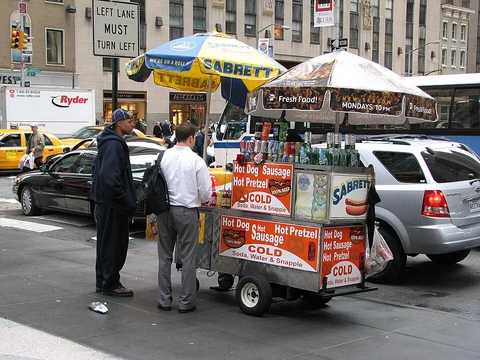
Street food
Street food is sold by vendors in public places for immediate consumption.

Street food is prepared and sold by vendors in public spaces like streets, markets, fairs, or parks, typically from portable setups such as booths, carts, or trucks, and is designed to be eaten right away. While some street foods are tied to specific regions, many have traveled far from their origins. Most qualify as both finger food and fast food, and they are usually less expensive than meals at restaurants. The offerings differ widely across regions and cultures worldwide. A 2007 study by the Food and Agriculture Organization found that 2.5 billion people eat street food daily. Although in some cultures eating while walking is frowned upon, street food provides quick, affordable nutrition and job opportunities for many, especially in developing countries, where it is a key part of daily life for middle- to high-income consumers. Governments and organizations are paying more attention to both the economic importance of street food and the challenges it brings, such as food safety, sanitation, unauthorized use of public or private spaces, social issues, and traffic problems.
**History**
In ancient Greece, small fried fish were sold on the street, though the philosopher Theophrastus looked down on the practice. Excavations in Pompeii uncovered evidence of many street food vendors. In ancient Rome, poor city residents, who lived in tenements without ovens or hearths, commonly ate street food, including chickpea soup with bread and grain paste. A Florentine traveler in the late 14th century noted that in Cairo, people spread rawhide picnic cloths on the streets to sit and eat lamb kebabs, rice, and fritters bought from vendors. During the Renaissance in Turkey, vendors at many crossroads sold spit-roasted chicken and lamb. In 1502, Ottoman Turkey became the first country to regulate and standardize street food sales. In 19th-century Transylvania, vendors offered gingerbread nuts, cream mixed with corn, and bacon or other meat fried on ceramic vessels filled with hot coals. French fries, fried strips of potato, likely began as street food in Paris in the 1840s. In Victorian London, street foods included tripe, pea soup, buttered pea pods, whelks, prawns, and jellied eels.
In the Americas, Aztec market vendors sold drinks like atolli (a maize-dough gruel), nearly 50 types of tamales (filled with turkey, rabbit, gopher, frog, fish, fruits, eggs, or maize flowers), as well as insects and stews. Spanish colonization introduced wheat, sugarcane, and livestock to Peru, but most commoners stuck to their traditional diets, only occasionally accepting imports like grilled beef hearts from street vendors. Some 19th-century Lima street vendors, such as Erasmo, the "negro" Sango vendor, and Na Agardite, are still remembered. During the American colonial period, street vendors sold oysters, roasted corn, fruit, and sweets to all social classes at low prices. Oysters were especially cheap and popular until overfishing and pollution drove up prices around 1910. New York City street vendors faced heavy opposition; after earlier restrictions on hours, they were completely banned by 1707. In the 18th and 19th centuries, many women of African descent earned a living selling street foods in America—fruit, cakes, and nuts in Savannah, and coffee, biscuits, pralines, and other sweets in New Orleans. Cracker Jack began as one of many street food exhibits at the Columbian Exposition.
In Asia, street food vending in China dates back thousands of years and became a key part of Chinese food culture during the Tang Dynasty. It originally served the poor, though wealthy residents often sent servants to buy street food for home meals. Street food remains central to Chinese cuisine, with regional varieties drawing culinary tourists from home and abroad. The Chinese diaspora spread Chinese street food across Asia and introduced the concept of street food culture to many countries. In much of Southeast Asia, street food culture was established by Chinese coolie workers who arrived in the late 19th century. Ramen, whose predecessor was brought to Japan by Chinese immigrants in the late 19th or early 20th century, started as street food for Chinese laborers and students in Yokohama Chinatown. It later became a national dish of Japan, developing regional variations as it spread. In Thailand, street food was originally sold by the ethnic Chinese population and only gained popularity among native Thais in the early 1960s, when rapid urban growth fueled the street food culture; by the 1970s, it had replaced home cooking for many. Consequently, many Thai street foods are derived from or heavily influenced by Chinese cuisine. About 76% of urban residents in Thailand regularly visit street food vendors, and the country’s tourism boom has further boosted its popularity. Thailand’s 103,000 street food vendors generated 270 billion baht in 2017, and Minister Suvit Maesincee predicted the sector would grow by six to seven percent.
- daily consumers
- 2.5 billion (2007 FAO study)
- earliest known evidence
- Ancient Greece (small fried fish) and Pompeii excavations
- first country to legislate sale
- Ottoman Turkey (1502)
- major region of origin
- China (Tang Dynasty)
- known for
- Affordable, immediate-consumption food sold by vendors in public spaces
Lore & Background
In ancient Greece, small fried fish was a street food, though the philosopher Theophrastus held the custom in low regard. Evidence of a large number of street food vendors was discovered during the excavation of Pompeii. Street food was widely consumed by poor urban residents of ancient Rome whose tenement houses did not have ovens or hearths. Chickpea soup with bread and grain paste were common meals. A travelling Florentine reported in the late 14th century that in Cairo, people brought picnic cloths made of rawhide to spread on the streets and sit on while they ate meals of lamb kebabs, rice, and fritters purchased from street vendors. In Renaissance Turkey, many crossroads had vendors selling 'fragrant bites of hot meat,' including chicken and lamb that had been spit-roasted. In 1502, Ottoman Turkey became the first country to legislate and standardize the sale of street food. In the Americas, Aztec market places had vendors selling beverages such as atolli, almost 50 types of tamales, as well as insects and stews. During the American Colonial period, street vendors sold oysters, roasted corn ears, fruit, and sweets at low prices to all classes. Oysters were cheap and popular until around 1910 when overfishing and pollution caused prices to rise. Street vendors in New York City faced considerable opposition, and while restrictions and regulations were imposed, a complete ban by 1707 is not supported by established historical canon. Many women of African descent made their living selling street foods in America in the 18th and 19th centuries, with products ranging from fruit, cakes, and nuts in Savannah to coffee, biscuits, pralines and other sweets in New Orleans. In Asia, the selling of street food in China stretches back millennia and became an integral part of Chinese food culture during the Tang Dynasty. In ancient China, street food primarily catered to the poor, but as urban centers grew, it became a culinary staple for all classes.
Reader's Guide
Street food has been a persistent feature of urban life across civilizations, from ancient Rome to modern Bangkok. Its significance lies in its accessibility and affordability, providing daily nutrition and job opportunities for millions, especially in developing countries. The 2007 FAO study indicating 2.5 billion daily consumers underscores its global scale. Street food also reflects cultural exchange: Chinese diaspora spread street food culture across Southeast Asia, while colonial encounters created fusion foods. Governments increasingly recognize both its socioeconomic importance and associated risks, such as food safety, sanitation, and traffic congestion. The first known legislation standardizing street food sale occurred in Ottoman Turkey in 1502, and Singapore's hawker centres were incorporated into UNESCO's Intangible Cultural Heritage list in 2020. Street food continues to evolve, with regional variations driving culinary tourism. Its legacy is one of resilience and adaptation, serving as a vital economic sector and a repository of culinary traditions.
Did You Know?
- According to a 2007 study from the Food and Agriculture Organization, 2.5 billion people eat street food every day.
- Ottoman Turkey became the first country to legislate and standardize the sale of street food in 1502.
- Street food vendors in New York City were completely banned by 1707.
- Singapore's hawker centres were incorporated into UNESCO's List of Intangible Cultural Heritage on 16 December 2020.
Frequently Asked Questions
What is Street Food?
Street Food refers to ready-to-eat meals or snacks prepared and sold by mobile vendors in public areas like markets, parks, or fairs. It is typically served from carts, booths, or trucks and designed to be eaten right away.
Where did Street Food first appear?
The earliest archaeological traces point to Ancient Greece, where small fried fish were sold, and to excavations at Pompeii. China's Tang Dynasty is also widely recognized as a major cradle of organized street vending culture.
How many people eat Street Food every day?
A 2007 Food and Agriculture Organization study estimated that roughly 2.5 billion people worldwide consume street-sold food on a daily basis.
What distinguishes Street Food from restaurant meals?
Street Food is generally priced lower than sit-down restaurant fare and is categorized as both finger food and fast food. It is meant for immediate consumption rather than being served at a table.
Which country first created laws governing Street Food sales?
Ottoman Turkey holds that distinction, having passed the first known legislation specifically regulating the sale of street food back in 1502.
More in Street Food 1-20
Spotted an error? Know more?
This is a living reference — every entry is fact-audited, and reader corrections feed straight into our audit queue. Suggest an edit · See this site's audit record