Sundae (sausage)
A blood sausage popular as Korean street food.
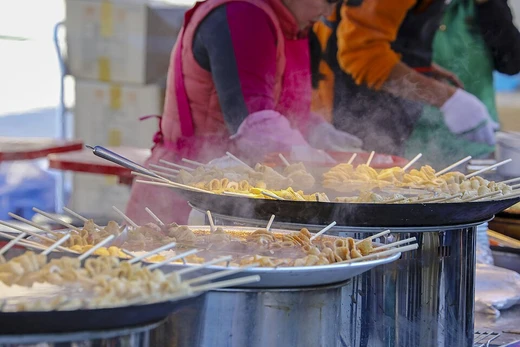
Sundae, also known as soondae, is a Korean blood sausage commonly sold as street food in both North and South Korea. It is typically made by steaming cow or pig intestines that have been stuffed with various ingredients.
Quick Facts
- Country
- Korea
- National cuisine
- Korean cuisine
- Course
- Street food
Facts from the source article.
Did You Know?
- The skin of sundae is made by rubbing pig intestines with salt and flour to remove the smell.
- Sundae is stuffed with pork skin, tofu, bean sprouts, glutinous rice, and various spices before steaming.
- Eogyo-sundae is made with the swim bladder of brown croakers.
History
The sundae sausage dates back to the Goryeo period, when wild boars were used in the dish. Recipes appear in nineteenth-century cookbooks such as Gyuhap chongseo and Siuijeonseo, the latter attesting the early Korean form 슌ᄃᆡ as an abbreviation of a Manchu loan meaning 'blood intestines'. Traditional sundae was an indulgent food for special occasions. After the Korean War, dangmyeon replaced meat fillings during post-war poverty, and sundae became an inexpensive street snack.
Varieties
Traditional South Korean, North Korean, Russian Korean, and Chinese Korean sundae fillings include seonji, minced meat, rice, and vegetables. Modern South Korean bunsik varieties often use dangmyeon instead. Regional varieties include abai-sundae from Hamgyong and Pyongan Provinces, Kaesong-sundae from Kaesong, Baegam-sundae from Yongin, Jeju-sundae from Jeju Island, Byeongcheon-sundae from Chungcheong Province, and amppong-sundae from Jeolla Province. Some varieties use seafood casings, such as ojingeo-sundae with fresh squid in Gangwon, and myeongtae-sundae with Alaska pollock in Gangwon and Hamgyong.
Accompaniments
In South Korea, sundae is typically steamed and comes with steamed liver and lung. How it's eaten varies by region: Seoul uses a salt and pepper dip, Honam prefers vinegar with gochujang, Yeongnam opts for seasoned soybean paste, and Jeju goes with soy sauce. It's commonly found at guk-bap restaurants and snack bars, where it's also dunked in tteok-bokki sauce. Many snack bars offer a combo called tteok-twi-sun, featuring tteok-bokki, fritters, and sundae.
More in Street Food in South Korea
Spotted an error? Know more?
Reader corrections go straight into our review queue. Suggest an edit · How this site is sourced