
Stock
Shares represent fractional ownership in a corporation.
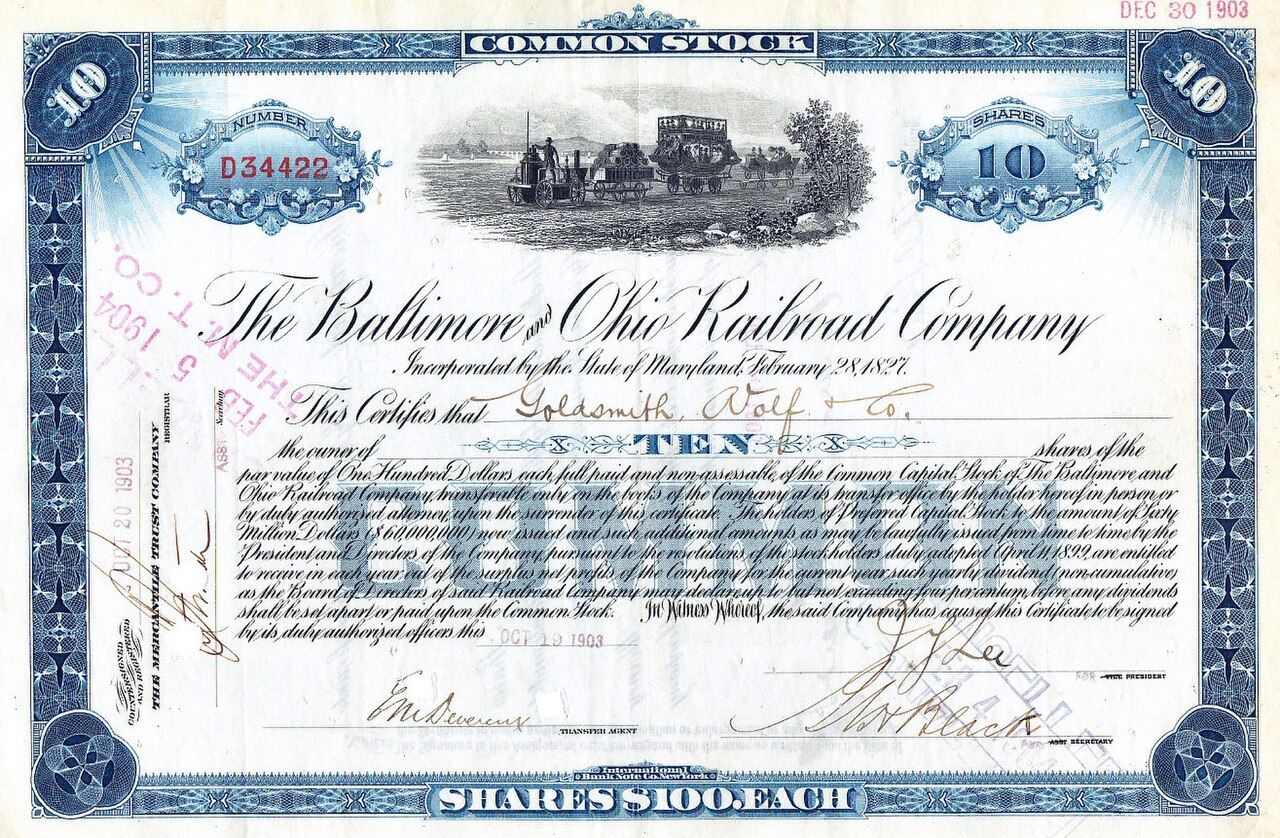
Stocks, also called capital stock or shares, represent the division of ownership in a corporation or company. A single share entitles the holder to a fractional ownership proportional to the total number of shares, typically granting rights to earnings, liquidation proceeds, and voting power, though not all shares are equal. Stocks can be bought and sold privately or on stock exchanges, with private transactions closely overseen by governments and regulatory bodies to prevent fraud and protect investors.
Quick Facts
- Field
- Finance, Corporate Ownership
- Types
- Common stock
- preferred stock
- convertible preferred stock
- Rule 144 stock
- Derivatives
- Stock futures, stock options (calls and puts)
- Earliest example
- Roman Republic publicani issued shares called partes and particulae
Facts from the source article.
Lore & Background
The concept of stock dates back to the Roman Republic, where government contractors called publicani issued shares known as partes and particulae. Polybius noted that 'almost every citizen' participated in these government leases, and Cicero referenced shares that 'had a very high price at that time,' indicating price fluctuation and stock market behavior. Around 1250 in France, shares of the Société des Moulins du Bazacle were traded based on the profitability of its mills. In 1288, the Bishop of Västerås acquired a 12.5% interest in Great Copper Mountain, documented as a stock transfer in exchange for an estate.
Reader's Guide
Stocks are fundamental to modern capitalism, enabling companies to raise capital by issuing shares and allowing investors to own a portion of a business. The distinction between common and preferred stock affects voting rights and dividend priority, while convertible preferred shares offer flexibility. Rule 144 stock in the United States governs the resale of restricted and control securities, requiring specific conditions for liquidation. Stock derivatives, such as futures and options, allow trading based on underlying equity prices, with the Black–Scholes model commonly used to value options. The historical evolution from Roman publicani to the Dutch East India Company's tradeable shares on the Amsterdam Stock Exchange illustrates the long-standing role of stock in economic growth and investment.
Gallery





More in Stock Markets & Finance
Spotted an error? Know more?
Reader corrections go straight into our review queue. Suggest an edit · How this site is sourced