
Stock market index
Index measuring stock market performance for investor comparison.
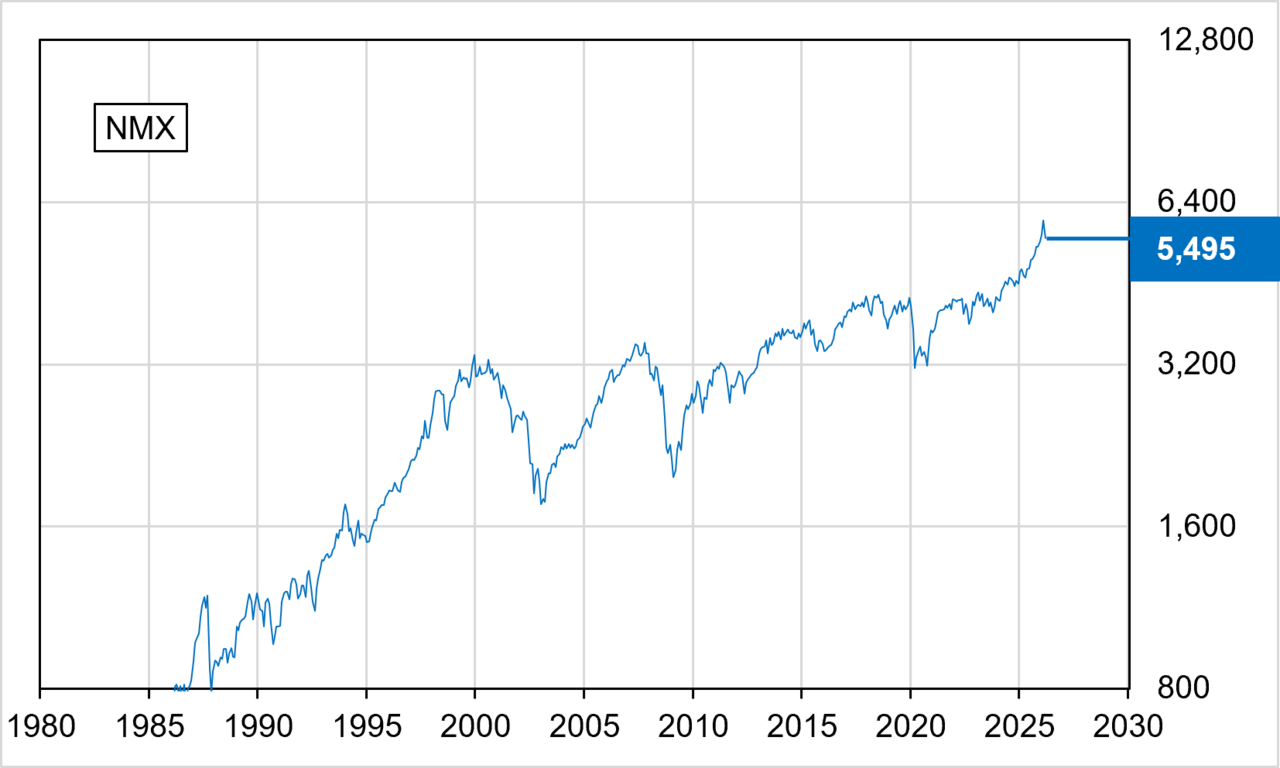
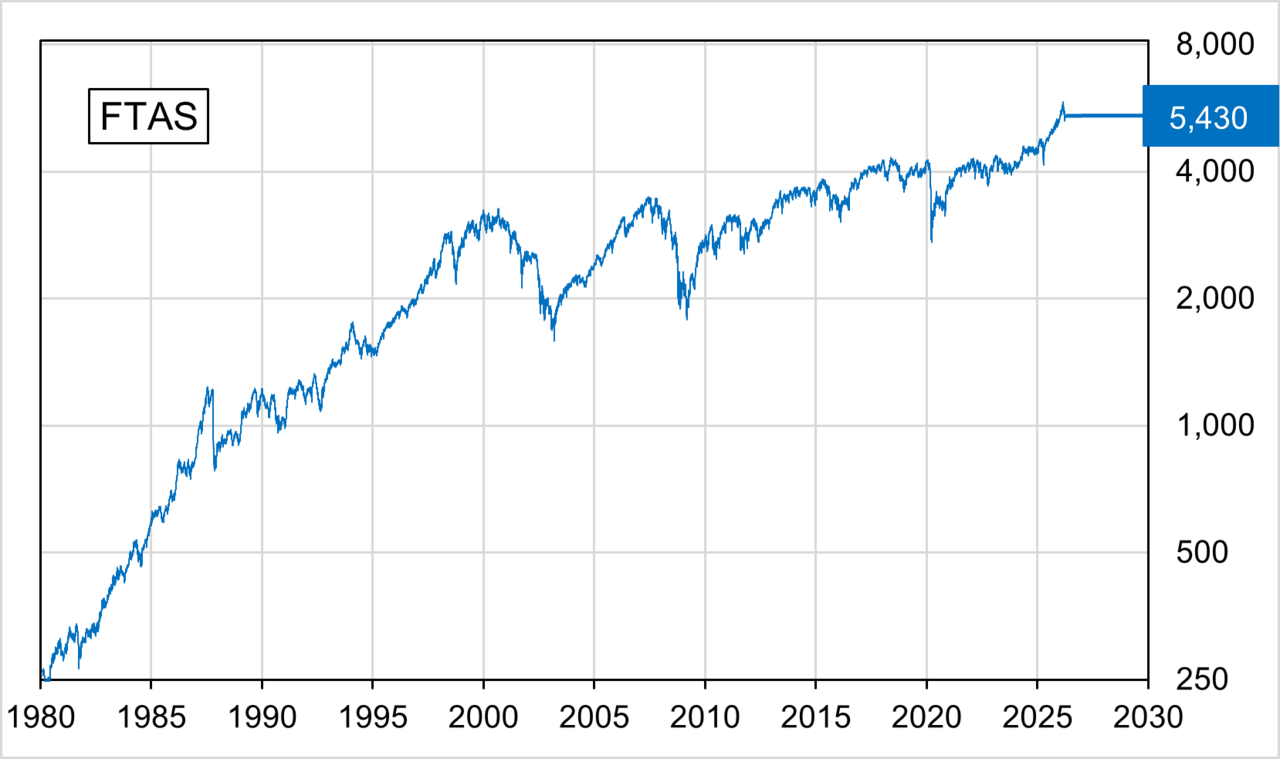
A stock market index, often called a stock index, tracks how a stock market—or a specific part of one—is performing. It gives investors a way to compare today’s stock prices with those from the past to gauge market trends. For an index to be useful, it must be investable (meaning people can actually put money into it) and transparent (the rules for how it’s built are clearly laid out). Investors can gain exposure to an index by buying an index fund, which might be a mutual fund or an exchange-traded fund that follows the index’s movements. Any difference between the fund’s performance and the index itself is known as tracking error. Indices can be grouped by the types of stocks they include, called their coverage. This coverage is separate from how the stocks are weighted. For instance, the S&P 500 market-cap weighted index covers the 500 largest stocks from the S&P Total Market Index, but there’s also an equally weighted S&P 500 index with the same stock list. World or global coverage aims to reflect the entire global stock market. The MSCI World includes nearly 1,400 stocks from 23 developed countries, covering about 85% of their free float-adjusted market value. The FTSE Global Equity Index Series goes further, with over 16,000 companies, while the S&P Global 100 is more focused, with just 100. Regional coverage tracks stocks from a single geographic area, like the FTSE Developed Europe Index or the FTSE Developed Asia Pacific Index. Country coverage follows the stock market of one nation, often signaling investor sentiment about that country’s economy. Well-known examples include the DAX (Germany), NIFTY 50 (India), Nikkei 225 (Japan), KSE 100 (Pakistan), FTSE 100 (UK), and S&P 500 (US). Exchange-based coverage groups stocks by the exchange they trade on, such as the NASDAQ-100, or by a set of exchanges, like the Euronext 100 or OMX Nordic 40. Sector-based coverage focuses on specific market segments, like the Wilshire US REIT Index (over 80 real estate investment trusts) or the NASDAQ Biotechnology Index (about 200 biotech firms). Indices also differ by how they weight stocks, independent of their coverage. For example, the S&P 500 and S&P 500 Equal Weight both cover the same stocks, but the first uses market capitalization weighting, while the second gives each stock equal importance.
Quick Facts
- Field
- Finance
- Key criteria
- Investable and transparent
- Common investment vehicle
- Index fund (mutual fund or exchange-traded fund)
- Tracking error
- Difference between index fund performance and the index
Facts from the source article.
Lore & Background
Indices are also categorized by weighting method, independent of coverage. Common methods include market-capitalization weighting, free-float adjusted market-capitalization weighting, price weighting (e.g., Dow Jones Industrial Average), equal weighting, fundamental factor weighting, factor weighting (e.g., smart beta strategies), volatility weighting, and minimum variance weighting. For example, the S&P 500 is market-cap weighted, while an equally weighted S&P 500 index also exists with the same coverage.
Reader's Guide
Stock market indices serve as essential benchmarks for investors, enabling comparison of current price levels with past data to gauge market performance. Their significance lies in providing a transparent and investable measure of market segments, from global markets to specific sectors or countries. The distinction between coverage and weighting methods allows for diverse index designs, such as market-cap weighted indices that are mean-variance efficient under the capital asset pricing model, or equal weight indices that produce less concentrated portfolios. Investors can gain exposure to an index through index funds, which track the index and may exhibit tracking error. The variety of weighting methods—including price weighting, fundamental factor weighting, and volatility weighting—offers different risk-return profiles, though some methods like price weighting are considered unattractive as benchmarks for passive strategies due to distortions from stock splits. Overall, indices are foundational tools for portfolio construction, performance evaluation, and passive investing.
Did You Know?
- A price-weighted index can be thought of as a portfolio with one share of each constituent stock.
- Free-float adjustments exclude closely or strategically held shares not generally available to the public market.
Gallery
More in Stock Markets & Finance
Spotted an error? Know more?
Reader corrections go straight into our review queue. Suggest an edit · How this site is sourced