
Lego Star Wars Battles
A Lego Star Wars deck-building real-time strategy game.

Warner Bros. Games · CC BY 3.0
Lego Star Wars Battles is a deck-building real-time strategy video game. It was created by TT Odyssey and Playdemic, which are subsidiaries of TT Games, and published by Warner Bros. Games and Lucasfilm Games. The game first launched for Android on September 3, 2019, but was later shut down. It returned on Apple Arcade on September 24, 2021.
In the game, players collect and upgrade characters, vehicles, and troops from both the Light Side and Dark Side of the Force. The roster includes figures like Darth Vader, Obi-Wan Kenobi, Luke Skywalker, Princess Leia, and Kylo Ren. Gameplay combines real-time strategy and tower defense: players deploy units onto a battlefield to attack the opponent’s base while defending their own. The goal is to destroy enemy turrets and the base within a time limit.
Players gather cards representing units and abilities, which can be leveled up for increased power. They build decks from their collection to balance offense and defense. Resource management is key, as players decide when to deploy units and use special abilities. Arenas are based on Star Wars locations and include environmental challenges. A ranking system matches players of similar skill, and winning matches earns resources and cards. Events and challenges offer additional rewards.
Development and release were complicated. According to Pocket Gamer, the game was planned for both Android and Apple Arcade in 2020, but only the Android version appeared. After nearly two years of beta testing, players received an in-game message in May 2021 that the game would shut down, which happened on July 1, 2021. Neither the developers nor the publishers commented on the reason. A few months later, Warner Bros. Games and Playdemic announced a relaunch on Apple Arcade, which arrived on September 24, 2021. Eurogamer’s Tom Phillips noted that screenshots of the new version looked identical, though in-app purchases were presumably removed.
Reception was mixed or average, according to Metacritic. Metro GameCentral rated it 7/10, Multiplayer.it gave it 8/10, and Pocket Tactics also scored it 7/10. Reviewers consistently compared it to Clash Royale, calling it a clone or “basically Clash Royale in Lego form.” Some praised the simple mechanics, while others noted the game’s reasonable balance.
Quick Facts
- Developer
- TT Games Odyssey; Playdemic
- Series
- Lego Star Wars
- Genre
- Deck-building, real-time strategy
- Modes
- Single-player, multiplayer
- Engine
- Unity
- Director
- Danny Bergmann
- Producer
- Jeff Terra
- Composer
- John Williams
Facts from the source article.
Lore & Background
Lego Star Wars Battles combines deck-building and real-time strategy mechanics with tower defense elements. Players collect and upgrade cards representing characters, vehicles, and troops from the Light Side and Dark Side of the Force, including Darth Vader, Obi-Wan Kenobi, Luke Skywalker, Princess Leia, and Kylo Ren. The objective is to deploy units onto a battlefield to destroy enemy turrets and the base within a set time limit while defending one's own base. Players manage resources, choose when to deploy units and use special abilities, and build decks balancing offensive and defensive capabilities. Arenas are inspired by various Star Wars locations and include environmental challenges. A ranking system matches players of similar skill levels, and winning matches rewards resources and cards. The game also offers events and challenges for additional rewards.
The game was initially set to release in 2020 for both Android and Apple Arcade, but only released on Android. After beta testing for almost two years, players received an in-game message in May 2021 that the game would shut down, which occurred on July 1, 2021. Neither the developers nor the publishers announced or commented on the reason for discontinuation. A few months later, Warner Bros. Games and Playdemic announced a relaunch on Apple Arcade, releasing on September 24, 2021. Screenshots of the Apple Arcade version showed it looking the same, though in-app purchases were presumably removed.
Reader's Guide
Lego Star Wars Battles received mixed or average reviews according to Metacritic. Reviewers frequently compared it to Clash Royale, describing it as a clone or essentially Clash Royale in Lego form. Metro GameCentral rated it 7/10, Multiplayer.it rated it 8/10, and Pocket Tactics also rated it 7/10. Critics complimented the simplicity of the mechanics and the reasonable balance of the game. The game's significance lies in its brief lifespan on Android, its shutdown after nearly two years of beta testing without official explanation, and its subsequent relaunch on Apple Arcade with in-app purchases removed. Its legacy is as a Lego-themed mobile strategy title that closely mirrored the popular Clash Royale formula, garnering moderate critical reception before finding a second life on Apple's subscription service.
Origins & Multi-Platform Launch
Lego Star Wars: The Video Game arrived on March 29, 2005, as the inaugural title in what would become a sprawling Lego video game franchise. Developed by Traveller's Tales, the game adapted the Star Wars prequel trilogy—The Phantom Menace, Attack of the Clones, and Revenge of the Sith—into a blocky, family-friendly action-adventure format, with a bonus level drawn from A New Hope. The initial wave of releases hit Xbox, PlayStation 2, and Windows in April 2005, with Griptonite Games handling a separate Game Boy Advance build. A Macintosh port, crafted by Aspyr, followed in August, and a Game Cube edition landed on October 26. Eidos Interactive and Giant Interactive Entertainment, now known as TT Games Publishing, served as publishers across all platforms. Traveller's Tales went on to develop numerous subsequent Lego titles, cementing the studio's place in the franchise's long history.
A Game Designed Without Punishment
The gameplay philosophy of Lego Star Wars is built around accessibility and fun rather than frustration. There is no traditional game-over screen; instead, when a character's four-heart health meter is depleted, the minifigure simply breaks apart and the player loses some Lego Studs. Up to two players can cooperate in each scenario, switching control between characters by walking up to a friendly ally—a mechanic essential for solving puzzles that require specific abilities. After completing the opening chapter of The Phantom Menace, players gain free-form access to any unlocked level from the other two films in whatever order they prefer. The economy revolves around collecting Lego Studs in four color tiers: silver at 10 points, gold at 100, blue at 1,000, and rare purple at 10,000, earned by smashing objects, using the Force, or defeating enemies. These studs unlock new characters for Free Play mode, hints, and cheats. Hidden minikit canisters in each level combine into bonus vehicles, and certain segments shift to flat-plane spaceship flight.
A Roster of 59 Playable Minifigures
The game features 59 playable characters across its versions, with 56 available on GameCube, PS2, Xbox, and PC. The Game Boy Advance edition adds a Gungan, Tusken Raider, and STAP, though the Gungan and STAP require cheat codes to access. Each character is modeled after real Lego parts and, upon taking a fatal hit, falls into individual pieces. Abilities are grouped by character type: Jedi and Sith wield lightsabers, double-jump, and command the Force to lift objects or repel enemies, while Darth Maul wields a double-ended blade for superior laser defense. Jar Jar Binks, General Grievous, and his bodyguard possess a super-jump reaching heights beyond the Jedi's capability. Blaster-carrying characters like Padmé Amidala and clone troopers can grapple to higher platforms, droids travel safely without provoking enemy attacks and open special doors, and Boba Fett and Young Anakin squeeze into tight spaces. Original trilogy figures—Chewbacca, Obi-Wan Kenobi, Yoda, Darth Sidious, C-3PO, and R2-D2—are unlockable since they appear in the prequels. Unlocked characters can even be imported into the sequel via a "Use Old Save" feature costing 250,000 studs.
Soundtrack Workarounds and the Mumble Tradition
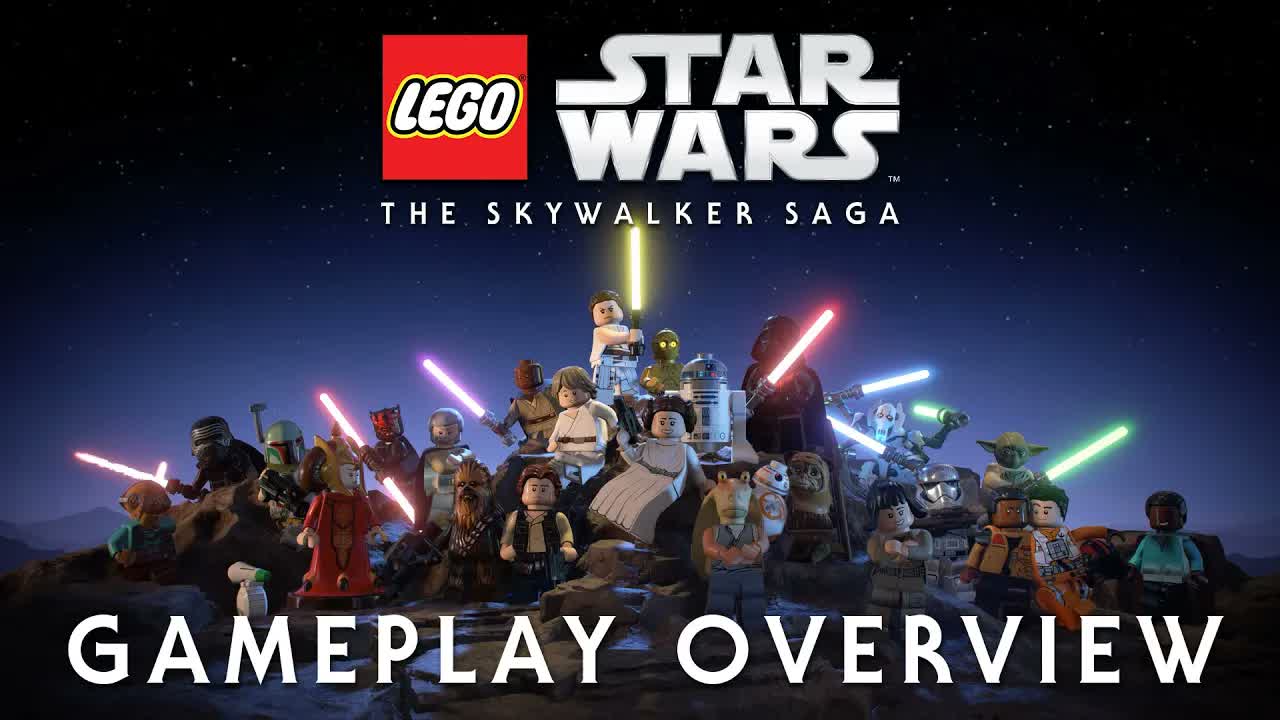
Because the game shipped before the Episode III soundtrack was available, the developers repurposed music from the original trilogy to score Revenge of the Sith's levels. "The Battle of Endor I" played during Chapter 6, "Princess Leia's Theme" accompanied Chapter 5, and "The Battle of Yavin" underscored Chapters 1 and 3, while the "Binary Sunset" alternate track covered the second chapter. In The Complete Saga, these placeholder tracks were swapped for proper Episode III music during gameplay, though the original trilogy scores remained in those episodes' cutscenes. Equally distinctive is the game's vocal approach: no character actually speaks. Instead, every minifigure—except astromech droids—only mumbles and grunts. This quirky choice became a franchise hallmark, carried forward into Lego Star Wars II, The Complete Saga, and Lego Star Wars III: The Clone Wars. The Skywalker Saga later preserved the tradition by offering a dedicated "Mumble Mode" as an optional setting.
Gallery
More in Star Wars Games
Spotted an error? Know more?
Reader corrections go straight into our review queue. Suggest an edit · How this site is sourced