Netball
A women's team sport played by millions across the Commonwealth.

Netball is a team sport played on a rectangular court, with two sides of seven players each. The aim is to get the ball through the opposing team’s goal ring while stopping them from doing the same. It’s one of the few sports originally designed for women and girls, and it’s still mostly played by them, both indoors and outdoors, often in schools and especially across the Commonwealth of Nations. World Netball reports that over 20 million people play in more than 80 countries. The organization includes over 70 national teams split into five global regions. Major domestic leagues include the Netball Superleague in Great Britain, Super Netball in Australia, and the ANZ Premiership in New Zealand.
Four big international competitions exist: the World Netball Championships and the Commonwealth Games, both held every four years, plus the Quad Series and Fast5 Series, which happen annually. In 1995, the International Netball Federation (now World Netball) became a recognized sport federation by the International Olympic Committee, but netball hasn’t yet been included in the Olympic Games.
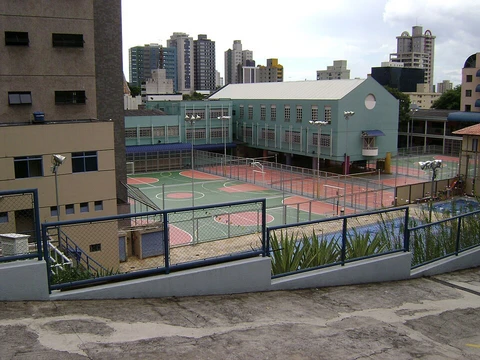
The goal is to outscore the other team. A goal counts when a player in the attacking shooting circle throws the ball through the ring. Those rings are 380 mm wide and sit on posts 3.05 meters high, with no backboards. The shooting circles are semi-circles with a 4.9-meter radius, one at each end of the court, each holding a goal post. Teams defend one circle and attack the other. The court is 30.5 meters long and 15.25 meters wide, split lengthwise into three equal thirds. The ball is usually leather or rubber, about 22 cm in diameter (680 to 710 mm around), and weighs between 397 and 454 grams. A standard game has four 15-minute quarters and can be played outdoors or in a covered stadium.
Each team fields seven players, each with a specific position that limits where they can move on the court. Players wear bibs with one- or two-letter abbreviations for their position. Only two positions are allowed in the attacking shooting circle, so only they can shoot for goal. Similarly, only two positions can be in the defensive shooting circle to block the other team’s shots. Other players are restricted to two-thirds of the court, except the centre, who can go anywhere except the shooting circles.
At the start of each quarter and after a goal, play begins with a centre pass from the middle of the court. These passes alternate between teams, no matter who scored last. When the umpire blows the whistle, four players from each side can move into the centre third to receive the pass, which must be caught or touched there. The ball then moves up and down the court by passing and must be touched by a player in each adjacent third. A player can hold the ball for only three seconds, and must release it before the foot they landed on when catching it touches the ground again.
Contact is allowed only if it doesn’t block an opponent or interfere with play. When defending a pass or shot, a player must stay at least 90 cm away from the ball holder. If illegal contact happens, the offending player can’t join play until the player taking the penalty has passed or shot. If a player holds the ball in two hands and drops it or misses a shot, they can’t be the first to touch it unless it bounces off the goal first.
A player is offside if they enter a court area their position doesn’t allow. Each position has specific zones, and stepping into a restricted area is an offside infringement, whether or not the player has the ball. If two opponents go offside at the same time, neither gains an advantage, and play continues under the advantage rule. When offside is penalized, the other team gets a free pass in the area where the violation happened, and the offending player must stay out of play until the pass is taken.
Besides the court and nets, the ball is about 70 cm around and weighs 400 to 450 grams, made from leather, rubber, or similar material. Players usually wear a jersey or tank top with a skort or shorts, though at higher levels they may wear one-piece netball dresses.
Netball’s early development came from Clara Baer’s misunderstanding of the original rules of James Naismith’s basketball. Basketball, invented in 1891, was first played indoors with two teams of nine, using a soccer ball thrown into closed-end peach baskets. The game spread quickly across the U.S., and rule variations soon appeared. Around the same time, physical education instructor Senda Berenson created modified rules for women in 1892, which led to women’s basketball, with separate college rules for men and women developing later. Clara Baer, a sports teacher in New Orleans, wrote to Naismith for a copy of his basketball rules. When she got them, the diagram included lines across the court meant to show where players could best patrol, but she misinterpreted those lines and thought they were fixed boundaries.
- origin
- Evolved from Clara Baer's misinterpretation of basketball rules in the late 19th century
- governing_body
- World Netball (formerly International Netball Federation)
- players
- More than 20 million in over 80 countries
- major_leagues
- Netball Superleague (Great Britain), Super Netball (Australia), ANZ Premiership (New Zealand)
- major_competitions
- World Netball Championships, Commonwealth Games, Quad Series, Fast5 Series
Lore & Background
Netball is a ball sport played on a rectangular court by two teams of seven players, with the aim of shooting a ball through the opponent’s goal ring while defending one’s own. The court measures 30.5 metres long and 15.25 metres wide, divided lengthwise into thirds, with a semicircular shooting circle of 4.9 metres radius at each end. Goal rings are 380 millimetres in diameter, mounted atop 3.05-metre-high posts without backboards. The ball, typically leather or rubber, is about 70 centimetres in circumference and weighs 400 to 450 grams. Matches consist of four 15-minute quarters and can be played indoors or outdoors. Each player wears a bib with a one- or two-letter abbreviation indicating a specific position that restricts movement to certain court areas; only two positions may enter the attacking shooting circle to score, and two may defend the opposing circle. Play restarts after each goal or quarter with a centre pass, alternating between teams. The ball must be touched in each adjacent third as it moves up the court, and players cannot hold it for more than three seconds. Contact is permitted only if it does not impede an opponent, and defenders must stay at least 0.9 metres from the player with the ball. Offside occurs when a player enters a restricted zone, resulting in a free pass for the opposing team. Netball was created exclusively for women and girls and remains primarily played by them, especially in Commonwealth nations, with over 20 million participants across more than 80 countries. Major international competitions include the quadrennial World Netball Championships and Commonwealth Games, alongside the annual Quad Series and Fast5 Series. The sport is governed by World Netball, which comprises over 70 national teams in five global regions.
Reader's Guide
Netball is a ball sport played on a rectangular court by two teams of seven players, with the objective of shooting a ball through the opponent’s goal ring while defending one’s own. The court is 100 feet long and 50 feet wide, divided lengthwise into thirds, with semi-circular shooting circles at each end containing goal posts topped by rings 15 inches in diameter and no backboards. The ball, typically made of leather or rubber, measures about 27 inches in circumference and weighs 400 to 450 grams. A standard game consists of four 15-minute quarters, played indoors or outdoors. Each player wears a bib indicating a specific position that restricts movement to designated court areas; only two positions may enter the attacking shooting circle to shoot, and only two may defend the opposing shooting circle. Play begins with a centre pass from the centre of the court, alternating between teams after each goal and quarter. The ball must be touched in each adjacent third as it moves up the court, and players cannot hold it for more than three seconds. Contact is permitted only if it does not impede an opponent, and defenders must stand at least three feet from the player with the ball. Offside occurs when a player enters an area not allowed for their position, resulting in a free pass for the opposing team. The sport’s early development stemmed from Clara Baer’s misinterpretation of James Naismith’s basketball rules, evolving into a distinct game. Netball remains primarily played by women and girls, especially in Commonwealth nations, with over 20 million participants across more than 80 countries. World Netball governs over 70 national teams in five regions, and major domestic leagues include the Netball Superleague, Super Netball, and ANZ Premiership. International competitions include the quadrennial World Netball Championships and Commonwealth Games, alongside the annual Quad Series and Fast5 Series. Though recognized by the International Olympic Committee since 1995, netball has not yet been included in the Olympic Games.
Did You Know?
- Netball's early rules resulted from Clara Baer's misinterpretation of a diagram of basketball court zones.
- A player can hold the ball for only three seconds and must release it before the foot they were standing on when they caught it touches the ground again.
Frequently Asked Questions
Who is Netball and where did it come from?
Netball traces its roots to the late 19th century, when Clara Baer misread basketball's rules and developed a distinct game that evolved into its own sport. It was designed as an activity for women and girls, and that identity has persisted to this day.
What are Netball's powers and how is it played?
Two teams of seven players contest a rectangular court, each aiming to pass the ball to a shooter who releases it through the opponent's goal ring. The game is governed by World Netball, the body formerly known as the International Netball Federation.
Where is Netball most active and who plays it?
The sport thrives across the Commonwealth of Nations, with strong school and community participation in countries like Australia, New Zealand, and Great Britain. World Netball reports more than 20 million players spread across over 80 countries worldwide.
What are Netball's major storylines and competitions?
The biggest fixtures include the World Netball Championships, the Commonwealth Games, the Quad Series, and the Fast5 Series. At the domestic level, fans follow the Netball Superleague in Great Britain, Super Netball in Australia, and the ANZ Premiership in New Zealand.
More in Sports And Athletics 1-24
Spotted an error? Know more?
This is a living reference — every entry is fact-audited, and reader corrections feed straight into our audit queue. Suggest an edit · See this site's audit record