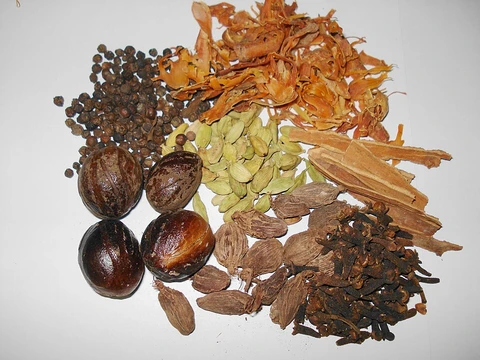
Ras el hanout
A North African spice blend of variable composition.
In Tunisia, Algeria, and Morocco, a spice blend called ras el hanout is commonly used.[1] The Arabic phrase "ras el hanout" translates to "head of the shop," signifying a combination of a merchant's finest spices.[1] This blend is often applied to meat or fish as a rub, or mixed into couscous and rice for savory dishes.[1]
Quick Facts
- Region
- Tunisia, Algeria, Morocco
- Etymology
- Arabic for 'head of the shop'
Facts from the source article.
Key facts and history
Good mixtures contain more than 20 different spices, including dried peppers, cardamom, nutmeg, allspice, cinnamon, cloves, fennel, rose buds, and lavender.[2] Some formulations can contain up to 100 spices.[2] Certain aphrodisiacs, including the dangerous "green metallic beetles" (cantharides), have appeared in many Moroccan ras el hanout formulations.[3] These aphrodisiac ingredients seem irrelevant for flavouring purposes.[3]
Ras el hanout is used in couscous, rice, meat, and vegetable dishes.[2] The BBC describes it as a classic spice mixture used in Moroccan cuisine.[2] Across Tunisia, Algeria, and Morocco, the composition of this spice mixture varies.[1]
What the cited sources add
The BBC source specifies that good mixtures contain more than 20 different spices and can include up to 100 spices.[2] It lists specific ingredients such as dried peppers, cardamom, nutmeg, allspice, cinnamon, cloves, fennel, rose buds, and lavender.[2] The BBC also confirms the mix is used in couscous, rice, meat, and vegetable dishes.[2]
References
- Wikipedia, "Ras el hanout" (CC BY-SA 4.0), which cites: Alan Davidson, "The Oxford Companion to Food", Oxford University Press, 21 August 2014, p. 671–672; "Ras el hanout" at bbc.com (retrieved 3 August 2016) (we also read that source) en.wikipedia.org
- "Ras el hanout" at bbc.com (retrieved 3 August 2016). facts only, no text reused. bbc.co.uk
- Wikipedia, "Ras el hanout" (CC BY-SA 4.0), which cites: Alan Davidson, "The Oxford Companion to Food", Oxford University Press, 21 August 2014, p. 671–672 (we also read that source) en.wikipedia.org
Each numbered sentence above was checked against the source it cites before publication. Sentences citing Wikipedia adapt text from the English Wikipedia article Ras el hanout (contributors), used under CC BY-SA 4.0; this entry is available under the same licence. Other sources were used for facts only; no text or images are copied from them.
Spotted an error? Know more?
Reader corrections go straight into our review queue. Suggest an edit · How this site is sourced