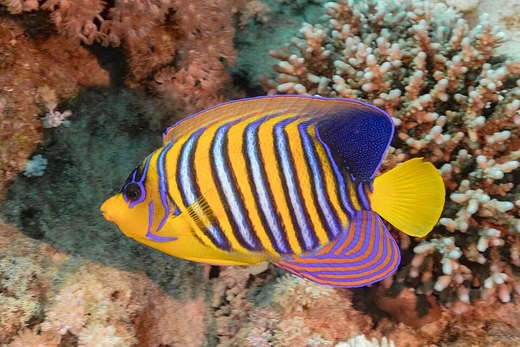
Regal angelfish (Pygoplites diacanthus)
Source-cited species reference: taxonomy from WoRMS, biology from FishBase, occurrence map from GBIF, conservation from IUCN Red List, description from Wikipedia.

Jean-Paul Boerekamps · CC0
The royal angelfish (Pygoplites diacanthus), or regal angelfish, is a species of marine ray-finned fish, a marine angelfish belonging to the family Pomacanthidae, and the monotypic genus Pygoplites. It is found in tropical Indo-Pacific oceans. It can grow as long as 25 cm.
- Scientific name
- Pygoplites diacanthus
- Authority
- (Boddaert, 1772)
- Family
- Pomacanthidae
- Order
- Acanthuriformes
- Maximum length
- 25 cm
- Depth range
- 0–110 m
- Habitat zone
- reef-associated
- Iucn red list
- Least Concern
- Gbif occurrence records
- 8,313
Taxonomy & Physical Form
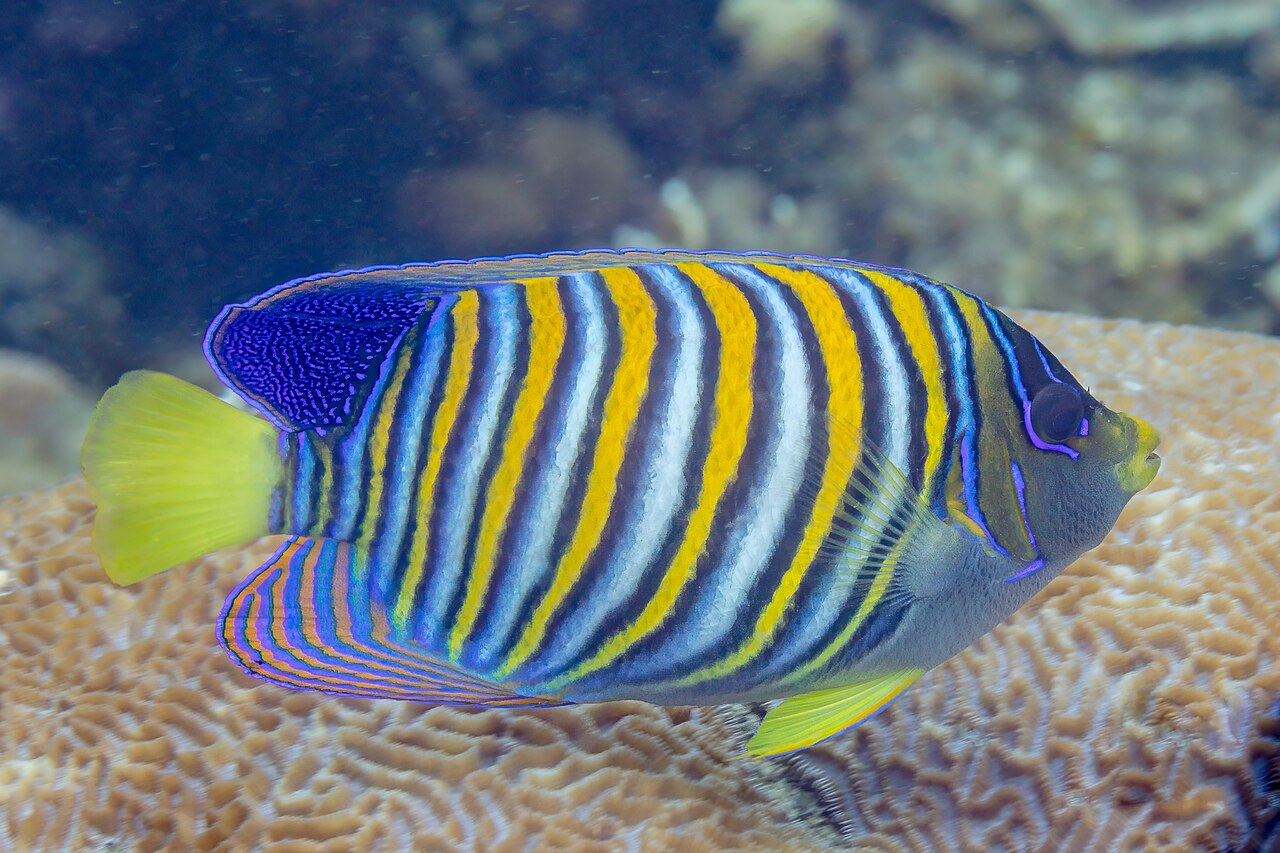
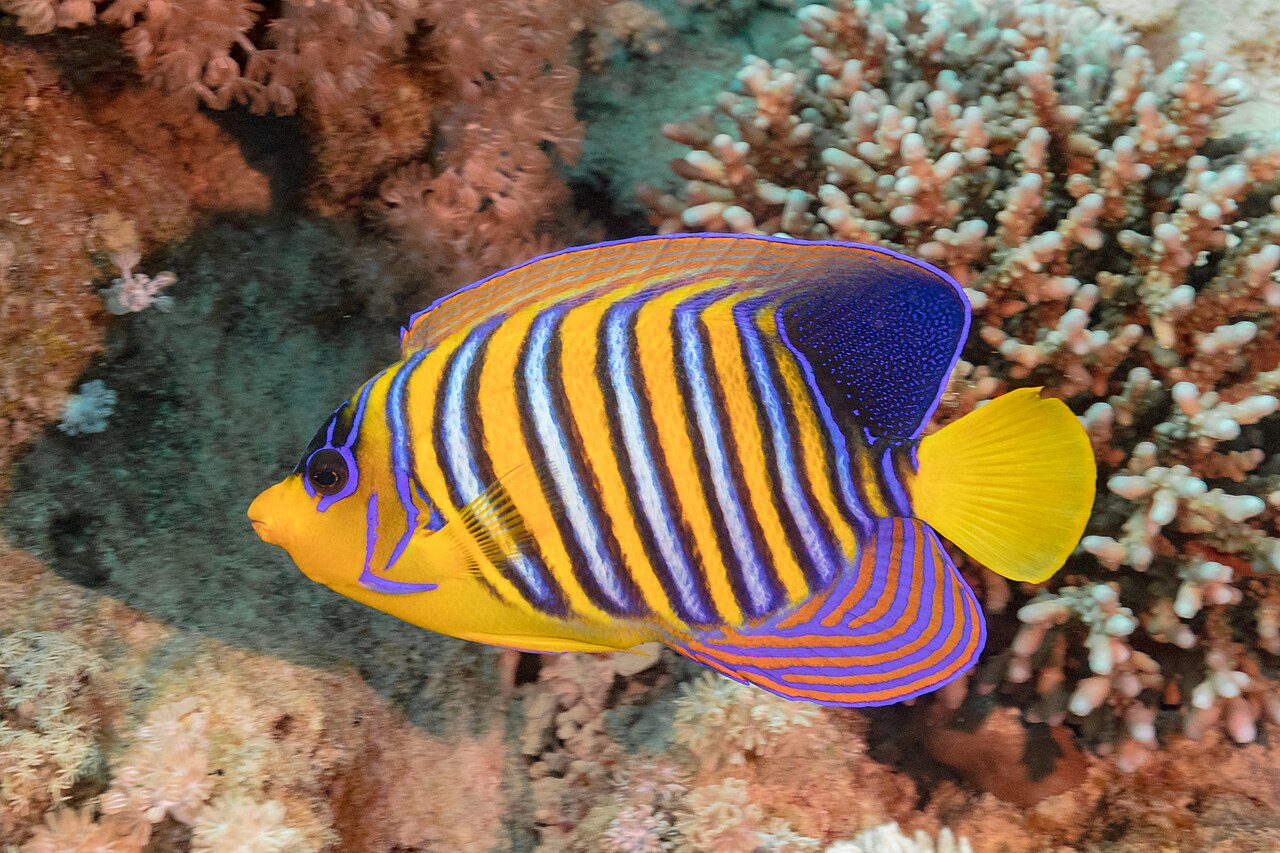
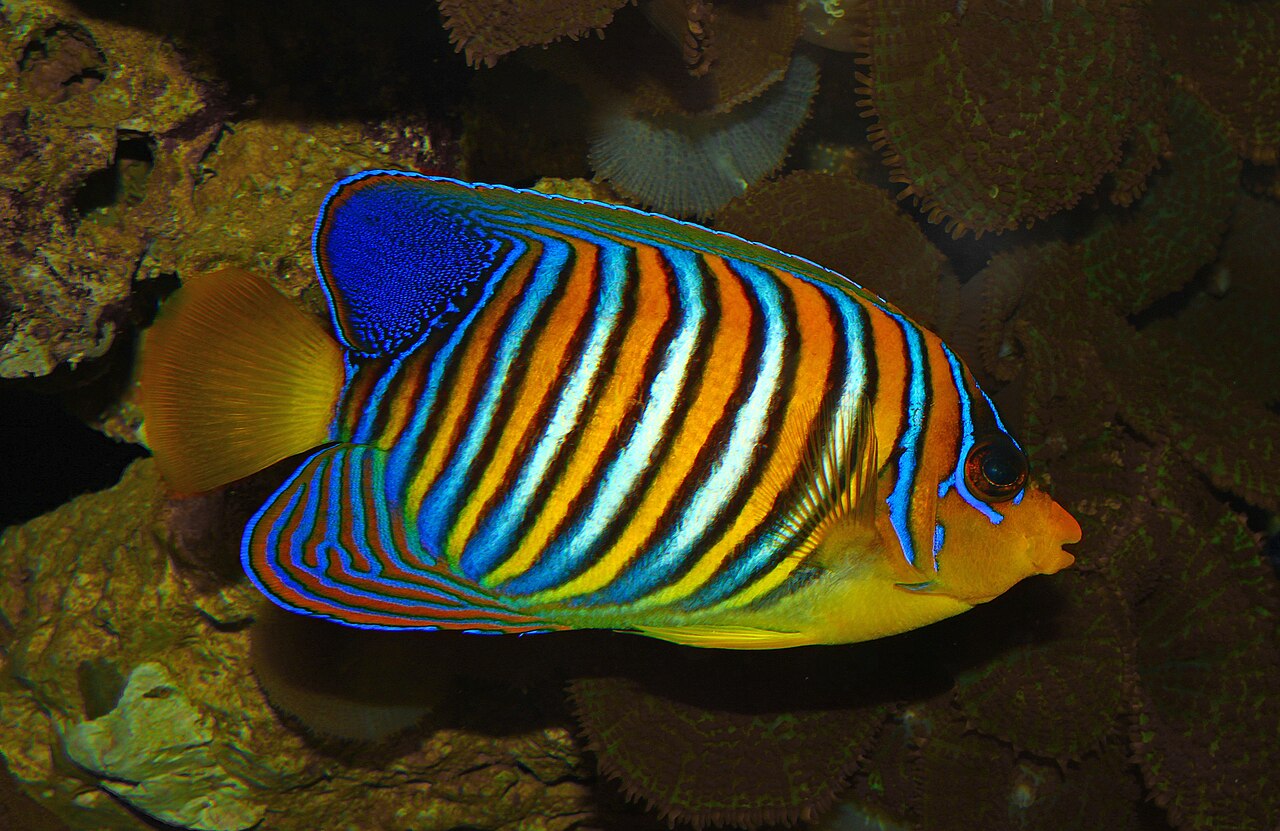
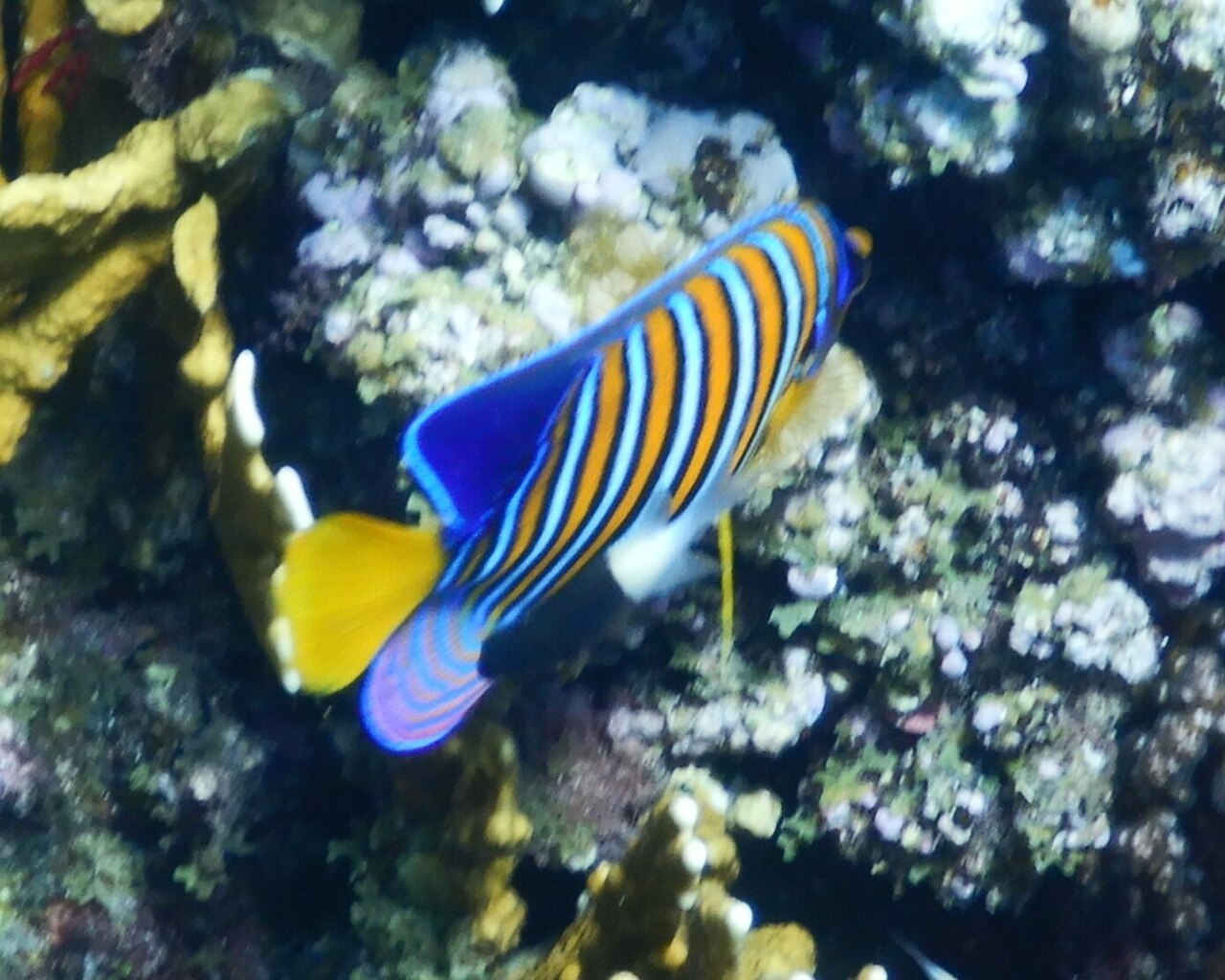
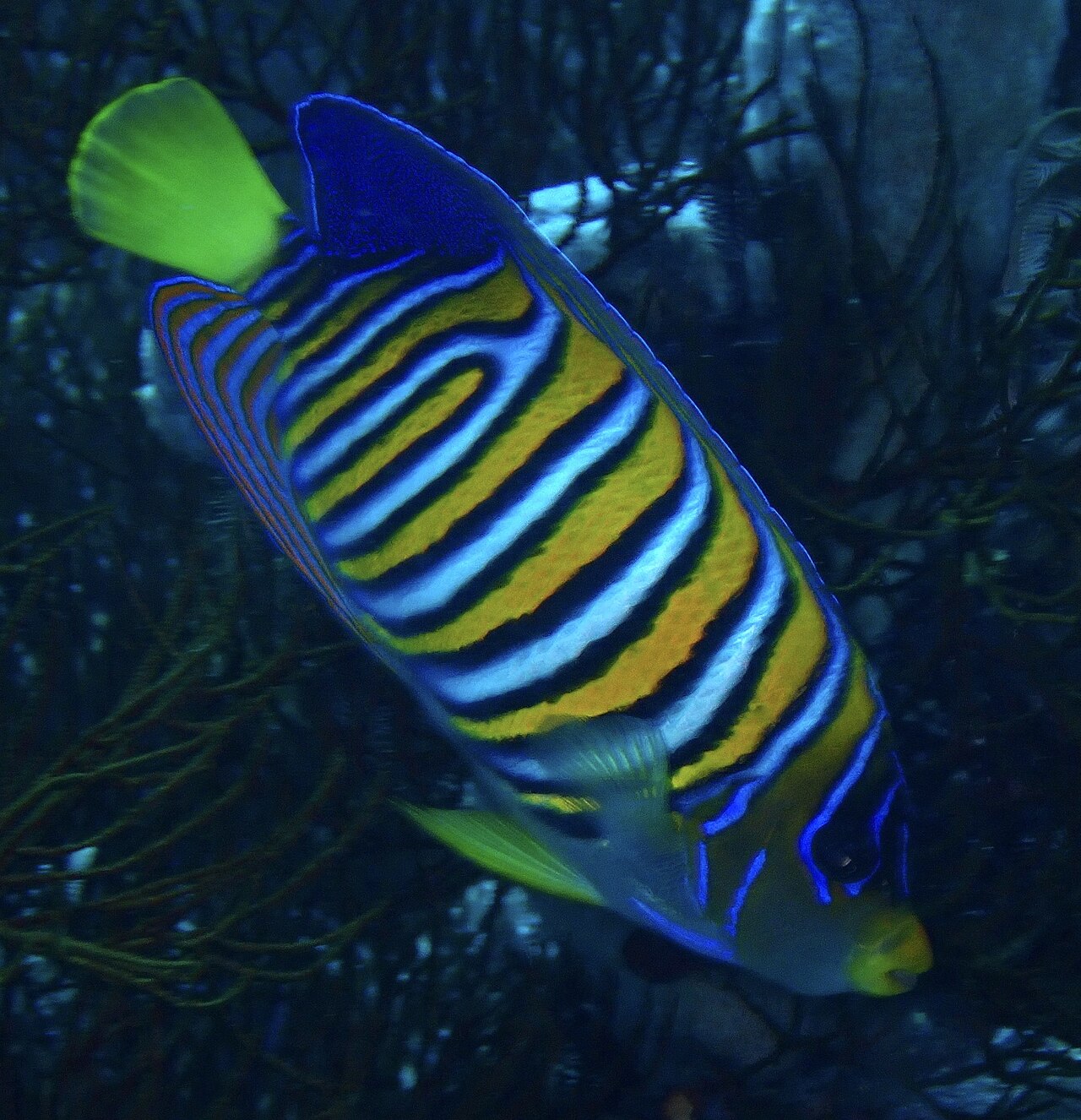
The regal angelfish holds a singular taxonomic position as the only species in the genus Pygoplites, a monotypic lineage within the marine angelfish family Pomacanthidae. Its body is moderately elongate yet extremely laterally compressed. The head features a convex preorbital bone without strong spines, one prominent spine angled at the preopercle, and a smooth ventral interopercle edge. Eyes are moderately small, and the terminal mouth is protractile. Fin counts include fourteen dorsal spines with seventeen to nineteen soft dorsal rays, three anal spines with seventeen to nineteen anal soft rays, and sixteen to seventeen pectoral rays, all finished by a rounded caudal fin. While coloration varies among Indian Ocean, Red Sea, and South Pacific populations, a shared pattern of narrow blue-white and orange stripes angling backward unites them. The posterior dorsal fin is black or blue dotted with close-set blue spots, the anal fin's rear shows parallel yellow and blue bands, and the caudal fin is yellow. Juveniles carry a large dark blotch on the soft dorsal fin's base. Recent research identifies two morphs within the species, potentially hybridizing at Christmas Island. Individuals reach up to twenty-five centimeters and have been reported living fifteen years.
Range & Habitat
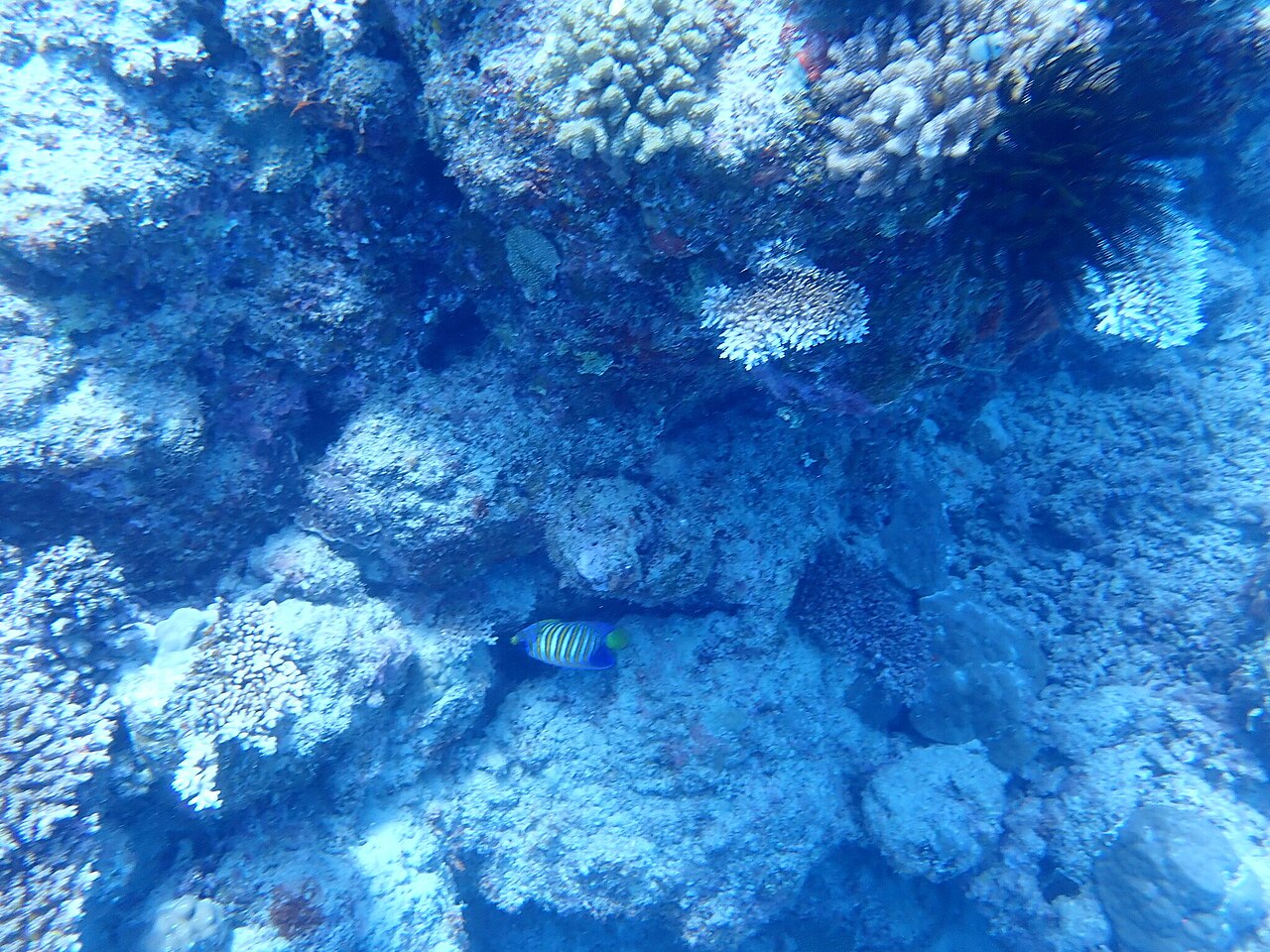
The regal angelfish enjoys one of the broadest distributions among marine angelfish, spanning tropical waters of the Indo-Pacific. Its range stretches from the Red Sea and the Indian Ocean off East Africa and the Maldives, eastward through the Tuamoto Islands, New Caledonia, and the Great Barrier Reef. To the north, its limits reach the southern East China Sea near Taiwan, the Ryukyu Islands, and Japan's Ogasawara Islands. Within this vast territory, the species inhabits depths from the surface down to eighty meters, favoring coral-rich lagoons, reef structures, and the vicinity of underwater caves. It is a non-migratory fish, meaning populations remain rooted to their local reef systems. Socially, regal angelfish are flexible: they may be encountered solitary, in pairs, or in small groups. Young individuals show a particular preference for sheltering within cracks and crevices in reef rock, using these tight spaces as refuge. This sedentary, reef-tied lifestyle across such an enormous geographic span makes the species a remarkable example of a single marine fish adapting to diverse tropical environments without the need for long-distance movement.
Feeding & Reproductive Behavior
As a carnivorous species, the regal angelfish specializes in consuming sponges and tunicates, foraging across reef surfaces and into underwater caves to locate its preferred prey. This dietary focus on soft-bodied invertebrates rather than coral tissue is ecologically significant, as it positions the fish as a consumer of sponges and tunicates within its reef community. Reproduction follows a spawning strategy in open water. Pairs typically spawn at dusk or during the night hours. Before gamete release, the two fish perform a spiraling dance, a coordinated courtship display that culminates in the simultaneous release of eggs and sperm into the upper water column. This method of external fertilization in open water means larval survival depends on dispersal before settling onto suitable reef habitat. The species' non-migratory nature, combined with its preference for coral-rich environments and cave systems, suggests that reproductive success is tightly linked to the structural complexity of local reef ecosystems. Juveniles, after the planktonic phase, seek out cracks and crevices for shelter, gradually transitioning to the adult foraging niche among sponges and tunicates.
Historical Record & Aquarium Keeping
The regal angelfish was first formally described in 1772 by the Dutch naturalist Pieter Boddaert, and its striking appearance made it a popular subject for zoological artists throughout the eighteenth and nineteenth centuries. In the modern era, the species has found a niche in the aquarium trade, where it is prized as one of the few angelfish considered genuinely reef-safe. Because its diet centers on sponges and tunicates rather than corals, it poses minimal threat to a living reef ecosystem, and it is regarded as harmless to humans. However, keeping a regal angelfish successfully in captivity is no simple task. A healthy specimen placed in a well-suited environment will typically begin feeding within a few days when offered a varied menu of live, frozen, flake, or freeze-dried foods. Conversely, a hostile tank setup directly undermines acclimation and feeding. Hobbyists are advised to avoid housing the fish alongside large angelfish, triggerfish, puffers, or particularly aggressive clownfish and surgeonfish, as these companions can create the stressful conditions that prevent the regal angelfish from thriving.
Gallery
Related in Regal angelfish
Links follow this subject's own source article.
Elsewhere in Regal angelfish
Spotted an error? Know more?
Reader corrections go straight into our review queue. Suggest an edit · How this site is sourced