
Flower cardinalfish (Ostorhinchus fleurieu)
Source-cited species reference: taxonomy from WoRMS, biology from FishBase, occurrence map from GBIF, conservation from IUCN Red List, description from Wikipedia.

Wikimedia Commons · Public domain
Ostorhinchus fleurieu (flower cardinalfish, gold cardinalfish, bullseye cardinalfish, cardinalfish, ring-tail cardinalfish or ringtailed cardinalfish) is a species of cardinalfish native to the Red Sea and Persian Gulf, the Gulf of Oman, and the waters around East Africa, Seychelles, India, Sri Lanka, the Indo-Malayan region, and Hong Kong., south to the Ashmore Reef, Western Australia. It is the type species of the genus Ostorhinchus. The specific name honours the French explorer and hydrographer Charles Pierre Claret, comte de Fleurieu (1738-1810) who was a colleague and friend of Lacepède's.
- Scientific name
- Ostorhinchus fleurieu
- Authority
- Lacepède, 1802
- Family
- Apogonidae
- Order
- Apogoniformes
- Maximum length
- 14.199999809265137 cm
- Depth range
- 1–97 m
- Habitat zone
- reef-associated
- Iucn red list
- Least Concern
- Gbif occurrence records
- 408
Taxonomy & the Name Behind the Name
The flower cardinalfish holds a distinguished position in ichthyological taxonomy as the type species of the genus Ostorhinchus, meaning the entire genus is essentially anchored to this single fish. Its scientific binomial, Ostorhinchus fleurieu, pays tribute to Charles Pierre Claret, comte de Fleurieu (1738–1810), a French explorer and hydrographer. The connection is personal as well as professional: Fleurieu was a close colleague and friend of Lacepède, the naturalist responsible for the original description. Beyond its formal Latin name, the species has accumulated a remarkable roster of common labels across different regions and communities—gold cardinalfish, bullseye cardinalfish, ring-tail cardinalfish, ringtailed cardinalfish, and simply cardinalfish—reflecting how widely it has been observed and discussed by divers, collectors, and local fishers across its vast range.
Appearance & the Art of Telling Them Apart
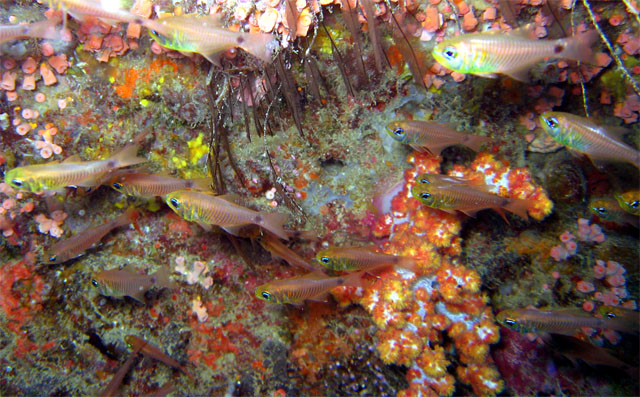
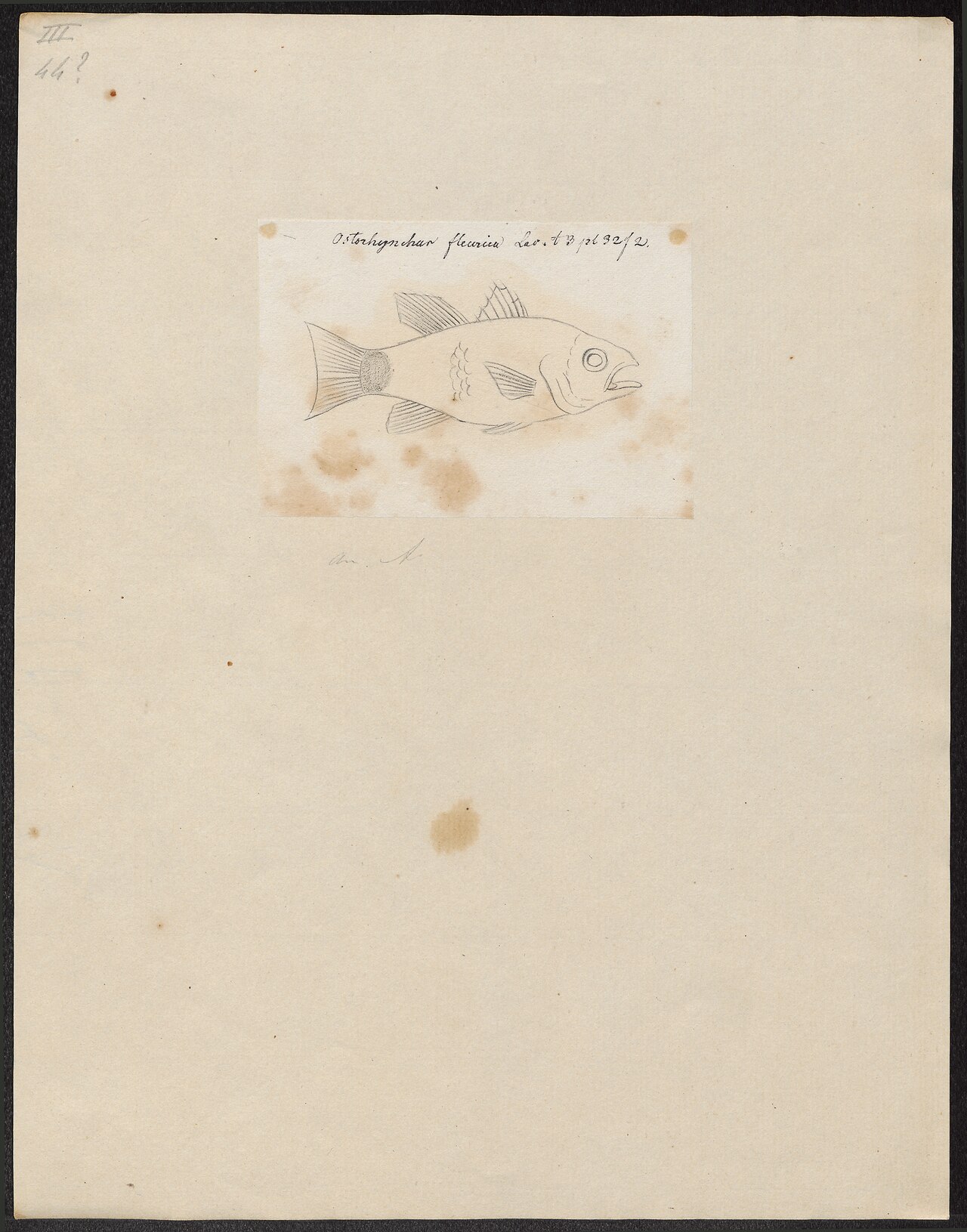
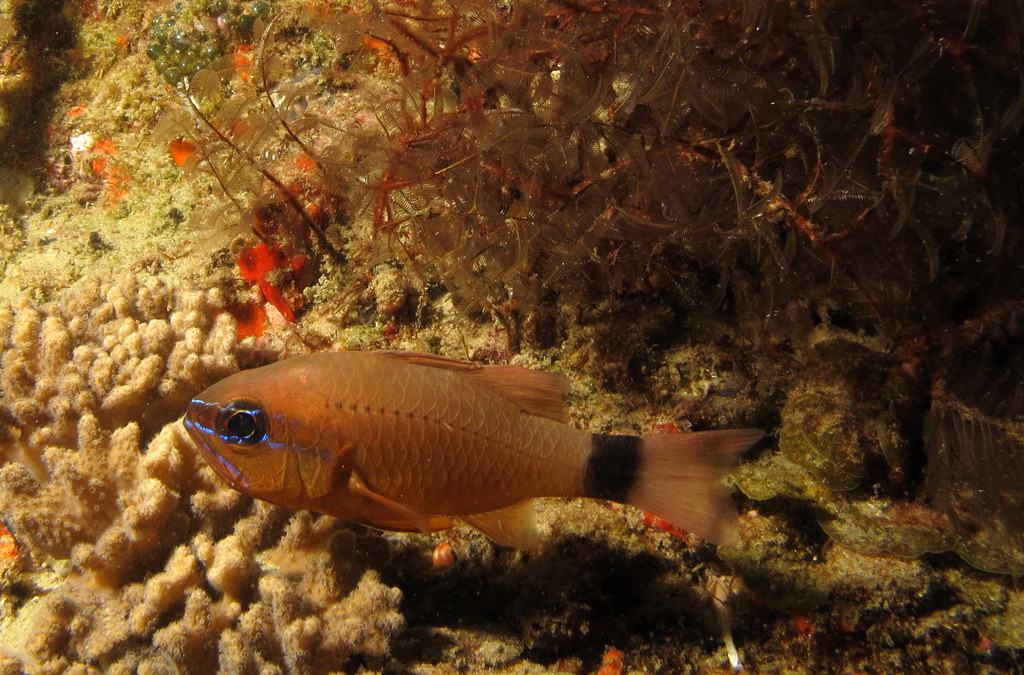
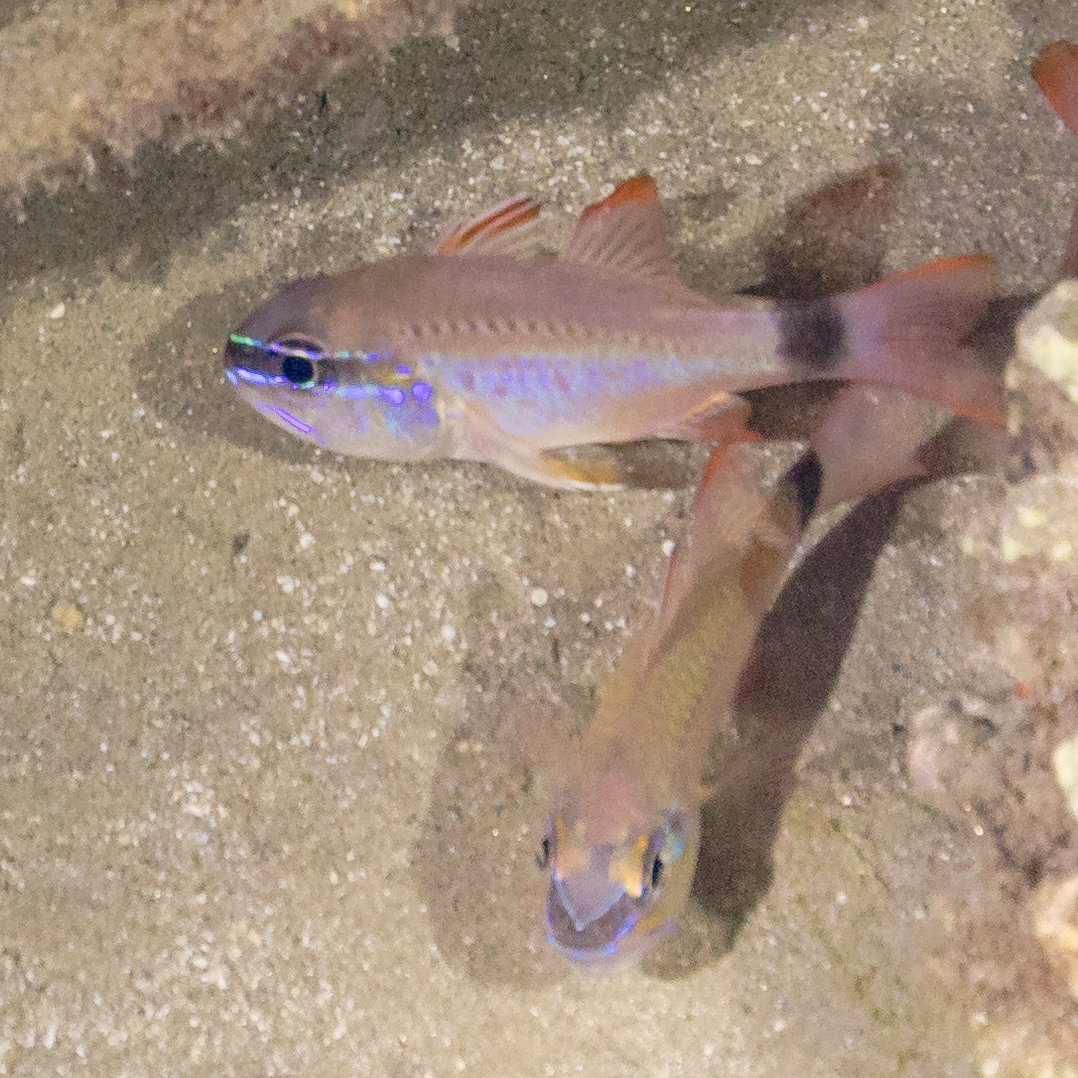
The flower cardinalfish is a strikingly patterned reef fish that reaches a maximum length of 12.5 centimetres. Its body takes on a warm coppery hue, overlaid with several bold markings that make it instantly recognizable to experienced divers. A broad blackish bar sits at the base of the caudal fin, while a similarly dark stripe runs from the front of the snout all the way to the eye. A narrow blue streak along the upper jaw adds a subtle accent to the face. In juvenile specimens, the tail-base marking appears as a single spot rather than the full bar seen in adults, offering a useful visual age indicator. One of the most common identification challenges involves distinguishing this species from Ostorhinchus aureus; the key difference lies in the shape of the black tail bar, which in O. aureus is noticeably narrower at its centre compared to its ends, whereas in the flower cardinalfish the bar maintains a more uniform width.
A Range That Spans Two Oceans
The flower cardinalfish enjoys one of the broadest distributions among cardinalfishes, spanning a vast arc of tropical and subtropical waters. Its range stretches from the Red Sea and the Persian Gulf eastward through the Gulf of Oman, then along the coastlines of East Africa, the Seychelles, India, and Sri Lanka. Further east, populations are recorded throughout the Indo-Malayan region and as far as the waters around Hong Kong. The southernmost extent of its known range reaches the Ashmore Reef off Western Australia. This extensive distribution, covering both the western Indian Ocean and the western Pacific, underscores the species' adaptability to a wide variety of reef environments. The breadth of its range also helps explain the proliferation of common names, as different regional communities have independently coined local labels for the very same fish.
Life Among the Coral Crevices
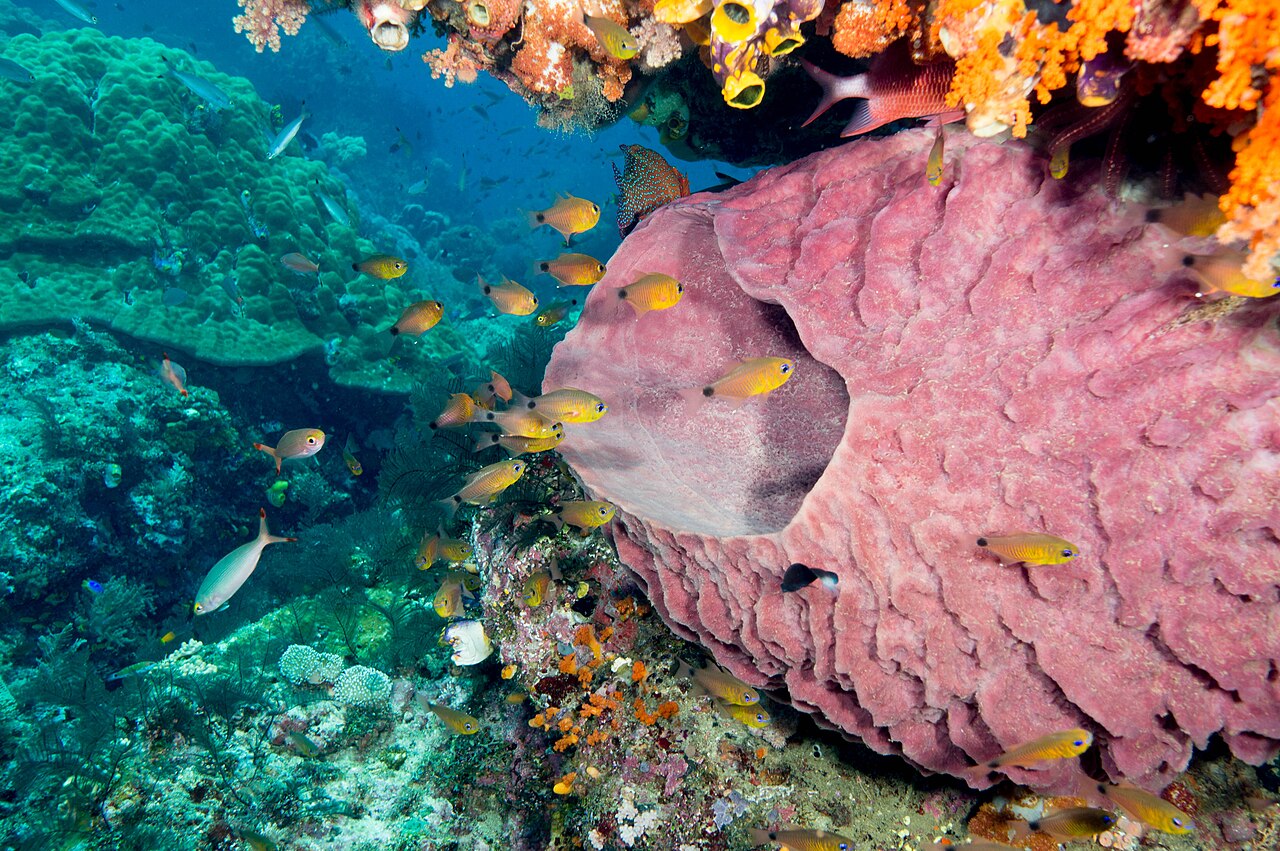
Adult flower cardinalfish are social creatures that form small schools, typically composed of pairs, though larger aggregations are also observed. These groups inhabit coral reef environments, favouring areas with moderate water currents. Their depth range is notably wide, extending from just seven metres (about twenty-three feet) down to at least seventy-three metres (roughly 240 feet), which places them in both the sunlit shallow zone and the dimmer mid-depth reef. Within this range, the fish are most commonly encountered in shallower sections of the reef where the coral structure provides abundant crevices and overhangs. These structural refuges serve as critical shelter, allowing the schools to retreat quickly when disturbed or threatened. The association with moderate currents suggests the fish are comfortable in active water flow, relying on the reef's physical complexity rather than open-water swimming for security.
Gallery
Spotted an error? Know more?
Reader corrections go straight into our review queue. Suggest an edit · How this site is sourced