
Green bubble weed (Dictyosphaeria cavernosa)
Source-cited species reference: taxonomy from WoRMS, biology from SeaLifeBase, occurrence map from GBIF, description from Wikipedia.
Dictyosphaeria cavernosa is a species of green algae (class Ulvophyceae) in the family Siphonocladaceae, one of the three species in this family. Its common name is green bubble seaweed.
- Scientific name
- Dictyosphaeria cavernosa
- Authority
- (Forsskål) Børgesen, 1932
- Family
- Siphonocladaceae
- Order
- Cladophorales
- Depth range
- 0–40 m
- Habitat zone
- epiphytic
- Gbif occurrence records
- 2,415
Classification (WoRMS)
Full classification as recorded by WoRMS: Kingdom: Plantae · Phylum: Chlorophyta · Class: Ulvophyceae · Order: Cladophorales · Family: Siphonocladaceae · Genus: Dictyosphaeria.
Accepted name: Dictyosphaeria cavernosa · Authority: (Forsskål) Børgesen, 1932 · Taxonomic status: accepted · AphiaID: 214395.
Synonyms and superseded combinations recorded for this taxon: Dictyosphaeria favulosa (C.Agardh) Decaisne ex Endlicher, 1843; Ulva cavernosa Forsskål, 1775; Valonia favulosa C.Agardh, 1823.
Source: World Register of Marine Species (WoRMS) — https://www.marinespecies.org/aphia.php?p=taxdetails&id=214395 (CC BY 4.0). Accessed 2026-09-23.
Biology and life history (SeaLifeBase)
Measured values published by SeaLifeBase for Dictyosphaeria cavernosa. Only fields the database actually holds for this species are shown; these are database values, not aquarium guidance.
Depth range: 0–40 m · Habitat zone: epiphytic.
SeaLifeBase notes: Occurs in shallow inner lagoon, coral reefs, lee side and inside of reef crest, low-relief spur and groove zone among coral rubble from shallow depths until 12 m (Ref. 87157)
Source: SeaLifeBase species summary (SpecCode 126191) — https://www.sealifebase.se/summary/Dictyosphaeria-cavernosa.html (CC BY-NC 3.0 — non-commercial use only). Accessed 2026-09-23.
Distribution and occurrence records (GBIF)
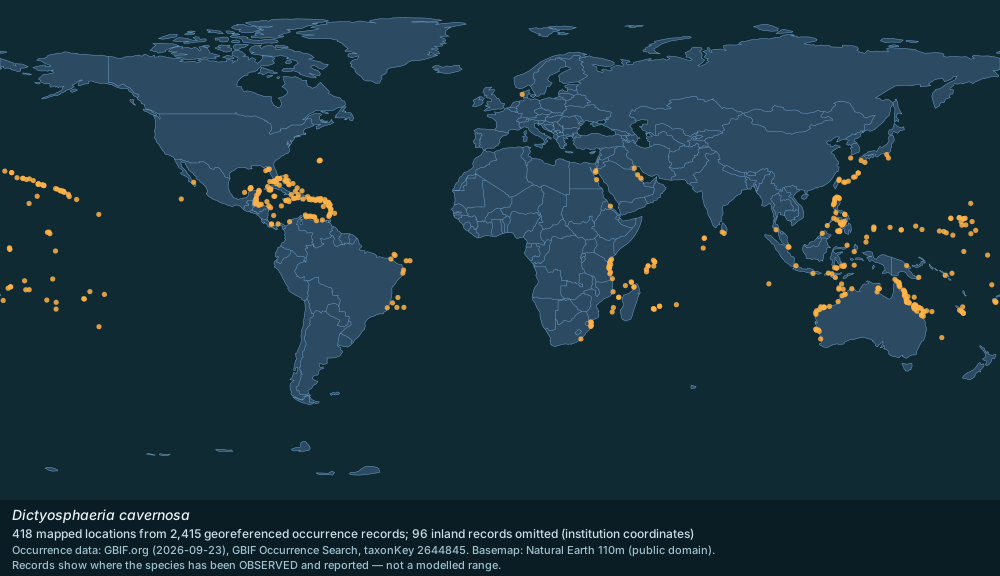
2,415 georeferenced occurrence records for Dictyosphaeria cavernosa are published through GBIF from 80 countries or marine areas. The map above plots 418 distinct locations from a sample of 2,415 records, omitting 96 inland records that carry an institution's coordinates rather than a collection site; it shows where the species has been observed and reported, not a modelled range.
Most records by country or area: United States of America (691); Australia (251); Philippines (163); Mexico (134); Puerto Rico (83).
The full country table, WoRMS marine regions and the sampling notes are on this species' Distribution page.
Source: GBIF Occurrence Search (taxonKey 2644845) — https://www.gbif.org/occurrence/search?taxon_key=2644845&has_coordinate=true (records CC0 / CC BY); WoRMS distribution records (MarineRegions) — https://www.marinespecies.org/aphia.php?p=taxdetails&id=214395 (CC BY 4.0); Natural Earth 110m basemap — https://www.naturalearthdata.com/ (public domain). Accessed 2026-09-23.
Description and natural history (Wikipedia)
Dictyospharea cavernosa is multicellular with multiple bumps or bubbles on the surface. Dictyosphaeria cavernosa is hollow in contrast to its sister species D. versluysii of the same appearance which is solid. It grows about 12cm in diameter and possesses a green-yellow color while young.
It is found all over the world especially in South-East Asia. Dictyosphaeria can be found on rocks in the shallow reef areas. On the island of Oahu they are found in the Kaneohe Bay area. The sewage system had a huge role in the growth of the algae in Kaneohe Bay.
Dictyosphaeria cavernosa is usually found in the crevices of rock formations around rocky tidal pools. It may look like a green rock at first, but it is a Dictyosphaeria cavernosa. Green bubble algae can spread rapidly due to access of nutrients. The green algae has a few times out of the year where they grow abundantly.
During the 1960-1970's there was in increase in sewage discharge and the nutrients found in the sewage water is the primary source for the bubble seaweed to grow. With a massive sewage discharge entering the ocean allowing the nutrients became a source for the green algae. This algae is harmful to the coral reefs due it spreading and covering the reef in a thick layer killing the reef and other organisms. Scientists have been studying the physical, biological, and chemical aspects of the reefs to find ways to reduce the growth of the algae. Declining the source of nutrients for the algae reduced the growth by 1977.
Source: Wikipedia: Dictyosphaeria cavernosa — https://en.wikipedia.org/wiki/Dictyosphaeria_cavernosa (CC BY-SA 4.0). Accessed 2026-09-23.
Gallery
Related in Green bubble weed
Links follow this subject's own source article.
Elsewhere in Green bubble weed
Spotted an error? Know more?
Reader corrections go straight into our review queue. Suggest an edit · How this site is sourced