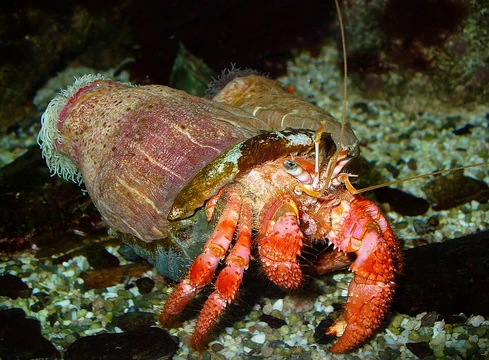
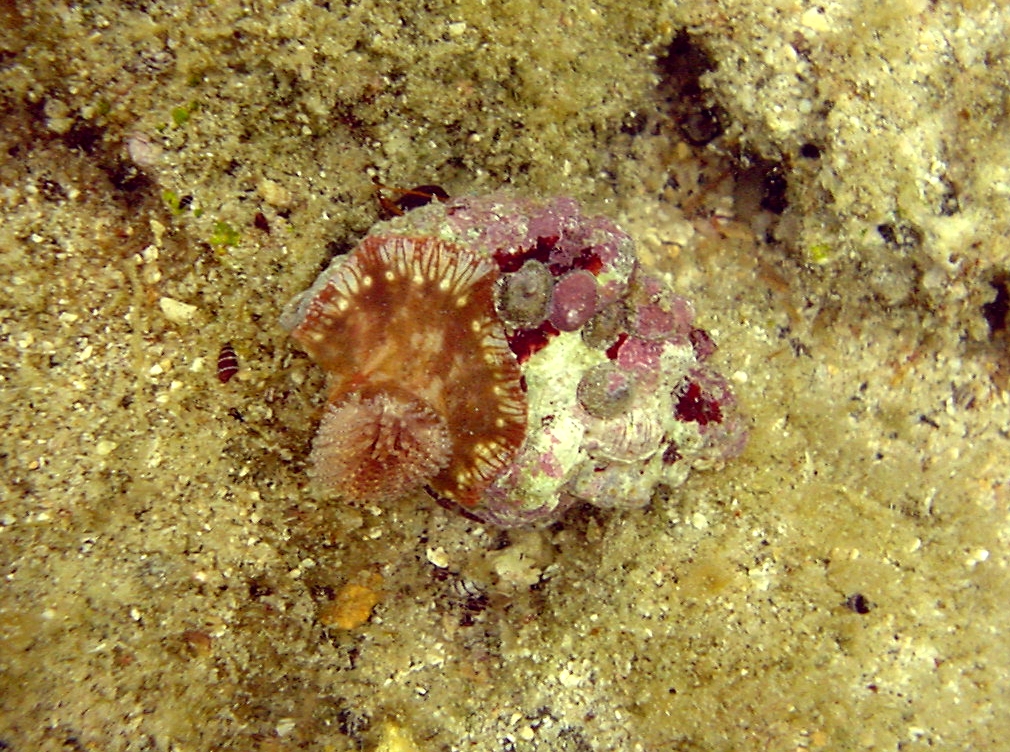
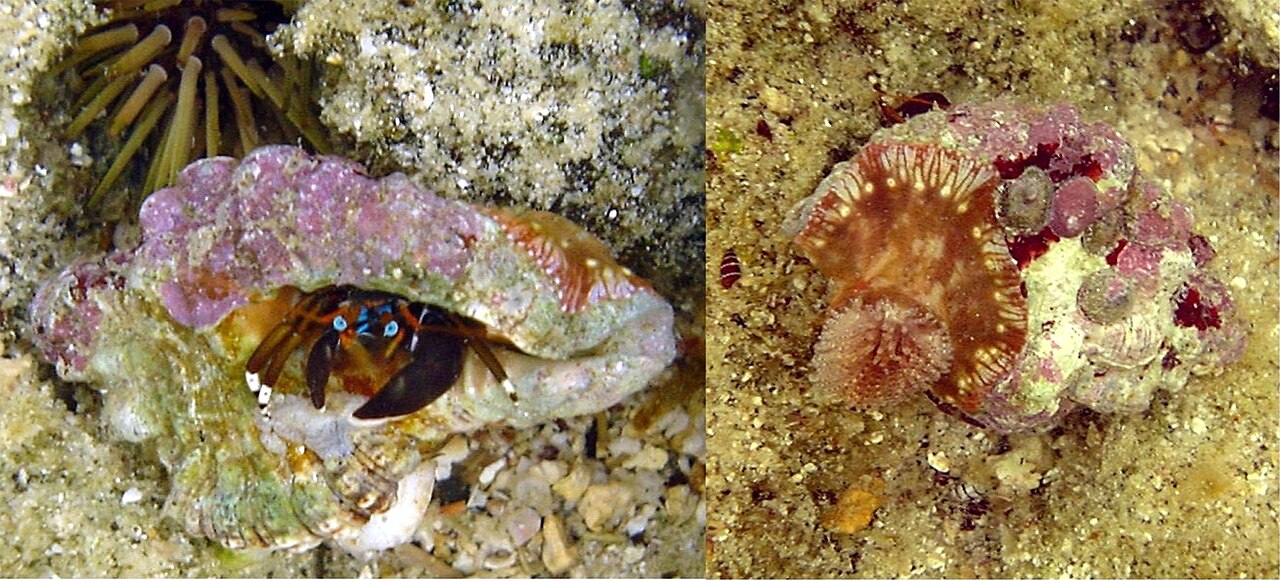
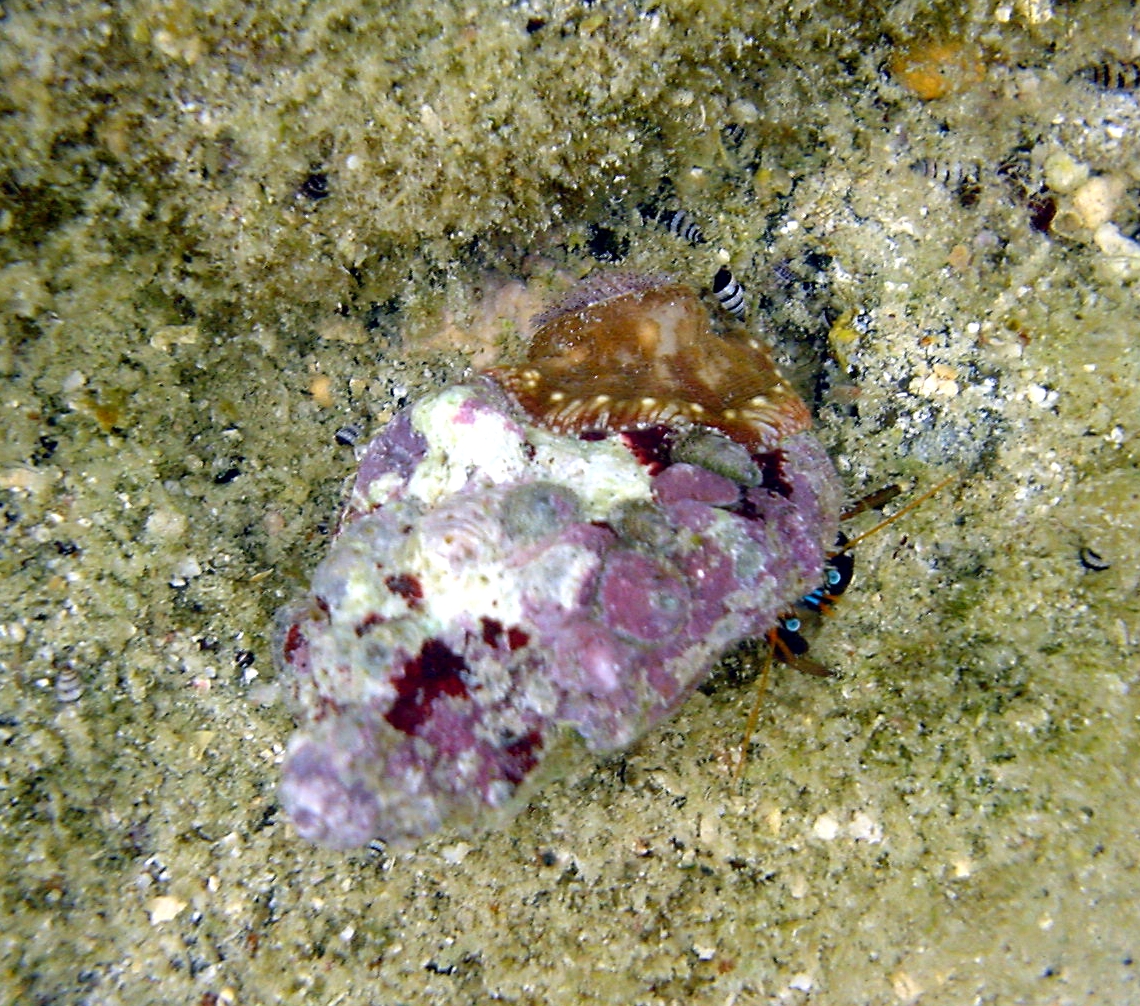
Anemone hermit crab (Dardanus pedunculatus)
Source-cited species reference: taxonomy from WoRMS, biology from SeaLifeBase, occurrence map from GBIF, description from Wikipedia.

Samuel Chow · CC BY 2.0
Dardanus pedunculatus, commonly referred to as the anemone hermit crab, is a species of hermit crab from the Indo-Pacific region. It lives at depths of up to 27 m and collects sea anemones to place on its shell for defence.
- Scientific name
- Dardanus pedunculatus
- Authority
- (Herbst, 1804)
- Family
- Diogenidae
- Order
- Decapoda
- Depth range
- 1–95 m
- Habitat zone
- benthic
- Gbif occurrence records
- 999
The Anemone Shield
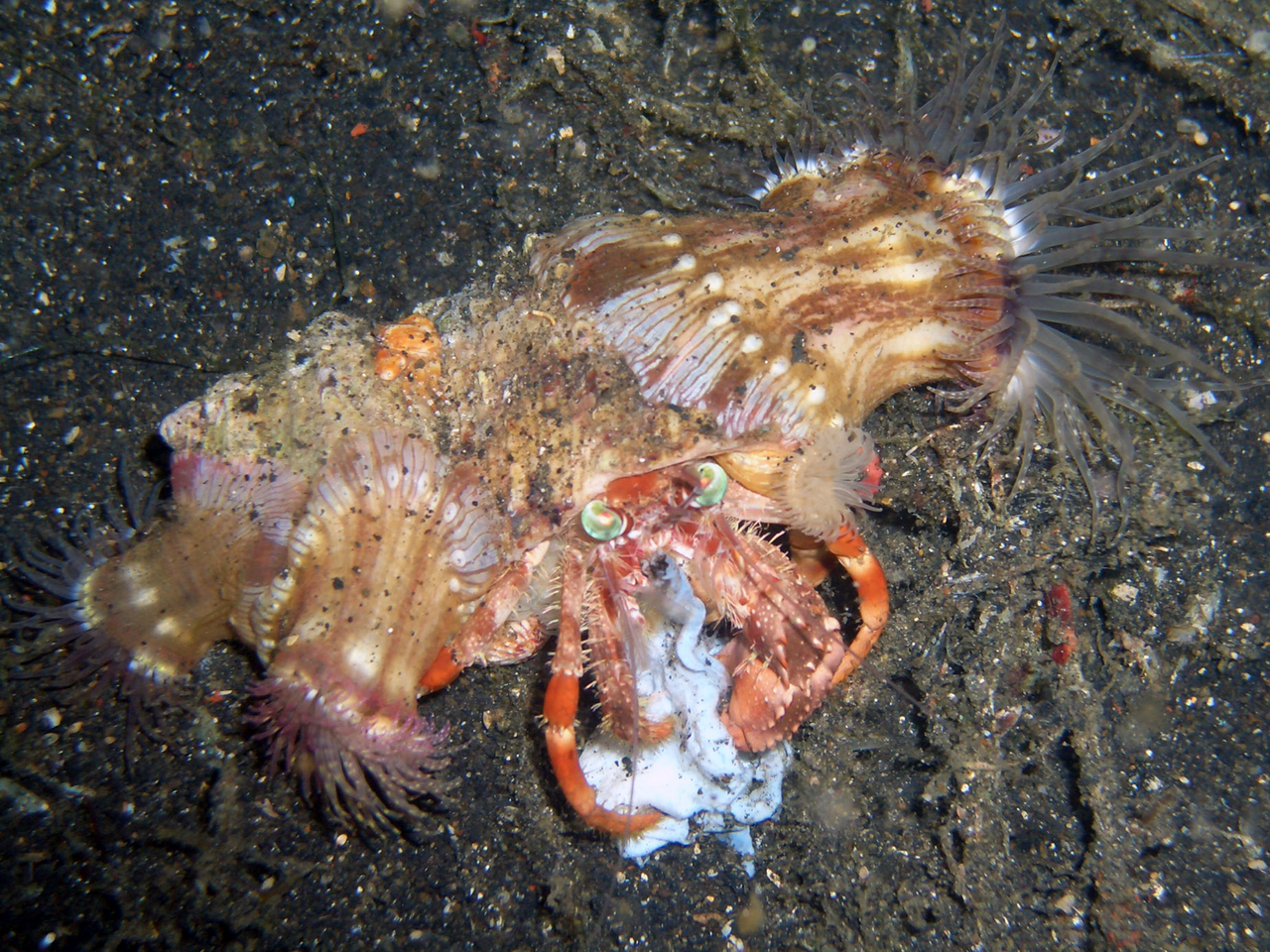
The anemone hermit crab's most remarkable behavioral trait is its nightly ritual of gathering sea anemones and mounting them atop the gastropod shell it inhabits. This living armor serves as a chemical and stinging defense against its principal threat: cephalopods of the genus Octopus, which would otherwise prey upon the soft-bodied crab. The collection process is methodical and entirely nocturnal. The crab approaches a settled anemone and begins stroking and tapping it, working to break the organism's firm attachment to the reef substrate. Once the anemone releases its hold, the crab carefully transfers it onto its shell, where it remains as a portable defensive structure. This behavior takes place across the crab's typical habitat—coral reefs and intertidal zones at depths ranging from just one metre to as deep as twenty-seven metres—where the constant threat of octopus predation makes such a strategy essential for survival.
A Vast Indo-Pacific Presence
Dardanus pedunculatus occupies one of the broadest ranges of any hermit crab, stretching across the entire Indo-Pacific ocean. At its westernmost extent, populations are recorded as far as the Seychelles archipelago, while the eastern boundary reaches as far as Japan and the Hawaiian Islands. Within Australia, the species is documented from the southern waters of Port Jackson in New South Wales northward through Queensland's coastal reefs. This wide geographic footprint reflects the crab's adaptability to its preferred environments: coral reef systems and intertidal zones. Across all of these locations, the crab is found at depths spanning roughly one to twenty-seven metres, a range that encompasses both the shallow, sunlit reef flats and the deeper, dimmer portions of the reef slope. No single habitat type defines the species; rather, it thrives wherever the interplay of reef structure, tidal influence, and anemone availability supports its unique defensive lifestyle.
Form, Color, and a Checkered Taxonomic Past
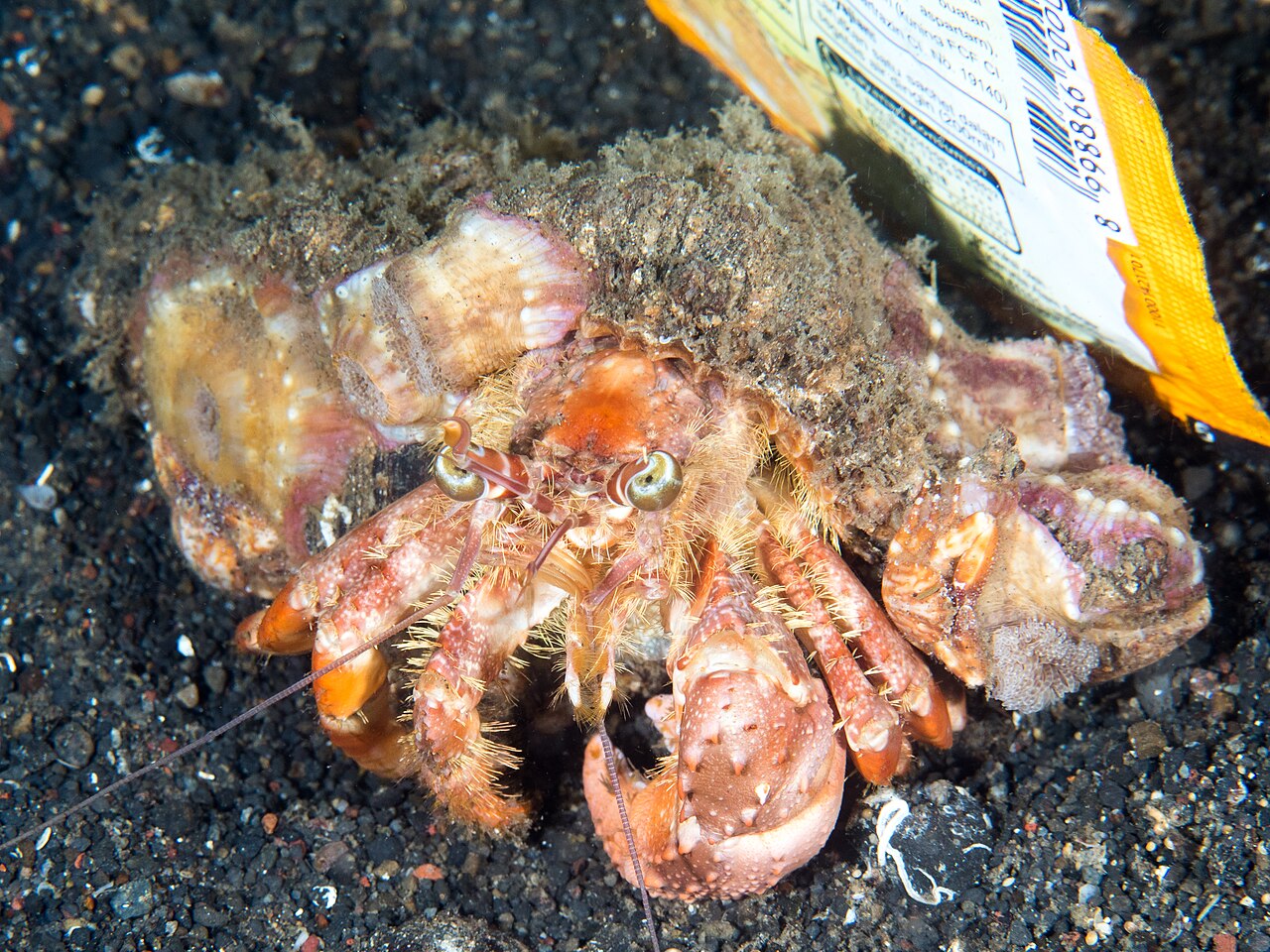
Reaching a maximum size of roughly ten centimetres, the anemone hermit crab presents a modest but distinctive appearance. Its carapace displays a mottled pattern of tan and cream tones, while the eyestalks stand out as white structures banded with red. Males and females are visually similar, making sex determination from external coloration alone difficult. One of the most noticeable morphological features is the pronounced asymmetry of the claws: the left cheliped is substantially larger than the right. The species' taxonomic history is equally notable for its instability. Johann Friedrich Wilhelm Herbst first described the animal in 1804 under the name Cancer pedunculatus, in his comprehensive work on crabs and shrimp, though the original type locality remains unknown. Over the following two centuries, the species has been shuffled among multiple genera, including Pagurus and Neopagurus, generating a trail of taxonomic synonyms that reflects the ongoing difficulty of placing it within the broader hermit crab family tree.
The Captive Challenge
Despite the hermit crab family's enduring popularity in marine aquaria worldwide, Dardanus pedunculatus remains a species that has defied long-term captive rearing. While it is occasionally kept by hobbyists and displayed in public aquarium collections, no documented case exists of the species being successfully bred or sustained through multiple life stages in artificial conditions. This failure to establish captive populations stands in contrast to other hermit crab species that have been routinely maintained in the aquarium trade. The difficulty likely relates to the crab's specialized ecological requirements—particularly its dependence on live sea anemones for defense and its specific reef-associated habitat preferences—which are challenging to replicate in a tank setting. The species' taxonomic instability, having been reassigned among several genera since Herbst's 1804 description, may also have complicated its identification and availability in the trade. As a result, the anemone hermit crab remains primarily a creature of the wild Indo-Pacific, known to aquarists more as a fleeting visitor than a sustainable resident.
Gallery
Spotted an error? Know more?
Reader corrections go straight into our review queue. Suggest an edit · How this site is sourced