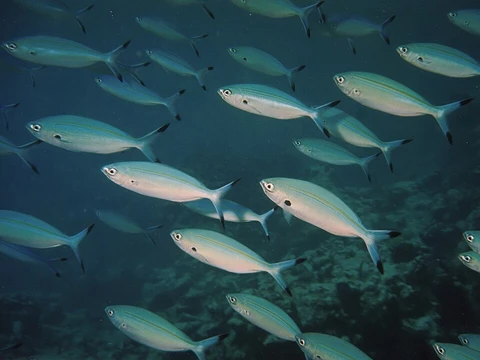
Variable-lined fusilier (Caesio varilineata)
Source-cited species reference: taxonomy from WoRMS, biology from FishBase, occurrence map from GBIF, conservation from IUCN Red List, description from Wikipedia.

Hans Hillewaert · CC BY-SA 4.0
Caesio varilineata, the variable-lined fusilier or thin-lined fusilier, is a species of pelagic marine ray-finned fish, a fusilier belonging to the family Caesionidae. It is found in the Indo-Pacific region.
- Scientific name
- Caesio varilineata
- Authority
- Carpenter, 1987
- Family
- Caesionidae
- Order
- Eupercaria incertae sedis
- Maximum length
- 40 cm
- Depth range
- 2–25 m
- Habitat zone
- reef-associated
- Iucn red list
- Least Concern
- Gbif occurrence records
- 297
Taxonomy & the Origin of Its Name
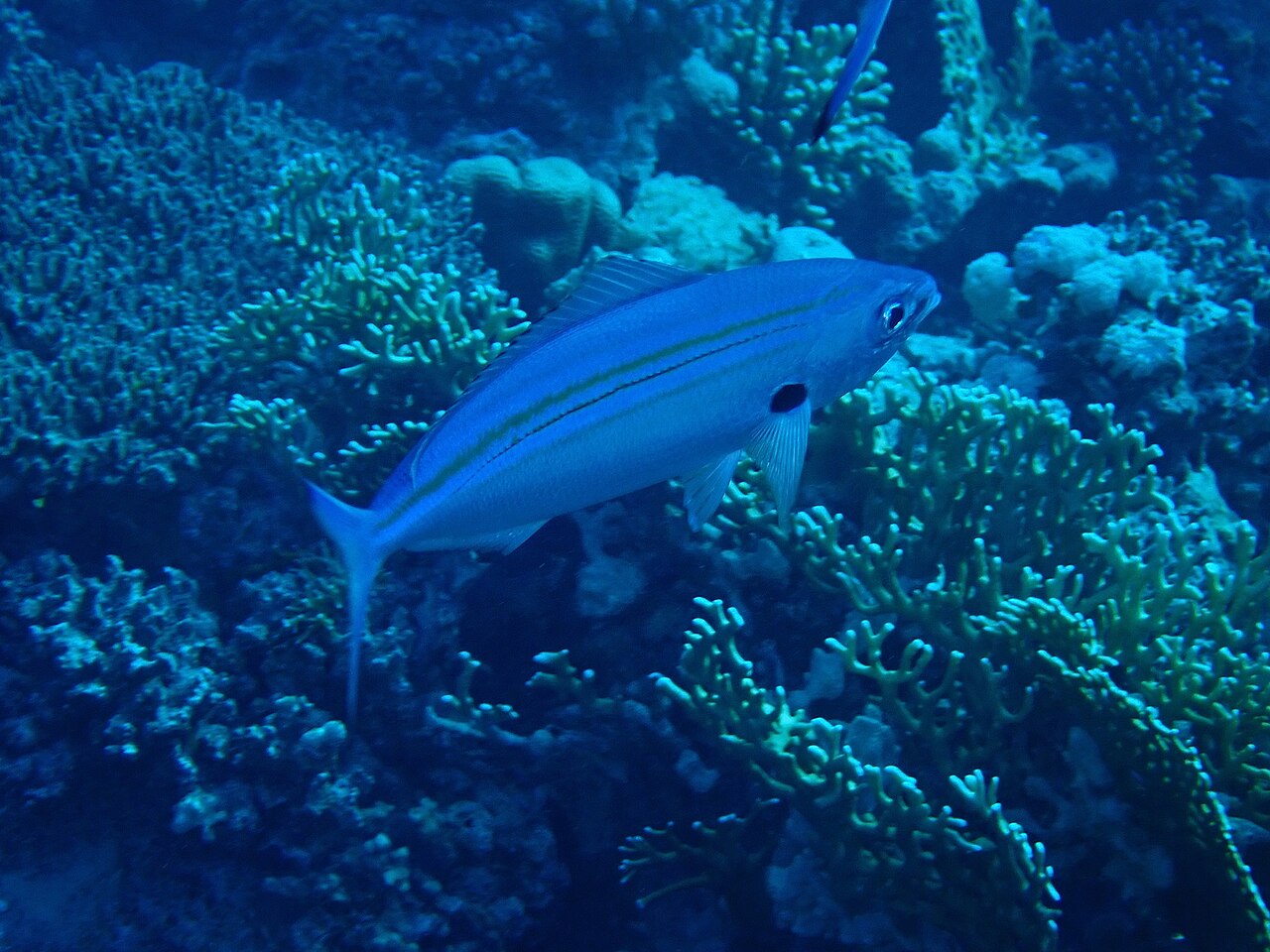
The variable-lined fusilier was formally introduced to scientific literature in 1987 by American ichthyologist Kent E. Carpenter, who designated the Persian Gulf as the type locality for this newly recognized species. Carpenter classified it within the subgenus Caesio of the family Caesionidae, a group of pelagic marine ray-finned fishes commonly known as fusiliers. The species epithet varilineata is a deliberate nod to the fish's most striking visual feature: a set of horizontal golden stripes along the flanks whose number is not fixed. The prefix vari- conveys "various," while lineata means "lined," together capturing the idea that each individual may display a different count of these markings. This naming convention reflects the genuine biological variation observed across the population, distinguishing the species from more uniformly striped relatives. As a member of the Caesionidae family, it shares the open-water, schooling lifestyle characteristic of fusiliers throughout the tropical Indo-Pacific, though its relatively restricted range and modest size set it apart from some of its larger congeners.
Morphology & Coloration
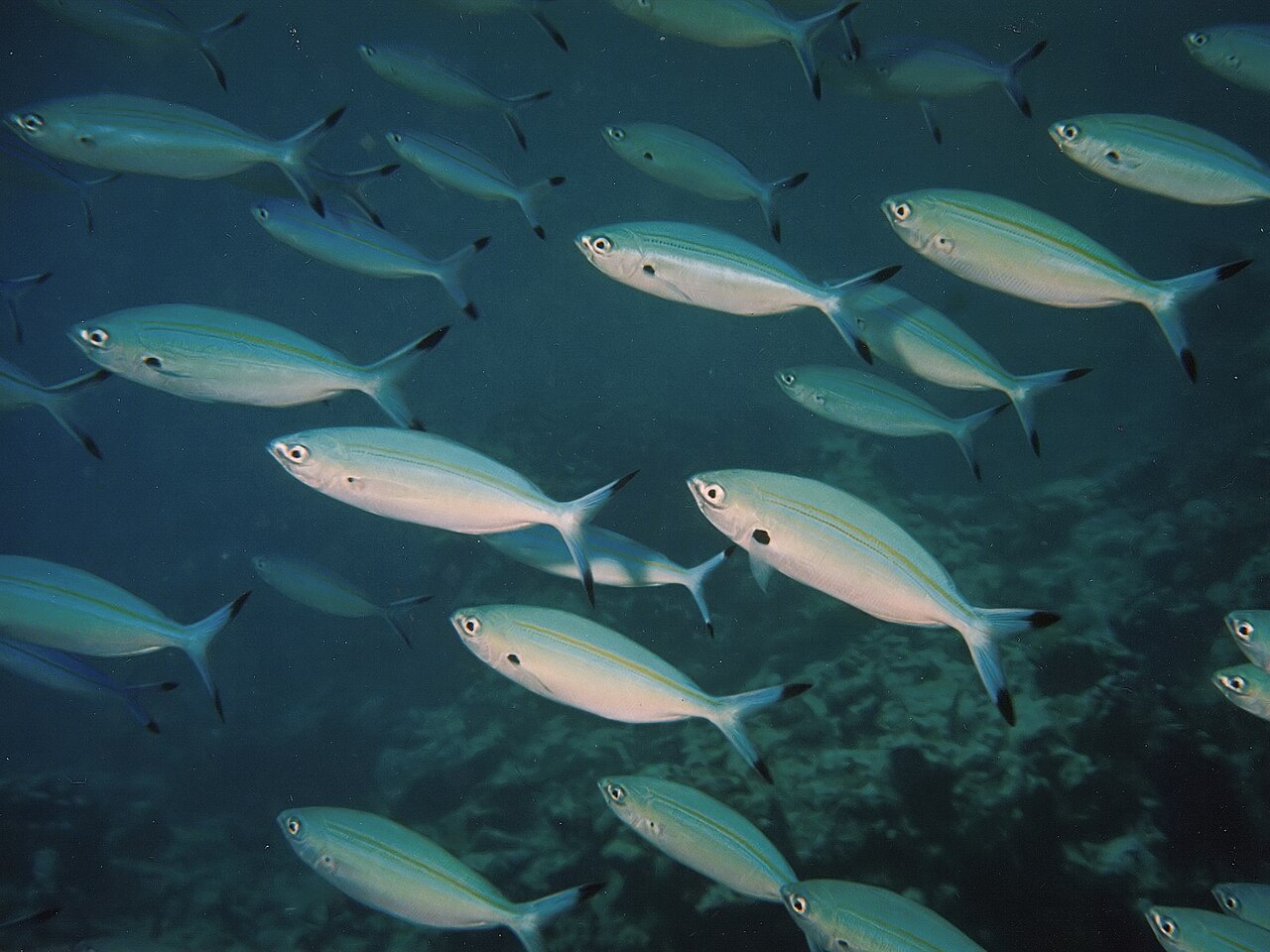
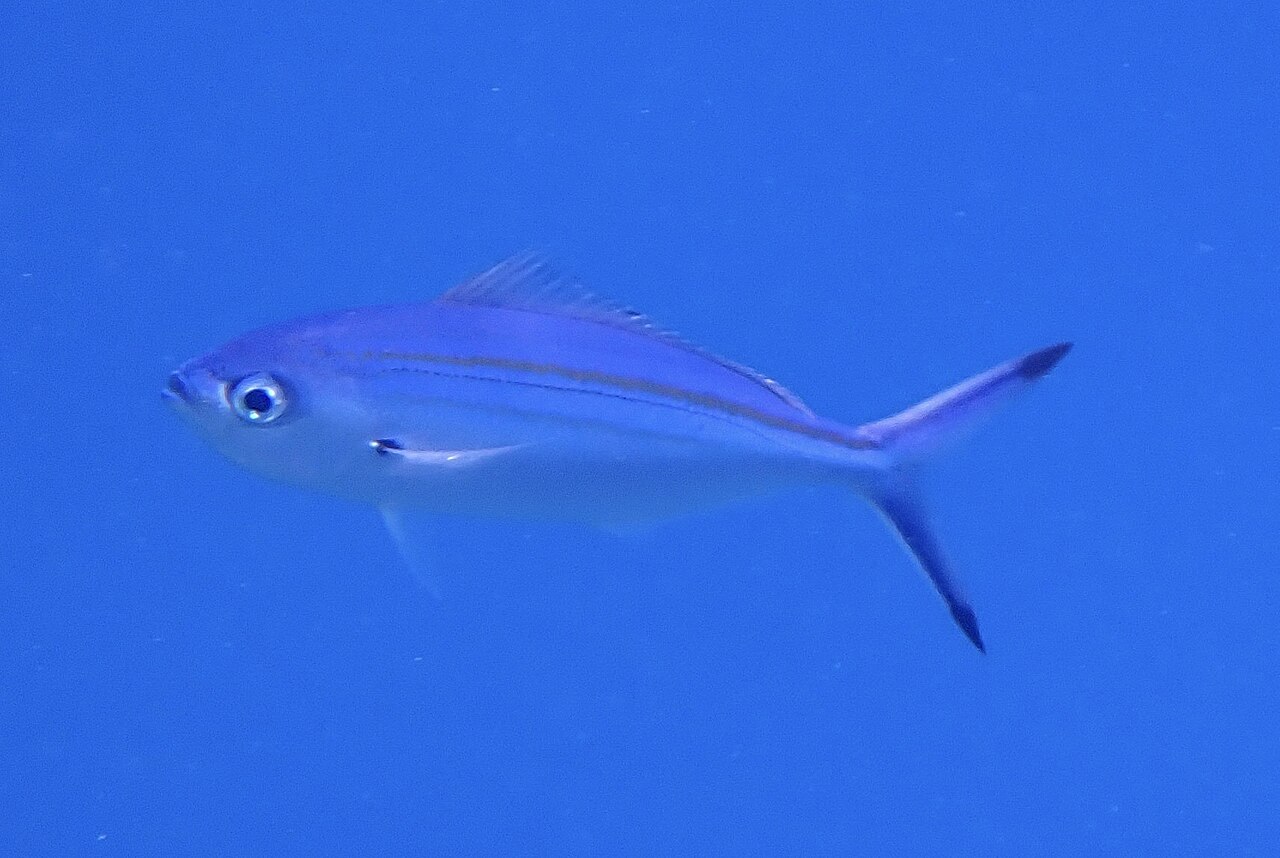
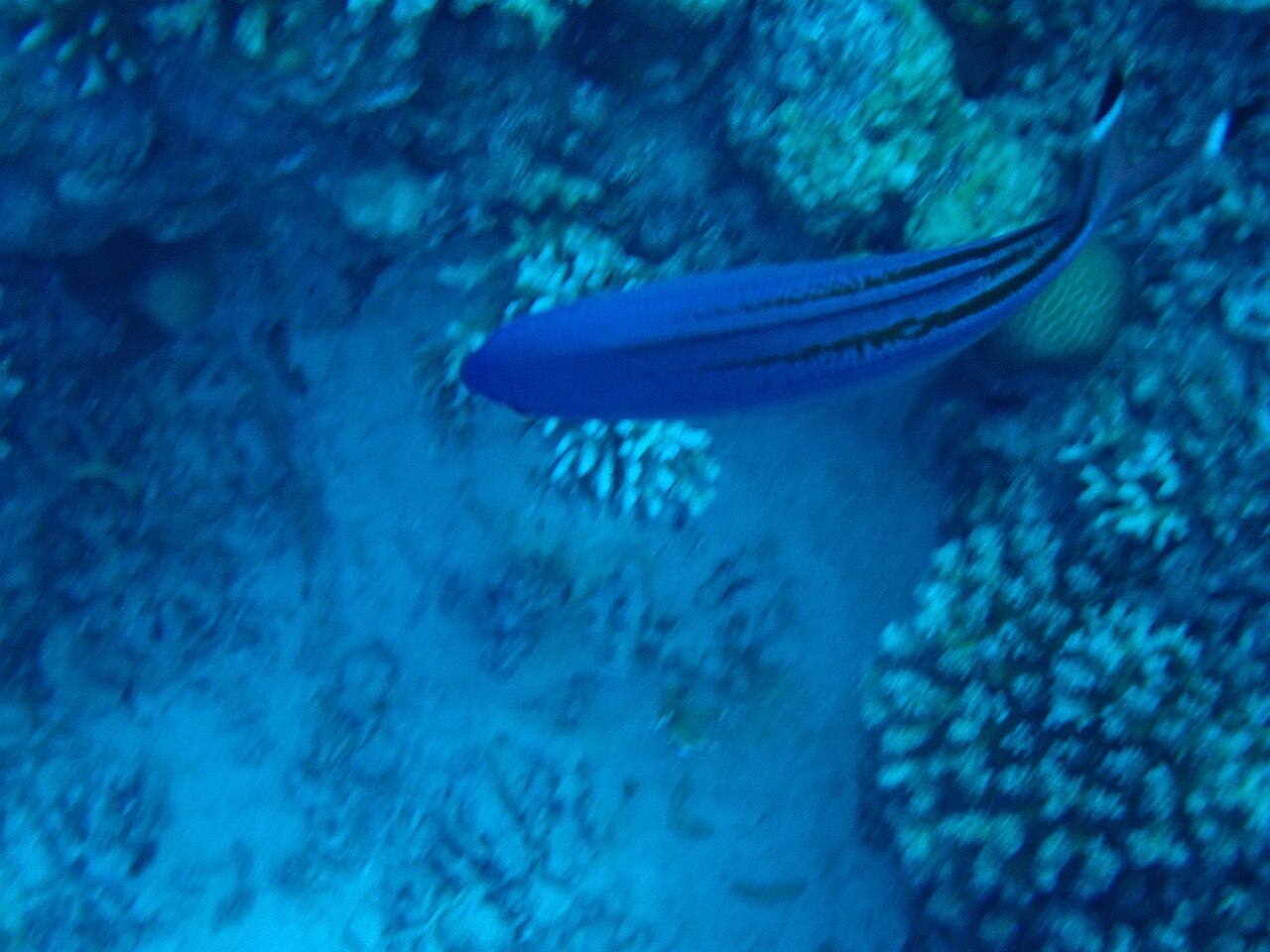
At a maximum total length of roughly 40 centimetres, the variable-lined fusilier occupies the small-to-medium end of the fusilier spectrum. Its body is distinctly fusiform, tapering to a spindle shape that suits life in open water, and the caudal fin is deeply forked, lending it a streamlined, swift appearance. The eyes are notably large relative to the head, while the mouth remains small, terminal, and protrusible—capable of extending forward to capture prey. Fin architecture is consistent across the species: the dorsal fin bears ten spines followed by fourteen to sixteen soft rays, and the anal fin carries three spines alongside eleven to thirteen soft rays. The base coloration is a silvery green-blue, overlaid with two to six yellow longitudinal lines whose width and intensity shift from one individual to the next, a variation that directly inspired the species name. The outer edges of the caudal fin lobes are bordered in black, providing a sharp contrast against the lighter body and adding a final touch of visual distinction to an otherwise modestly sized reef-adjacent fish.
Range, Habitat & the Mediterranean Intrusion
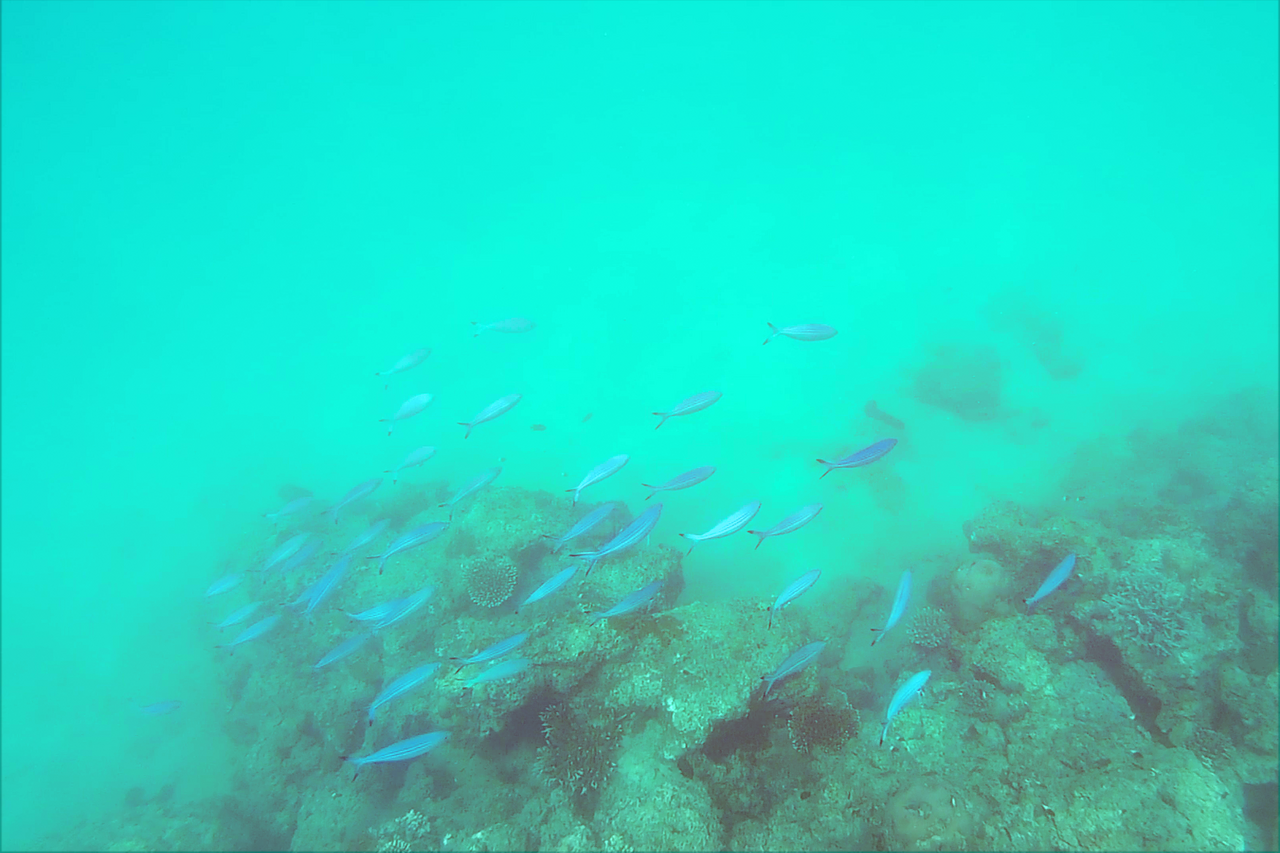
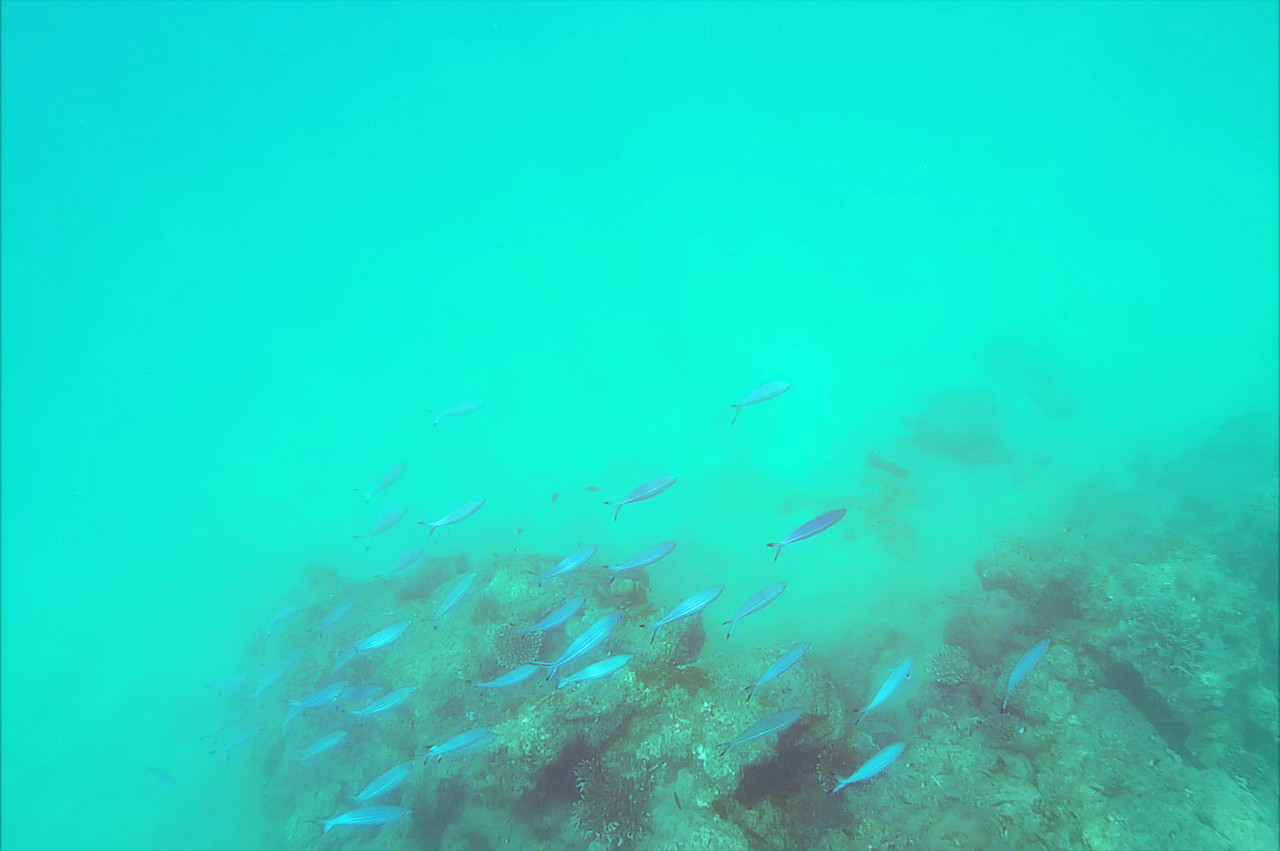
Native to the Indian Ocean basin, the variable-lined fusilier ranges from western Indonesia eastward to the eastern African coast, encompassing the Red Sea and the Persian Gulf within its natural distribution. It inhabits open water in the vicinity of coral reefs and external reef structures, where it feeds on zooplankton in the mid-water column, often joining mixed-species schools alongside other fusilier species. As an oviparous fish, it releases large numbers of small pelagic eggs into the water column. A remarkable recent development is its appearance in the Mediterranean Sea off Alexandria, Egypt. The most plausible explanation is passive transport through the Suez Canal. Because the Mediterranean lacks the coral reef habitats this species typically depends upon, the Alexandrian population has apparently adapted to forage around rock reefs encrusted with Anthozoa, a soft-coral group that offers a structural substitute. This trans-basin incursion highlights both the species' capacity for habitat flexibility and the ecological consequences of artificial waterway connections between otherwise separate marine regions.
Fisheries, Markets & Conservation Concerns
Within its native range, the variable-lined fusilier holds moderate importance in certain coastal fisheries while remaining a minor catch in others. Fishers employ gillnets, handlines, and traps to harvest it, and the fish is typically sold fresh. It is a regular sight in fish markets across East Africa and Sri Lanka, though it appears only sporadically in Omani markets, possibly as incidental bycatch. In the Maldives and the Laccadive Islands, juvenile specimens are specifically targeted to serve as live bait in the tuna fishery, adding a second layer of exploitation pressure. Conservation assessments flag the species as vulnerable to overexploitation, and it is already regarded as overfished in the Persian Gulf. The Mediterranean records from Alexandria fish markets further complicate its status, as this introduced population faces fishing pressure in a basin where it has no established regulatory framework. The combination of targeted harvest, bait-fish removal of juveniles, and the species' moderate reproductive output of small pelagic eggs underscores the need for careful management to prevent further population declines across its range.
Gallery
Frequently Asked Questions
What is the Variable-lined fusilier (Caesio varilineata)?
It is a pelagic, ray-finned marine fish in the fusilier family Caesionidae, also known by the common name thin-lined fusilier. It swims in open water throughout the Indo-Pacific region.
How large does a Variable-lined fusilier grow?
The species reaches a maximum total length of roughly 40 centimeters. That places it in the moderate size range among its close relatives in the Caesionidae family.
Where does the Variable-lined fusilier live in the wild?
It is found across the Indo-Pacific, typically occupying depths between about 2 and 25 meters below the surface. As a pelagic fish, it favors open water rather than staying tightly associated with reef structures.
Who originally described Caesio varilineata and when?
The species was formally named and described by the ichthyologist Carpenter in 1987. Taxonomically it sits within the family Caesionidae, under the order Eupercaria incertae sedis.
What sets the Variable-lined fusilier apart from other fusiliers?
Its common name comes from the fine, variable striping pattern along its body, which distinguishes it visually from broader-lined congeners. Like other Caesionidae, it is a schooling, open-water species, but those narrower markings make it easier to tell apart in the field.
Spotted an error? Know more?
Reader corrections go straight into our review queue. Suggest an edit · How this site is sourced