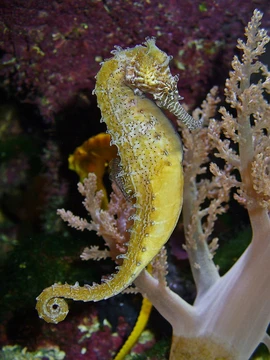
Barbour's seahorse (Hippocampus barbouri)
Source-cited species reference: taxonomy from WoRMS, biology from FishBase, occurrence map from GBIF, conservation from IUCN Red List, description from Wikipedia.

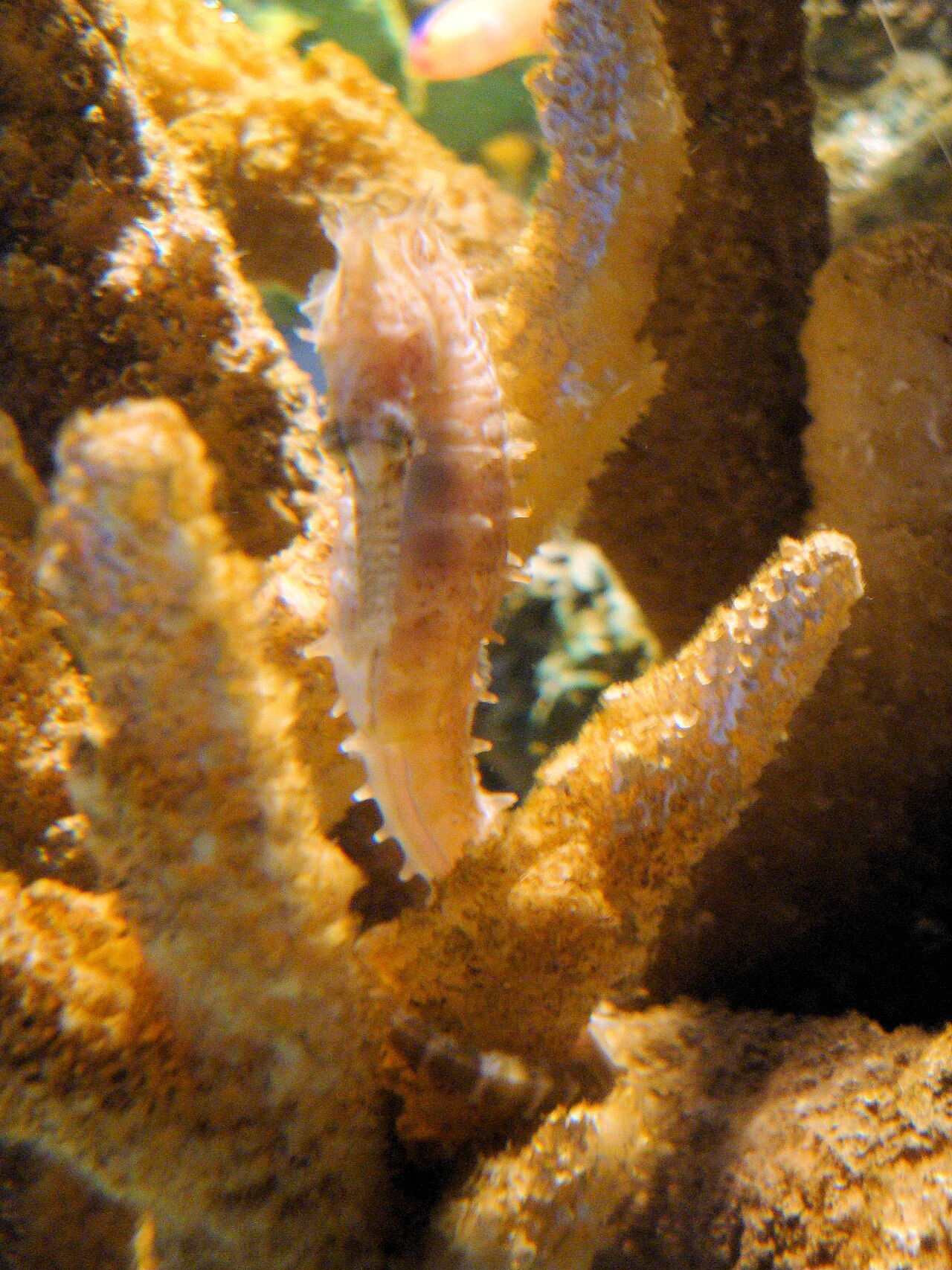
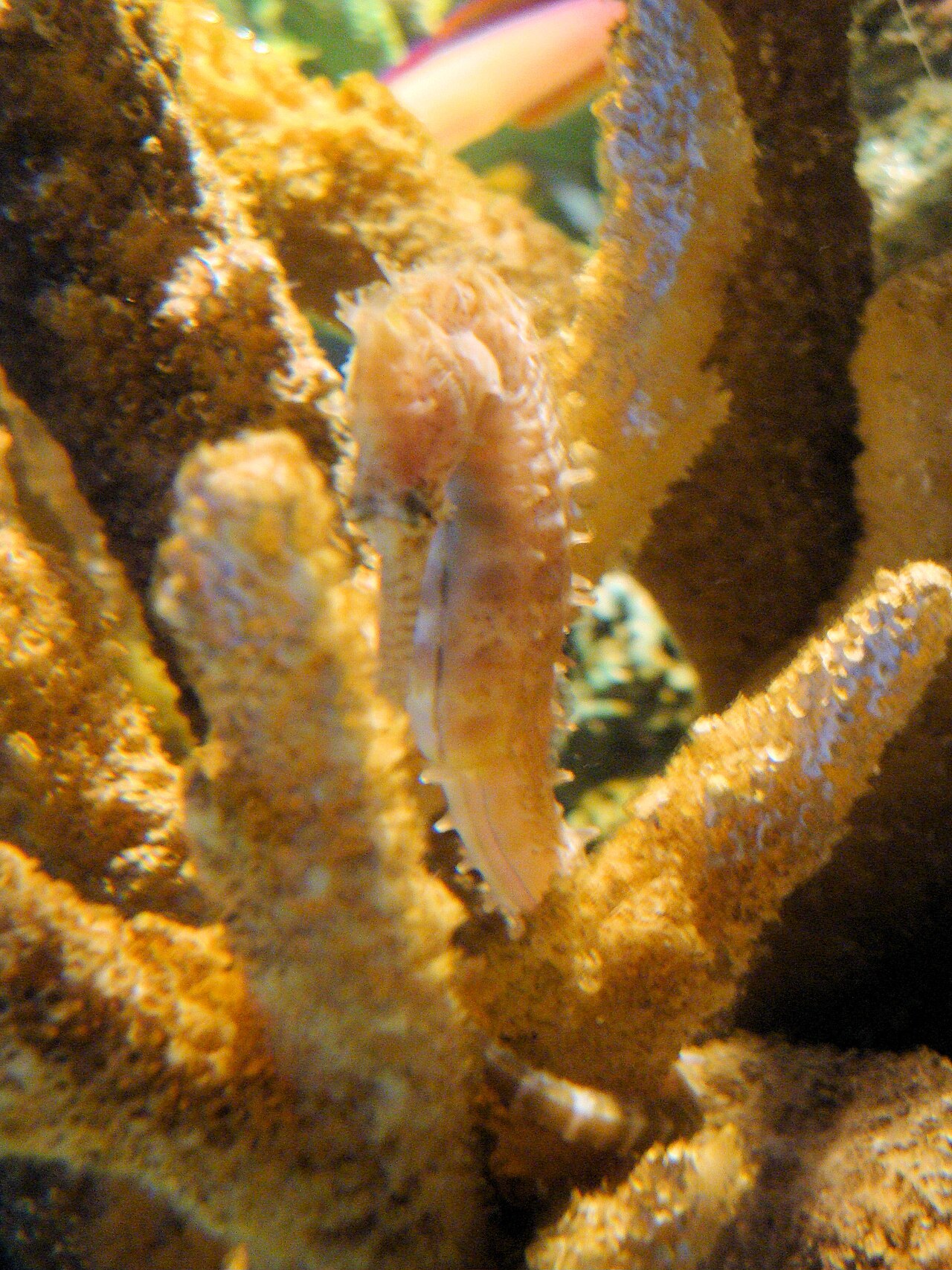
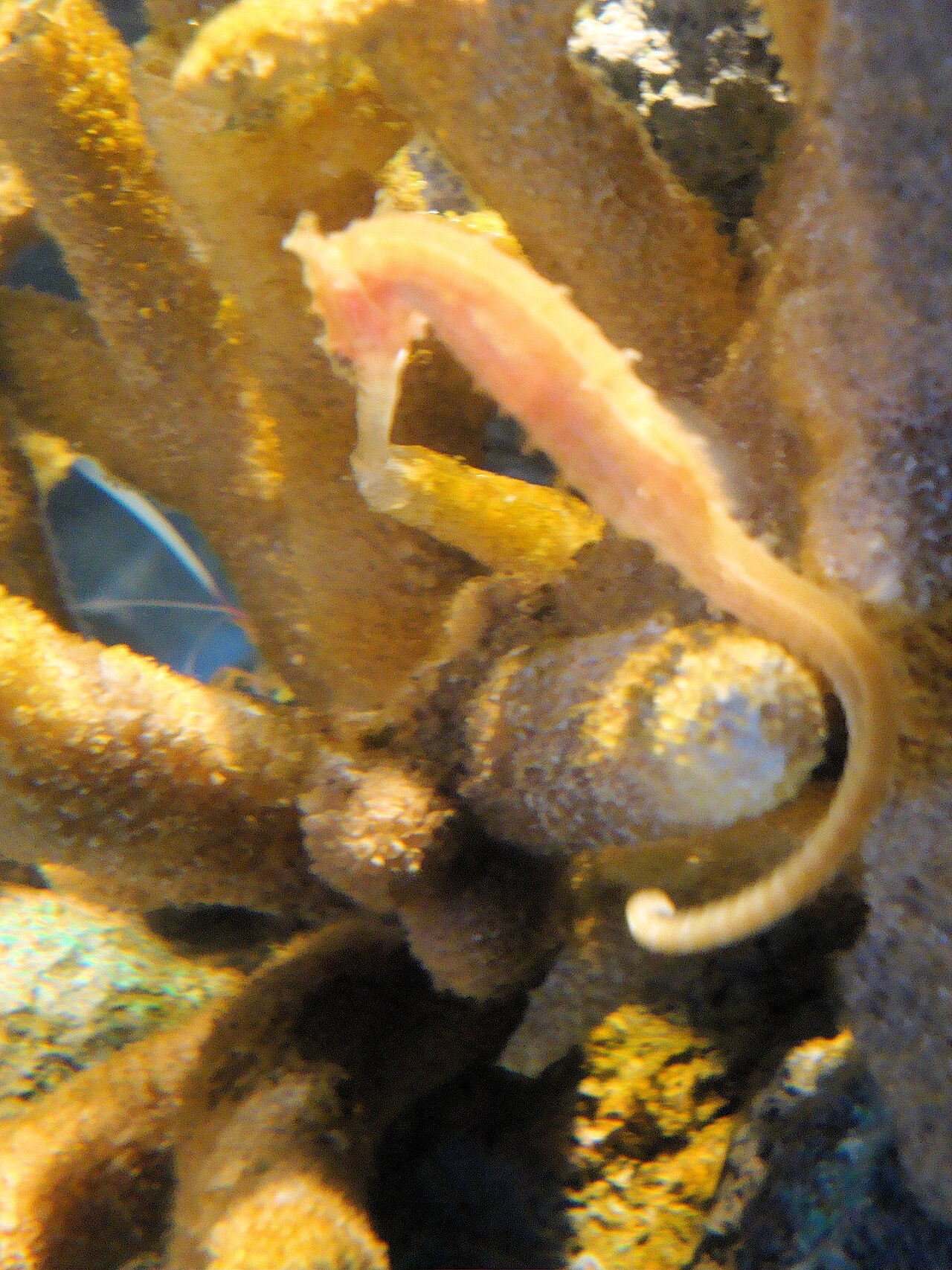
Jim G from Silicon Valley, CA, USA · CC BY 2.0
Barbour's seahorse (Hippocampus barbouri) is a species of fish of the family Syngnathidae.
- Scientific name
- Hippocampus barbouri
- Authority
- Jordan & Richardson, 1908
- Family
- Syngnathidae
- Order
- Syngnathiformes
- Maximum length
- 15 cm
- Depth range
- 0–12 m
- Habitat zone
- reef-associated
- Iucn red list
- Vulnerable
- Gbif occurrence records
- 136
Evolutionary Lineage and the Fossil Record
Barbour's seahorse belongs to a lineage whose deep past is only faintly preserved in stone. Anatomical, molecular, and genetic evidence all converge on one conclusion: seahorses are essentially pipefish that underwent dramatic morphological modification. The fossil record, however, remains thin. The oldest known specimens—two pipefish-like forms, H. sarmaticus and H. slovenicus—were recovered from the middle Miocene coprolitic horizon of the Tunjice Hills in Slovenia, roughly thirteen million years old. Better-preserved material comes from the Lower Pliocene Marecchia River beds near Rimini, Italy, yielding specimens of H. guttulatus dated to about three million years ago. Molecular clock estimates push the pipefish–seahorse split back to the Late Oligocene, and researchers have speculated that tectonic activity in the western Pacific created vast shallow-water zones where expanding seagrass beds offered the cover an upright body plan needed. From that Pacific cradle, seahorses later made two independent incursions into the Atlantic. A 2016 genome study in Nature revealed the seahorse genome to be the fastest-evolving among all fish examined to date, and the shift from horizontal pipefish swimming to vertical seahorse posture may reflect an adaptation letting the animal strike at small shrimp from greater distances than its pipefish relatives can manage.
Anatomy and the Art of Upright Locomotion
Though classified as bony fish, seahorses like H. barbouri carry no conventional scales. Instead, thin skin is stretched over a series of bony plates arranged in rings around the body; each species possesses a distinct ring count, and this outer skeleton doubles as predator armor, replacing the need for ribs entirely. The animal swims vertically—a posture shared by no other fish except the razorfish—propelling itself with a rapidly fluttering dorsal fin while pectoral fins tucked behind the eyes handle steering. There is no caudal fin. The tail, built from square-like bony rings, is prehensile and used to anchor the animal to stationary objects, a necessity given how poorly seahorses swim. The genus ranges from 1.5 to 35 cm in length, and the dwarf seahorse H. zosterae holds the record for slowest top speed at roughly 1.5 meters per hour. A flexible, well-defined neck and a species-specific crown-like coronet on the head complete the equine silhouette. Eyes move independently, much like a chameleon's, and the animal can grow or reabsorb spiny appendages to match its surroundings.
The Pivot-Feeding Mechanism
Seahorses possess long tubular snouts they use to draw in food, yet their digestive tracts are remarkably simple—lacking a stomach entirely—which forces them to feed continuously to survive. Their preferred prey are small crustaceans, especially mysid shrimp, though some individuals have been observed taking other invertebrates and even larval fish. Thanks to excellent camouflage, the seahorse sits motionless and ambushes anything that drifts within striking range. A study found that the distinctive head shape provides a hydrodynamic advantage, minimizing water disturbance as the animal creeps toward evasive copepods. The actual capture unfolds in three named phases. In the preparatory phase, the seahorse slowly advances upright and then flexes its head downward. The expansive phase follows: the head elevates, the buccal cavity widens, and the prey is sucked in in a single motion. Finally, during recovery, the jaws, head, and hyoid apparatus snap back to resting positions. This phased sequence is known as pivot-feeding, and the amount of available vegetation in the habitat directly shapes how the animal times its strikes.
Habitat, Territory, and Camouflage
Seahorses occupy shallow tropical and temperate salt water roughly between 45°S and 45°N, favoring sheltered microhabitats such as seagrass beds, brackish estuaries, coral reefs, and mangrove roots. Some individuals drift far from their home range while rafting on clumps of sargassum, while others spend an entire lifetime tethered to a single local sea fan. Four species range across Pacific waters from North to South America; in the Atlantic, H. erectus stretches from Nova Scotia down to Uruguay, and the tiny H. zosterae is restricted to the Bahamas. European colonies have been documented in the Thames Estuary, and two species—the long-snouted H. guttulatus and the short-snouted H. hippocampus—hold territories in the Mediterranean. There, males defend a home range of roughly one square meter, whereas females roam over approximately one hundred times that area. All seahorses, including H. barbouri, belong to the family Syngnathidae alongside pipefishes and the two seadragon genera, Phycodurus and Phyllopteryx.
Gallery
Frequently Asked Questions
Who is Barbour's seahorse (Hippocampus barbouri)?
Barbour's seahorse is a small marine fish in the syngnathid family, first formally named by Jordan and Richardson back in 1908. It reaches a maximum total length of roughly 15 cm and lives in shallow coastal waters.
What are Barbour's seahorse (Hippocampus barbouri)'s powers/role?
It anchors itself with a prehensile tail among seaweed or coral and ambushes tiny crustaceans and plankton for food. Taxonomically it sits in the order Syngnathiformes, sharing its evolutionary lineage with pipefish and seadragons.
Why is Barbour's seahorse (Hippocampus barbouri) important?
As a mid-level predator in shallow marine food webs, it helps regulate populations of small invertebrates. Its presence also serves as an indicator of the overall biodiversity and ecological integrity of Indo-Pacific coastal habitats.
Where does Barbour's seahorse (Hippocampus barbouri) live?
It inhabits shallow coastal waters from the surface down to about 12 meters depth, typically associating with seagrass beds, coral rubble, or algal thickets. Its geographic range across the Indo-Pacific has been mapped through occurrence records in global biodiversity databases such as GBIF.
Spotted an error? Know more?
Reader corrections go straight into our review queue. Suggest an edit · How this site is sourced