
Black snapper (Apsilus dentatus)
Source-cited species reference: taxonomy from WoRMS, biology from FishBase, occurrence map from GBIF, conservation from IUCN Red List, description from Wikipedia.

Williams, J. T.; Carpenter, K. E.; Van Tassell, J. L.; Hoetjes, P.; Toller, W.; · CC BY 2.5
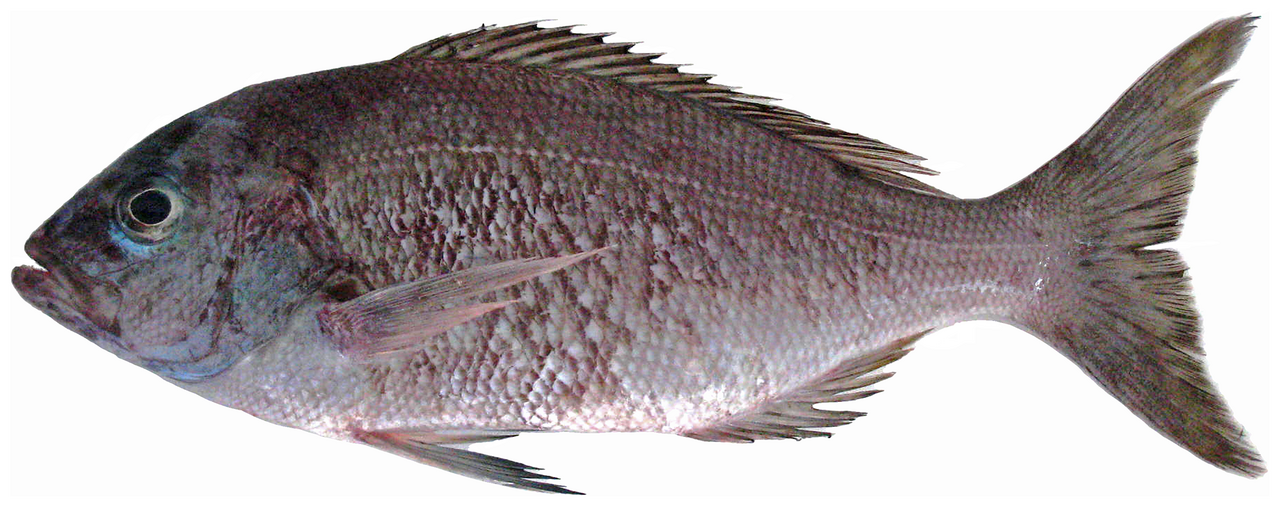
Apsilus dentatus, the black snapper, is a species of marine ray-finned fish, a snapper belonging to the family Lutjanidae. It is found in the western Atlantic Ocean.
- Scientific name
- Apsilus dentatus
- Authority
- Guichenot, 1853
- Family
- Lutjanidae
- Order
- Eupercaria incertae sedis
- Maximum length
- 65 cm
- Depth range
- 40–300 m
- Habitat zone
- reef-associated
- Iucn red list
- Least Concern
- Gbif occurrence records
- 59
Taxonomic Identity and Family Placement
Apsilus dentatus is a fish species classified as a member of the snapper fish family. It is one of the organisms that carries the common name "Black snapper" in everyday usage. As a member of the snapper family, it shares its broader taxonomic grouping with other well-known snapper species, though its specific ecological niche, habitat preferences, or geographic range are not detailed in the available reference material. What is firmly established is that it is a fish, that it belongs to the snapper family, and that it is one of several distinct species that humans have collectively labeled "Black snapper" in casual language. This familial placement is the primary taxonomic fact that anchors the species within the wider world of marine biology, distinguishing it from the other, taxonomically separate organisms that happen to share the same colloquial name.
The Common Name Problem
The term "Black snapper" is not a single species designation but rather a common name that has been applied to multiple, taxonomically distinct organisms. In the case of Apsilus dentatus, the name identifies a fish within the snapper family. However, the same colloquial label also attaches to Lutjanus griseus, another snapper-family fish inhabiting the coastal waters of the western Atlantic Ocean, and to Girella tricuspidata, a fish native to New Zealand. This overlap in naming creates a practical challenge for anglers, biologists, and anyone relying on common names to identify species. The fact that one everyday phrase can point to at least three different fish species, each belonging to different genera and, in some cases, different regions of the world, highlights how common names, while convenient in casual conversation, can obscure the precise taxonomic identity of the animal being discussed.
Beyond the Fish: An Unlikely Viper
Perhaps the most surprising element in the "Black snapper" disambiguation is that the name also refers to Sistrurus catenatus, a venomous pit viper found predominantly in the United States. This means that a single common name bridges not just multiple fish species but crosses entirely different taxonomic groupings, connecting a marine snapper-family fish to a terrestrial, venomous snake. For anyone encountering the term "Black snapper" in a field guide, a fishing report, or a natural history reference, the possibility that the name could denote a dangerous pit viper rather than a fish adds a layer of caution to casual usage. The viper's presence in the disambiguation list underscores how common names in natural history can be remarkably imprecise, spanning vertebrate classes and even ecological realms, and why scientific binomial nomenclature remains essential for unambiguous identification.
Geographic Spread of the Name
The organisms collectively called "Black snapper" are spread across remarkably different geographic settings. Lutjanus griseus, one of the fish species bearing the name, is associated with the coastal waters of the western Atlantic Ocean. Girella tricuspidata, another fish sharing the common name, is linked to New Zealand. The venomous pit viper Sistrurus catenatus is found mostly in the United States. Meanwhile, Apsilus dentatus, the snapper-family fish that is the primary referent in this entry, is identified as a member of the snapper family without a specific geographic range stated in the available reference. This geographic dispersion, spanning the western Atlantic, New Zealand, and the continental United States, demonstrates that the common name "Black snapper" is not tied to a single ecosystem or region. Instead, it functions as a loosely applied label that has been independently assigned to species living in vastly different marine and terrestrial environments around the world.
Gallery
Frequently Asked Questions
What is Black snapper (Apsilus dentatus)?
The black snapper is a deep-water snapper species classified under the family Lutjanidae, native to the western Atlantic Ocean. It was first formally described by Guichenot back in 1853.
How big does Black snapper (Apsilus dentatus) get and where does it live?
This species can reach a maximum total length of roughly 65 cm, making it a moderately sized member of the snapper family. It typically inhabits depths between 40 and 300 meters in the western Atlantic.
What family and order does Black snapper (Apsilus dentatus) belong to?
It sits within the snapper family Lutjanidae, placing it alongside other well-known reef and deep-water snappers. Taxonomically it falls under the order Eupercaria incertae sedis, reflecting some ongoing uncertainty in its broader classification.
Who described Black snapper (Apsilus dentatus) and when?
The species was formally named and described by the French naturalist Guichenot in 1853. That original description remains the authority citation used in modern taxonomic databases such as WoRMS.
Why is Black snapper (Apsilus dentatus) notable to deep-sea fishing fans?
Its habitat range of 40 to 300 meters means most recreational anglers will never encounter it, making it a prized target for deep-sea charter operations in the western Atlantic. As a regionally restricted species, it also represents a unique piece of local marine biodiversity.
Spotted an error? Know more?
Reader corrections go straight into our review queue. Suggest an edit · How this site is sourced