
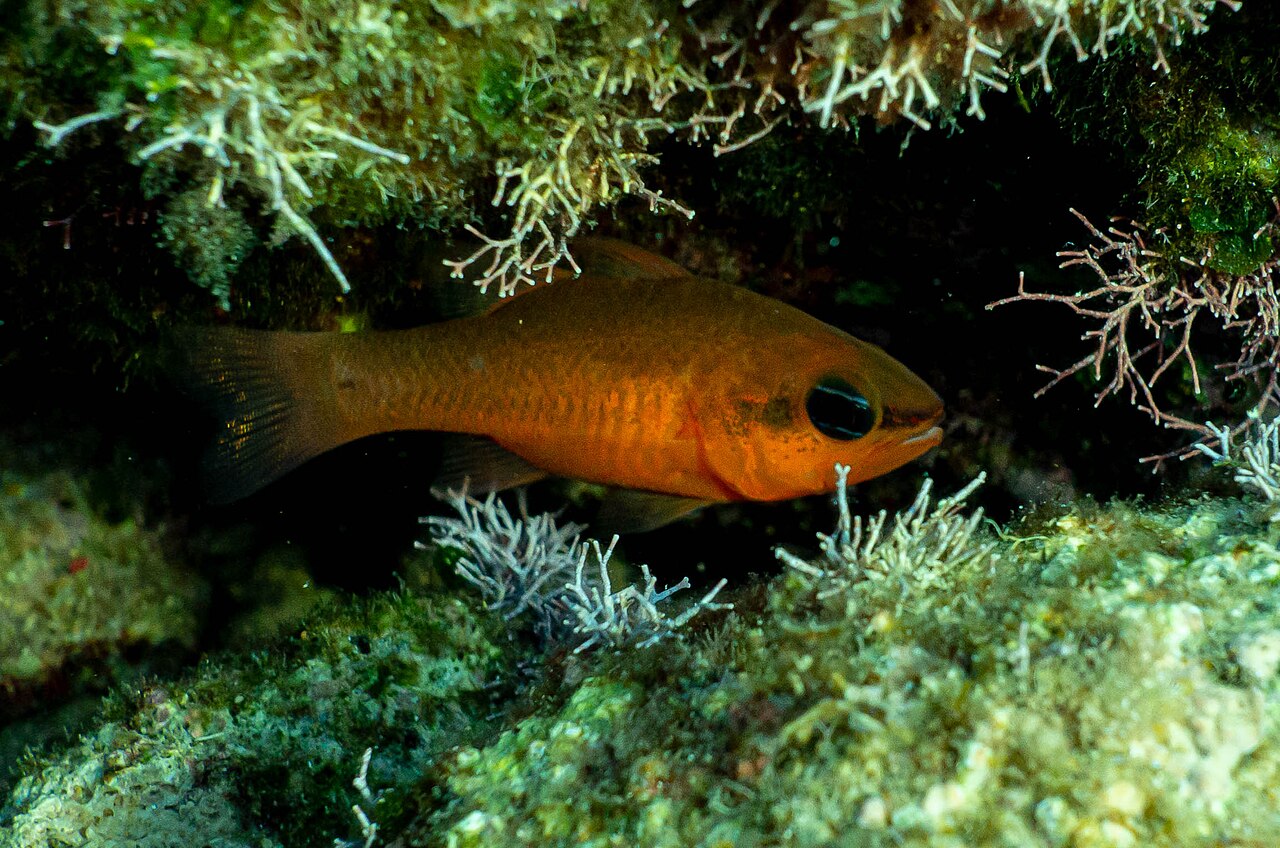
Cardinal fish (Apogon imberbis)
Source-cited species reference: taxonomy from WoRMS, biology from FishBase, occurrence map from GBIF, conservation from IUCN Red List, description from Wikipedia.

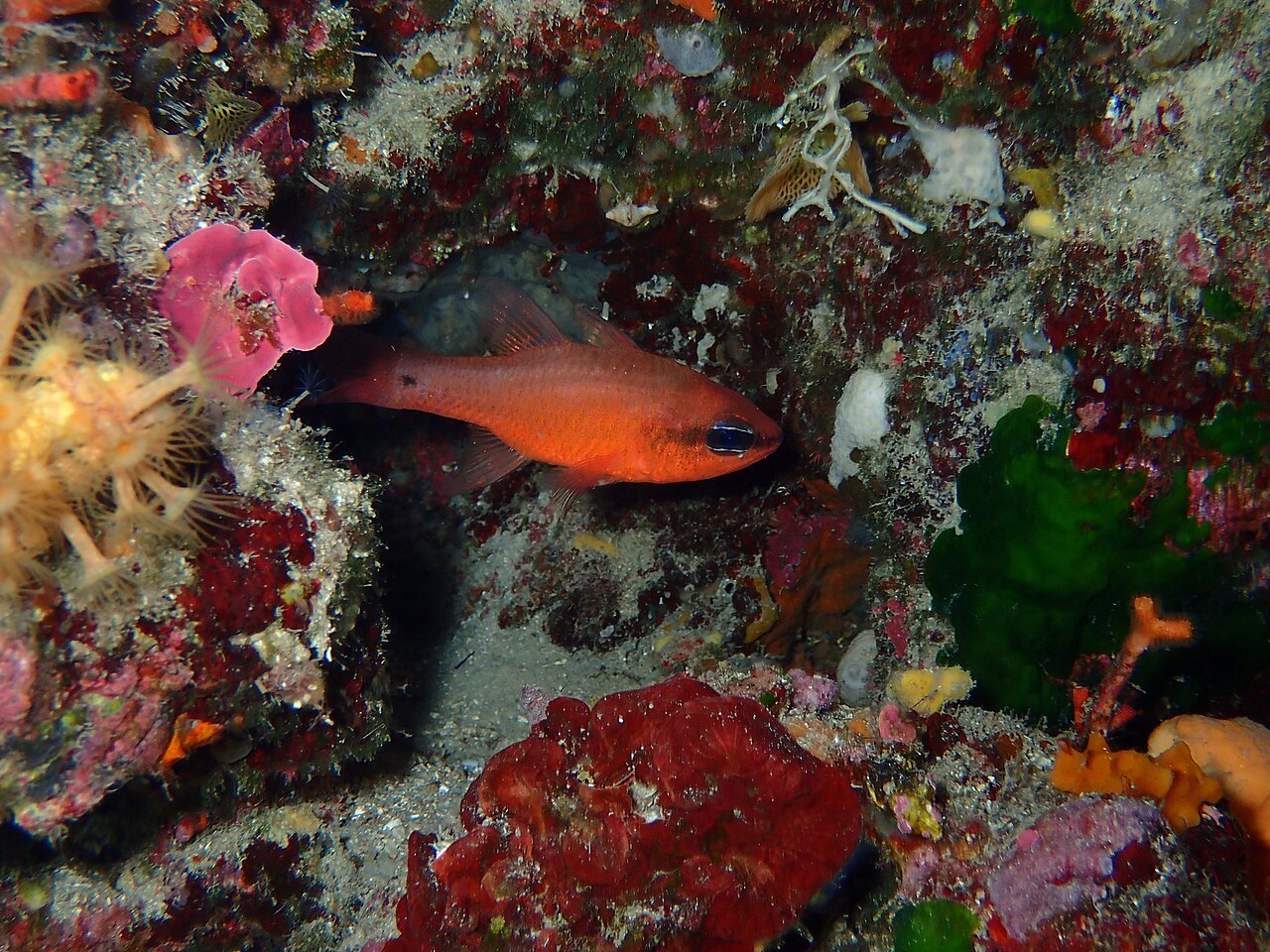
Paolo Gamba · CC BY 2.0
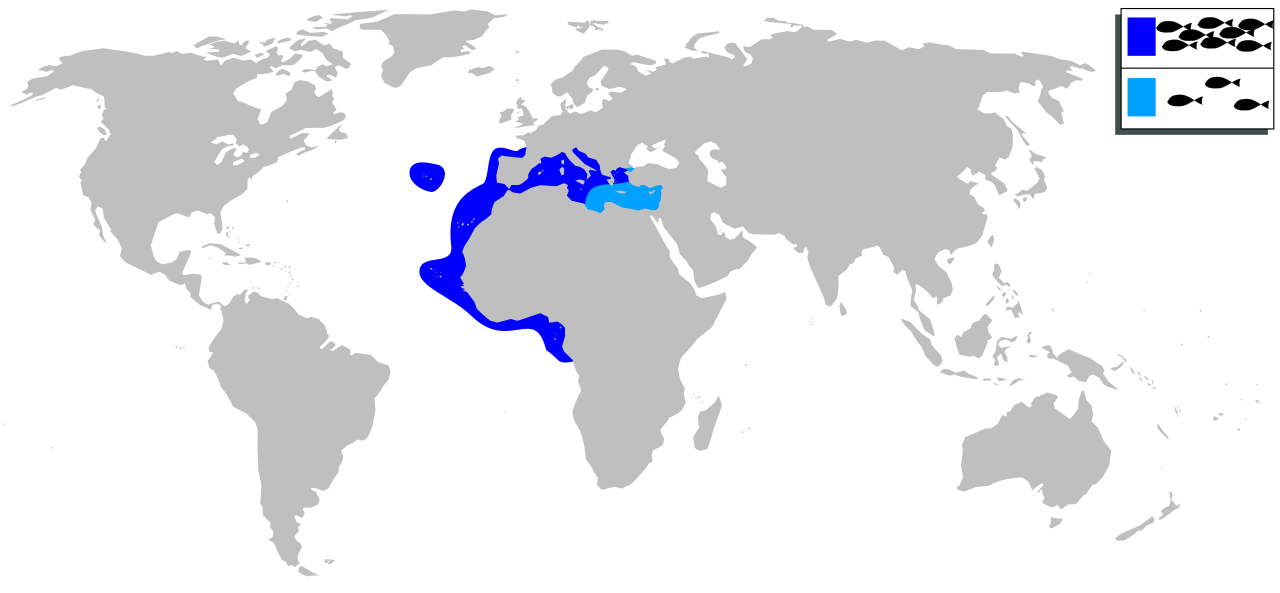
Apogon imberbis, the cardinalfish, the Mediterranean cardinalfish or king of the mullets, is a species of ray-finned fish, a cardinalfish belonging to the family Apogonidae. It is widely distributed in the Mediterranean and along the warm temperate and tropical eastern Atlantic coasts from Portugal south to the Gulf of Guinea.
- Scientific name
- Apogon imberbis
- Authority
- (Linnaeus, 1758)
- Family
- Apogonidae
- Order
- Apogoniformes
- Maximum length
- 15 cm
- Depth range
- 10–200 m
- Habitat zone
- reef-associated
- Iucn red list
- Least Concern
- Gbif occurrence records
- 8,838
Physical Form and Coloration
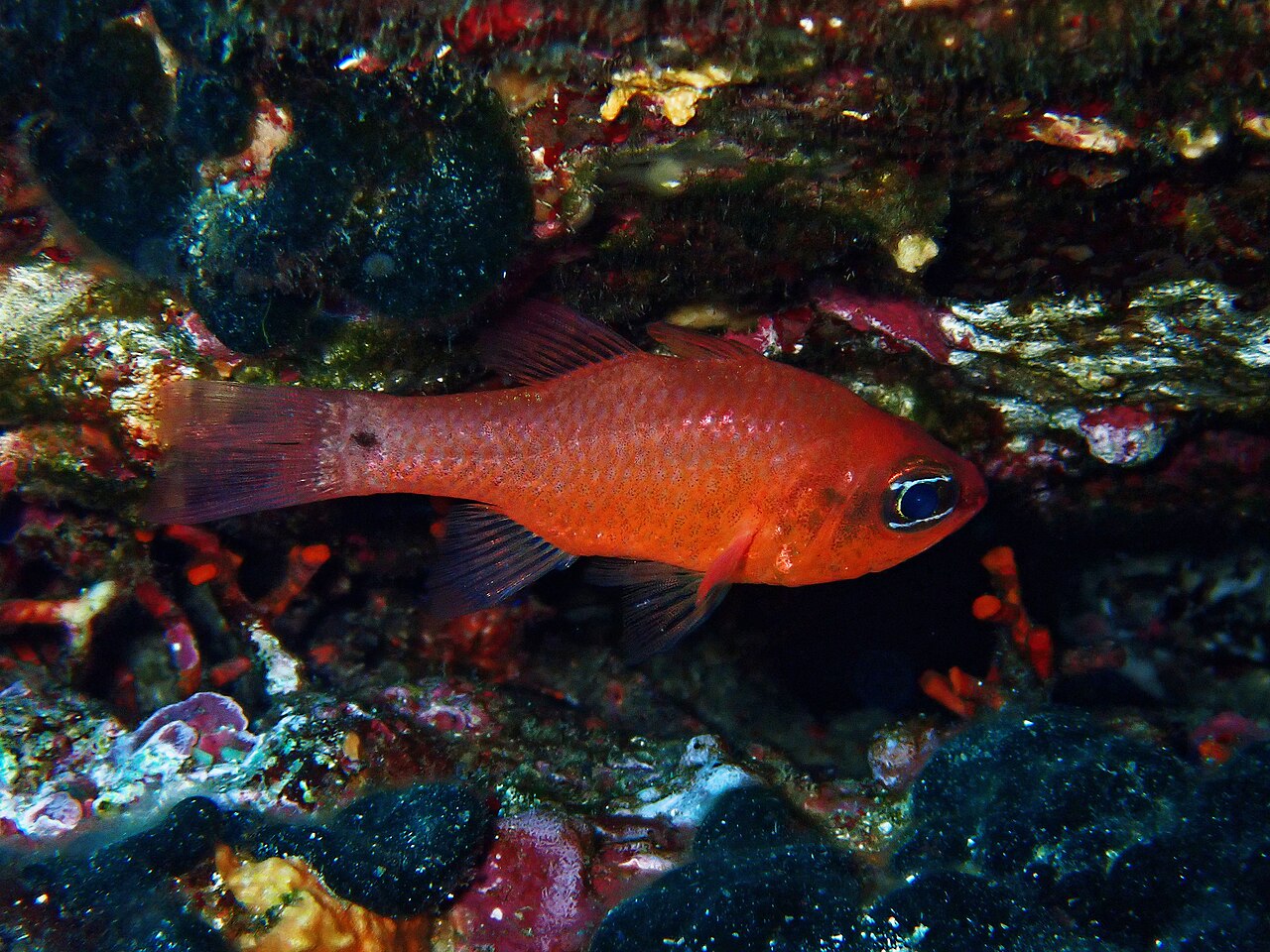
The cardinalfish presents a rounded, laterally compressed silhouette with a broadly ovate body. Its head is disproportionately large, dominated by an eye so oversized that it dwarfs the snout. The mouth is wide and set obliquely, the lower jaw jutting forward past the upper; inside, rows of tiny villiform teeth line the mandible, palatine, and vomer. The preopercular margin carries only a faint serration, while the ridge above it stays smooth. A notably long pectoral fin stretches back to at least the base of the anal fin, and the tail shows a subtle notch along its trailing edge. Scales are large and ctenoid, with the lateral line spanning twenty-two to thirty of them. The overall palette is a warm red or pink, deepening to a dusker tone across the back and crown. Two or three dark spots mark the base of the caudal fin, sometimes merging into a single blotch. Most individuals measure ten to twelve centimetres in standard length, though the record reaches fifteen. The two dorsal fins together bear seven spines and nine to ten soft rays, while the anal fin carries two spines and eight to nine soft rays.
Geographic Range and Habitat
The cardinalfish commands a remarkably broad swath of warm-water coastline. Along the eastern Atlantic, its range stretches from Gibraltar and the southern coast of Portugal all the way south to Angola, encompassing the Canary Islands, Madeira, the Azores, the Cape Verde archipelago, and the island groups dotting the Gulf of Guinea. Within the Mediterranean Sea it is present throughout, yet it does not push northward into the Black Sea. In terms of substrate, the species gravitates toward rocky reefs and, increasingly, artificial structured habitats. In the Atlantic it is particularly associated with coral and rocky formations, while a study in southern Italy highlighted its preference for rocky cliffs and sea caves. Depths typically fall between two and twenty metres. The fish can be found in surprisingly high numbers on man-made reefs, a pattern especially pronounced in Mediterranean waters. Its diet is opportunistic, encompassing small fish, various invertebrates, and plankton.
Nocturnal Rhythms and Social Life
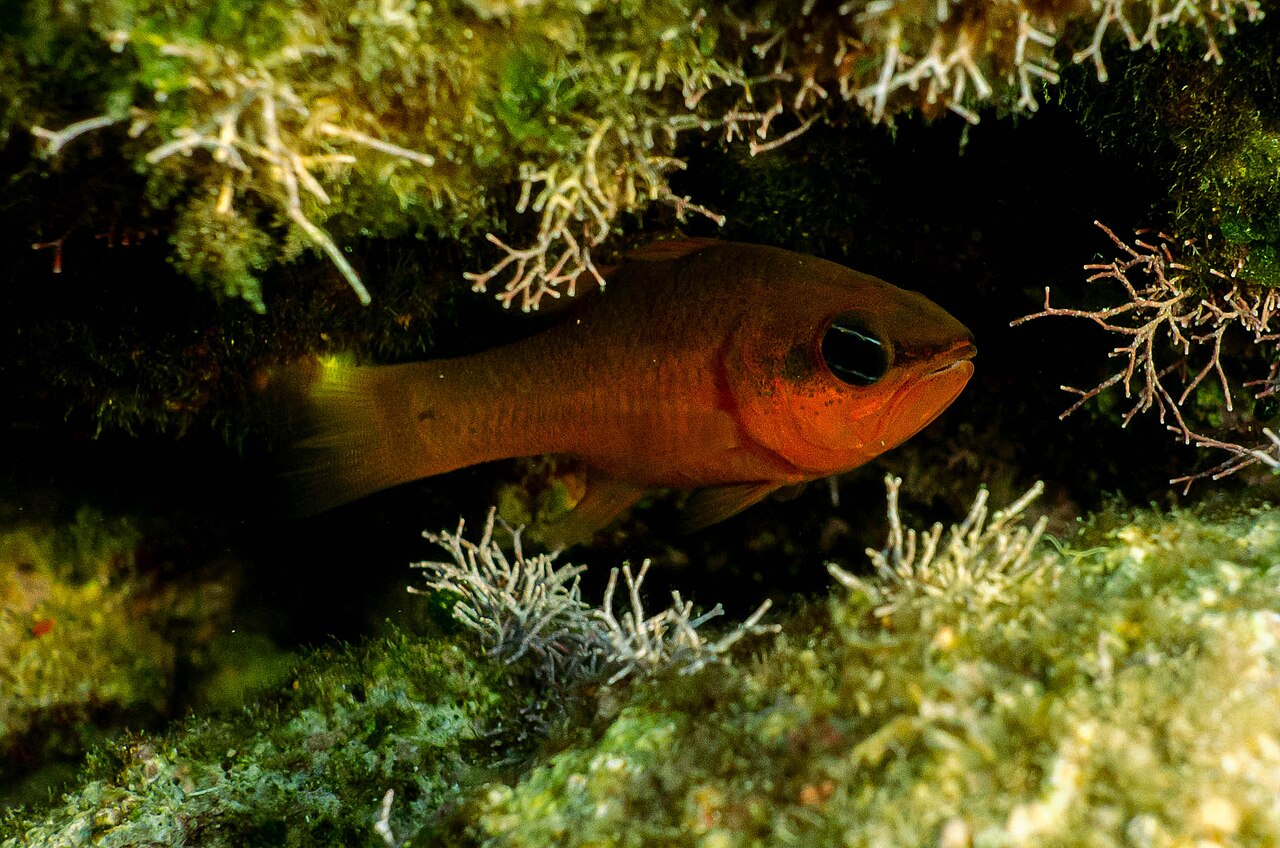
Despite its vivid coloration, the cardinalfish is a creature of the dark. It is fundamentally nocturnal, emerging to forage after sunset while the daylight hours are spent tucked into cavities, crevices, or caves. During these daytime retreats it may hide alone or cluster in groups, and in some locations it schools in large numbers. This social flexibility is one of its more notable behavioral traits. Seasonal shifts also shape its movements: in winter the fish appear to relocate to deeper waters, suggesting a thermal or light-driven shift within its preferred two-to-twenty-metre band. The species thrives on both natural and artificial structures, and in the Mediterranean its abundance on man-made reefs is particularly striking. In the Atlantic, its association with coral and rocky reefs gives it a slightly different ecological niche. Whether perched on a natural cliff face in southern Italy or nestled among the concrete framework of a harbor breakwater, the cardinalfish seems equally at home, its large eyes perfectly adapted to the dim, shadowed world it inhabits.
Courtship and the Male's Burden
Reproduction in the cardinalfish is a seasonally bounded event, with the breeding window falling between June and September. The species is a mouthbrooder, a strategy that places the entire burden of egg care on the male. Following internal fertilisation, the male takes the resulting balls of eggs into his mouth and carries them there for the duration of incubation. This is a considerable physiological commitment: the male must hold the eggs in his oral cavity, keeping them safe and viable until the young are ready to emerge. The seasonal timing of the breeding period, aligned with the warmest months of the year, suggests an evolutionary adaptation to conditions that favour successful development of the brood. Once the fry are released, the species' well-documented tendency to school in large numbers may offer a degree of collective protection for the newly independent juveniles as they navigate the reef environment. The cardinalfish's reproductive strategy thus stands as a clear example of paternal investment in the marine world, where the male's mouth functions as both nursery and protective enclosure for the next generation.
Gallery
Frequently Asked Questions
What is Cardinal fish (Apogon imberbis)?
It is a small ray-finned fish in the cardinalfish family (Apogonidae) that inhabits warm Atlantic and Mediterranean waters. Linnaeus first described the species in 1758, and it remains one of the more widely distributed members of its family.
Where can you find Cardinal fish (Apogon imberbis)?
Its range stretches from Portugal southward along the eastern Atlantic coast to the Gulf of Guinea, and it is also common throughout the Mediterranean Sea. It typically occupies depths between 10 and 200 meters, favoring rocky or reef-like structures where it can shelter.
How big does Cardinal fish (Apogon imberbis) grow?
Adults reach a maximum total length of about 15 cm (roughly 6 inches), placing them in the small-to-medium category for reef-associated fish. That size is well within the typical range you'd expect from a cardinalfish.
What is Cardinal fish (Apogon imberbis)'s taxonomic placement?
It belongs to the family Apogonidae within the order Apogoniformes, and the species authority is listed as Linnaeus, 1758. Common names you may encounter include 'Mediterranean cardinalfish' and the older folk term 'king of the mullets.'
Why is Cardinal fish (Apogon imberbis) sometimes called 'king of the mullets'?
That colorful nickname is a local folk name rather than a formal taxonomic label, and it likely references the fish's association with mullet schools in its habitat. In modern scientific literature and the aquarium hobby, 'cardinalfish' or 'Mediterranean cardinalfish' are the standard terms used.
Related in Cardinal fish
Links follow this subject's own source article.
Elsewhere in Cardinal fish
Spotted an error? Know more?
Reader corrections go straight into our review queue. Suggest an edit · How this site is sourced