SpaceX CRS-6
Eighth Dragon flight, sixth operational NASA resupply mission.
Last updated
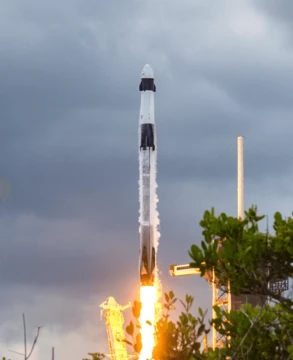
SpaceX CRS-6, or SpX-6, was a NASA-contracted mission that sent an uncrewed Dragon cargo spacecraft to the International Space Station. This was the eighth Dragon flight overall and the sixth operational trip for SpaceX under the Commercial Resupply Services program. The spacecraft remained docked at the station from April 17 until May 21, 2015.
Launch history
NASA initially scheduled the launch for February 2015, with berthing two days later. Delays from the previous SpaceX CRS-5 mission pushed the launch to 14 April 2015. A late March schedule for 13 April was postponed by one day due to weather. An FCC application noted a launch planning date no earlier than 8 April 2015 and confirmed communication uplinks for the first stage's attempted propulsive landing on the autonomous spaceport drone ship.
Payload
NASA determined the primary payload, launch time, and orbital parameters. The Dragon carried 2015 kg of supplies and payloads, including materials supporting about 40 of over 250 science and research investigations for Expeditions 43 and 44. Among the items were an Arkyd 3 Reflight smallsat from Planetary Resources, to be deployed from the ISS via Nanoracks; this was the second Arkyd 3, the first having been destroyed in the October 2014 Antares launch failure. Planet Labs sent 14 Flock-1e Earth observation CubeSats for later deployment through Nanoracks and CASIS.
SpaceX controlled secondary payload manifesting, subject to NASA restrictions on hazards and requiring specified probabilities of success and safety margins for any reboosts. Science payloads studied counteracting microgravity-induced cell damage, effects on bone cells, osteoporosis and muscle wasting treatments, astronaut vision changes, and a synthetic muscle material for robotics. A new espresso machine for the crew was also aboard, along with high school experiments including one from Ambassador High School in Torrance, California. Dragon returned 1370 kg of cargo to Earth.
Post-launch flight test
After second-stage separation, SpaceX attempted to return the nearly-empty first stage of the Falcon 9 to a vertical landing on a 90 x 50 m autonomous spaceport drone ship. The booster technically landed but came down with excessive lateral velocity, tipped over, and was destroyed. Elon Musk attributed the failure to a stuck bipropellant valve that prevented rapid control response.
This was SpaceX's second such attempt; the first, in January 2015, was abandoned due to weather. The booster carried grid fins and landing legs for the test. On 15 April 2015, SpaceX released a video of the descent, landing, tip-over, and a small deflagration as the stage broke up on the deck.
Did You Know?
- The Dragon capsule used for CRS-6 flew a second time in December 2017 on SpaceX CRS-13.
- The capsule made its third and final flight as part of the SpaceX CRS-18 mission on 25 July 2019.
More in SpaceX Payloads Contracted by NASA
Sources
Compiled from Wikipedia and the sources listed below. Text from Wikipedia is available under CC BY-SA 4.0; this entry is adapted from it.
- Wikipedia: SpaceX CRS-6 (CC BY-SA 4.0).
Spotted an error? Know more?
Reader corrections go straight into our review queue. Suggest an edit · How this site is sourced