AGILE (satellite)
Italy's gamma-ray eye on the high-energy universe.

AGILE (Italian: Astro-Rivelatore Gamma a Immagini Leggero) was an X-ray and gamma ray astronomical satellite of the Italian Space Agency (ASI). Launched in 2007, it de-orbited in February 2024.
Quick Facts
- Mission Type
- Gamma-ray astronomy
- Operator
- ASI
- Satcat
- 31135
- Mission Duration
- 23 April 2007 · 2010 (planned) / 23 April 2007 · February 2024
- Manufacturer
- OHB (in the Milano site), ex Compagnia Generale per lo Spazio
- Launch Mass
- 352 kg
- Launch Rocket
- PSLV C8
- Launch Site
- Satish Dhawan SLP
- Launch Contractor
- ISRO
- Decay Date
- February 18, 2024
- Orbit Epoch
- 4 December 2013, 04:13:37 UTC
Facts from the source article.
Lore & Background
AGILE is an Italian high-energy astrophysics mission dedicated to the observation of the gamma-ray Universe. Its very innovative instrumentation is unprecedentedly light (100 kg) and the most compact ever operational for high-energy astrophysics (approximately a cube of about 60 cm size) with excellent detection and imaging capability. Satellite data are collected by the ASI Broglio Space Centre in Malindi (Kenya), then quickly transferred to the Satellite Operations Centre in Fucino, transferred, preprocessed, and stored and analyzed at the ASI Science Data Center (ASDC) in Frascati. In parallel the pre-processed data are transferred at INAF/OAS Bologna for a fast science alert generation, thus assuring a very rapid response to gamma-ray detections, obtained by special quick look analysis programs and coordinated ground-based and space observation. Key scientific objectives include the study of Active Galactic Nuclei, Gamma-Ray Bursts, X-ray and gamma galactic sources, non-identified gamma sources, diffuse galactic gamma emissions, diffuse extragalactic gamma emissions, and fundamental physics.
Reader's Guide
AGILE's instrumentation includes a Gamma Ray Imaging Detector (GRID) sensitive in the 30 MeV – 50 GeV energy range, a SuperAGILE (SA) hard X-ray monitor sensitive in the 18–60 keV energy range, a Mini-Calorimeter (MCAL) non-imaging gamma-ray scintillation detector sensitive in the 350 keV – 100 MeV energy range, and an Anti-coincidence System (AC), based on a plastic scintillator, to assist with suppressing unwanted background events. The SuperAGILE SA is an instrument based on a set of four silicon strip detectors, each equipped with one-dimensional coded mask. The SA is designed to detect X-ray signals from known sources and burst-like signals. It provides long-term monitoring of flux and spectral features. MCAL can also effectively detect high-energy radiation bursts in its energy band. AGILE was successfully launched on 23 April 2007, from the Indian base of Sriharikota and was inserted in an equatorial orbit with low particle background. It was the first flight of the PSLV with a foreign country's payload as a primary payload. Later that day, ASI made contact with AGILE; its signals were acquired by the ground station at the Broglio Space Centre near Malindi, Kenya and it was placed in a Sun-pointing mode.
Did You Know?
- AGILE discovered gamma-ray emission from the microquasar Cygnus X-3.
- AGILE discovered that the archetypical source of gamma-ray astrophysics, the Crab Nebula, is not constant, showing very rapid and intense gamma-ray flares.
- AGILE provided the first direct evidence of proton/ion gamma-ray emission by pion emission below 200 MeV in SNR W44.
- AGILE discovered gamma-ray emission up to 100 MeV from terrestrial flashes associated with intense thunderstorms.
- AGILE's gamma-ray alert monitoring system is the fastest in the world, with the INAF/OAS Bologna pipeline generating alerts within 0.5–1 hour from the time of the last GRID event acquired in orbit.
Gamma-Ray Frontiers
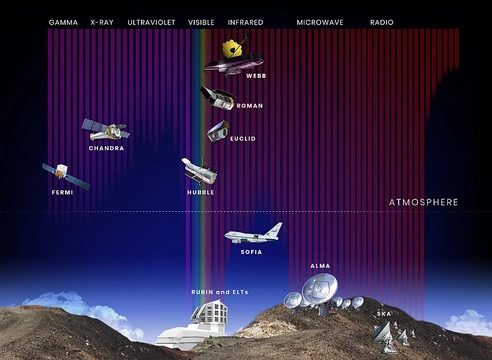
Gamma-ray astronomy represents one of the most demanding frontiers in space-based observation. The high-energy photons that carry information about some of the universe's most violent phenomena are entirely absorbed by Earth's atmosphere, making ground-based detection impossible. Observations in this band must therefore be conducted from high-altitude balloons or, more commonly, from dedicated space missions. The astrophysical sources that generate gamma rays are among the most extreme objects known: supernovae in their explosive death throes, rapidly spinning neutron stars, pulsars, and the gravitational wells of black holes. Gamma-ray bursts, which carry extremely high energies, have also been detected by space-based instruments, though their definitive identification remains an open question in astrophysics. Any satellite operating in this regime, including AGILE, must contend with the unique engineering challenges of detecting individual, discrete high-energy photons rather than the continuous wavefronts measured in other frequency bands.
A Multi-Band Observatory Landscape
The broader ecosystem of space-based astronomical observatories spans an extraordinary range of electromagnetic radiation, from the highest-energy gamma rays down through X-rays, ultraviolet, visible light, infrared, microwave, and radio frequencies. Instruments capable of operating across multiple frequency bands are catalogued in every relevant section, reflecting the interdisciplinary nature of modern astrophysics. Beyond the electromagnetic spectrum entirely, the landscape also encompasses spacecraft designed to collect subatomic particles such as cosmic ray nuclei and electrons, as well as instruments engineered to detect gravitational waves—ripples in the fabric of space-time produced by the collision of neutron stars or black holes. This comprehensive taxonomy underscores that a single mission like AGILE does not operate in isolation but rather as one node in a vast, multi-messenger network of observatories, each tuned to a different window on the universe's physical processes.
Orbital Conventions and Measurement
When cataloguing space telescopes, the initial orbital parameters are reported using a standardized two-value convention that adapts to the type of orbit in question. For observatories in Earth orbit, the minimum and maximum altitude above the planet's surface are expressed in kilometers, capturing the elliptical or circular nature of the trajectory. For missions in solar orbit, the convention shifts to astronomical units: the periapsis represents the minimum distance between the telescope and the Sun's center of mass, while the apoapsis gives the maximum distance. This dual reporting system ensures that readers can immediately gauge the scale and geometry of each mission's path. The choice of units—kilometers for terrestrial orbits and astronomical units for heliocentric ones—reflects the vastly different spatial scales involved, from low-Earth orbits measured in hundreds of kilometers to solar orbits spanning fractions or multiples of the Earth-Sun distance.
Scope, Exclusions, and Broader Context
The catalogue of space telescopes is deliberately bounded by its subject matter. Missions with specific targets within the Solar System—such as the Sun itself or its planets—are excluded and instead directed to dedicated lists of heliophysics missions and Solar System probes. Similarly, satellites designed to observe Earth are catalogued separately under Earth observation satellites. This scoping ensures that the space telescope list remains focused on astronomical observatories pointed outward at the cosmos. The broader ecosystem of related resources includes lists of proposed space telescopes, solar telescopes, and heliophysics missions, as well as the historic Great Observatories program that shaped modern space-based astronomy. Media collections on Wikimedia Commons and cross-references to lists of spacecraft and telescopes further contextualize any individual mission within the wider tapestry of humanity's effort to observe the universe from beyond the atmosphere.
Frequently Asked Questions
What is AGILE?
AGILE is an Italian X-ray and gamma-ray astronomy satellite built for the Italian Space Agency, designed to peer into the high-energy universe with a remarkably compact and lightweight payload.
What was AGILE's primary role?
Its core mission was to detect and image gamma-ray sources across the sky, helping astronomers study extreme cosmic objects such as blazars, pulsars, and other high-energy phenomena.
What made AGILE's design stand out?
Weighing only about 100 kg and fitting inside roughly a 60 cm cube, it still packed four key instruments—GRID, SuperAGILE, Mini-Calorimeter, and an anti-coincidence system—delivering imaging and detection performance far beyond what its tiny footprint suggested.
How did AGILE's mission end?
After nearly seventeen years in orbit, AGILE underwent an uncontrolled re-entry into Earth's atmosphere on 14 February 2024, bringing its operational life to a close.
Why is AGILE considered important in high-energy astrophysics?
It proved that a small, affordable satellite could deliver world-class gamma-ray observations, opening new observational windows into the most violent and energetic processes in the universe and reshaping what the field expected from compact space missions.
More in Space telescopes 1-24
Spotted an error? Know more?
Reader corrections go straight into our review queue. Suggest an edit · How this site is sourced