
Space Haven
Manage a spaceship crew in search of a new home.

David Howard · CC BY-SA 2.0
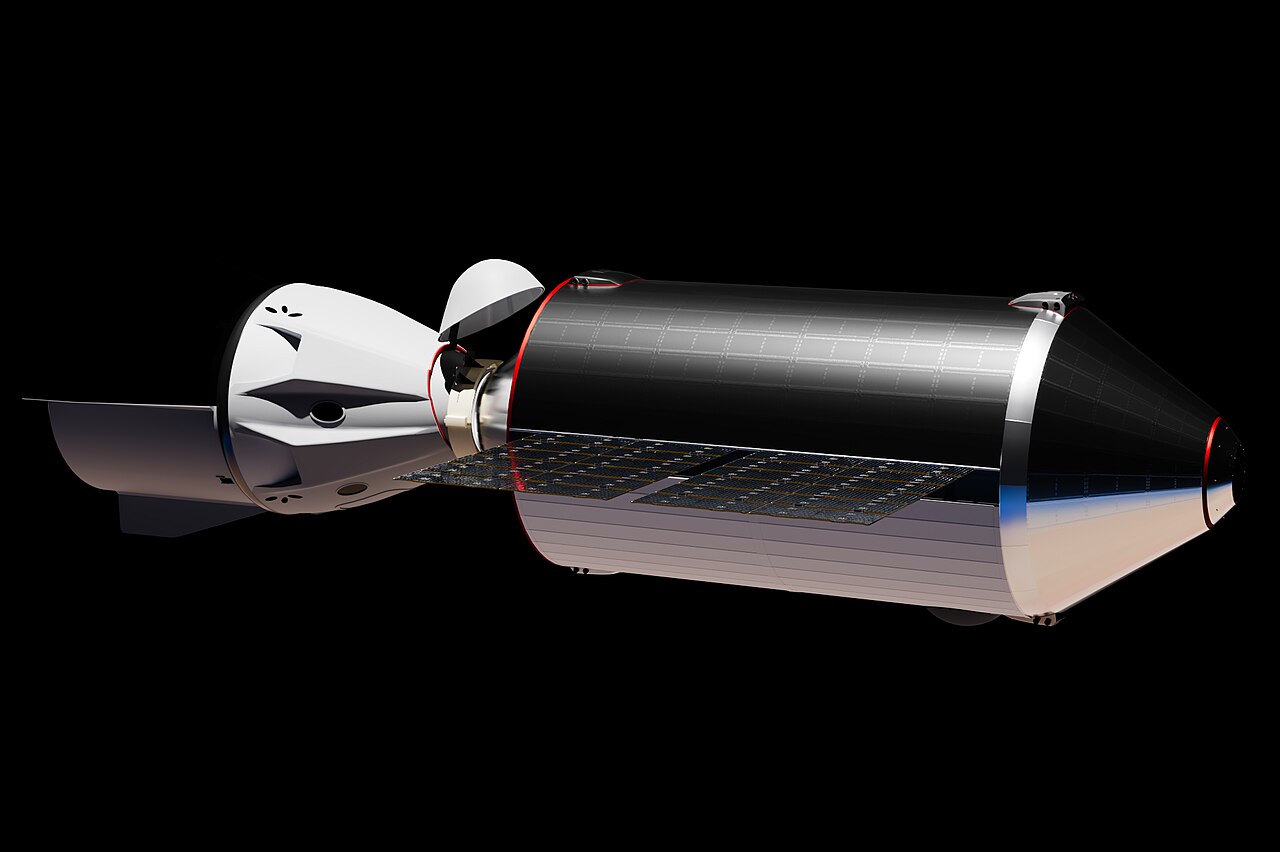
Space Haven is a 2026 management simulation video game published by independent developer Bugbyte. Players must protect and maintain a spaceship in search of a planet to colonise, managing crew survival through systems such as oxygen and heat. The game was released in early access in 2020 and received generally positive reviews, with praise for its level of detail and depth of gameplay mechanics, though criticism was directed at its gameplay balance and completeness of some features.
Quick Facts
- Title
- Space Haven
- Developer
- Bugbyte
- Platforms
- Windows, Mac, Linux
- Released
- WW · May 13, 2026
- Genre
- Simulation
- Modes
- Single-player
Facts from the source article.
Lore & Background
Space Haven was announced in 2018 with the release of a trailer. It was successfully crowdfunded via a Kickstarter campaign in early 2019 and entered early access in 2020. Major updates in 2022 introduced new features including additional crew characteristics, crew relationships, laser and plasma weapons, and faction leaders. The game finally left early access in 2026. The objective is to manage and maintain one or more spaceships moving through space with a crew of four or more inhabitants, though the option to manage a stationary facility is also available. Players must construct systems to maintain oxygen and heat, and collect resources by mining raw materials or salvaging wrecks of other ships.
Reader's Guide
Space Haven received positive pre-release coverage, with Campbell Bird of 148 Apps listing it as one of the most eagerly anticipated titles in 2018 and 2019 due to its ambitious combination of gameplay styles. Reviewing the early access version, Steve Hogarty of Rock Paper Shotgun praised the game's design as a welcome change of pace, highlighting its combat and salvage mechanics as distinct from other colony builders, though he noted a lack of joined-up thinking and superficial mechanics. Nate Crowley, also for Rock Paper Shotgun, highlighted the retro aesthetics and granularity of its simulation gameplay, but felt the gameplay and user interface could be fiddly. Wired named the game one of the best of 2020, with Phuc Pham highlighting its detail-oriented design. Charlie Hall of Polygon described it as a compelling management sim with complex, layered systems and a sense of speed and momentum lacking in other genre games, but felt it was not properly balanced. Jeuxvideo commended the advanced degree of customization and high level of micromanagement, while noting limitations including a lack of scripted content, dispensable combat systems, and an interface not very pleasant to the eye.
Did You Know?
- Major updates in 2022 introduced crew relationships and faction leaders.
- The game left early access in 2026.
Origins of the Play-by-Mail Genre
The question of which game first crossed the postal boundary remains genuinely unresolved. Both chess and Go have plausible claims to being the earliest play-by-mail pastime, and no definitive answer has emerged. What is clearer is the moment the genre became a commercial enterprise. In 1963, Diplomacy was first played by mail, establishing a template for strategic turn-based play across distances. Then in the early 1970s, Rick Loomis at Flying Buffalo Inc. in the United States launched a series of PBM titles, including Nuclear Destruction in 1970. That move is widely recognized as the birth of the professional PBM industry. Other publishers quickly followed, and the sector saw significant expansion throughout the 1980s, transforming what had been a handful of individual efforts into a recognizable market with its own infrastructure.
The 1980s Publication Boom
The commercial growth of PBM in the 1980s spawned a dedicated press ecosystem. Individual PBM companies began issuing their own newsletters to keep players informed about new scenarios, rule updates, and company news. Beyond those in-house publications, independent magazines emerged that focused exclusively on the play-by-mail industry. Titles such as Gaming Universal, Paper Mayhem, and Flagship devoted their pages entirely to PBM strategy, reviews, and community discussion. These niche outlets existed alongside broader gaming publications like Space Gamer (later Fantasy Gamer) and Dragon Magazine, which covered the wider hobby but regularly featured PBM content. Together, this layered press landscape gave the PBM community a sense of institutional identity, with dedicated spaces for advertising, critical review, and player-to-player communication that paralleled the tabletop wargaming world.
Rights, Licensing, and Game Lifespans
The PBM catalog is not a simple one-to-one mapping of titles to publishers. Rights to individual games were occasionally sold between companies, meaning a single title could appear under more than one publisher's name in historical records. Licensing agreements also crossed borders, with one company granting another the right to offer a game for play in a different country. The list of recognized PBM games is further constrained by a strict criterion: only titles that completed playtesting and were formally published for play are included. Many more games existed in nascent, playtest form but never reached that threshold. The lifespans of published titles vary enormously. Some, like Quest of Gorr, were briefly available before disappearing, while others such as Alamaze, Diplomacy, Hyborian War, and Chess have been actively played for decades or longer, spanning multiple generations of players.
Preserving a Niche Community's Record
Sourcing a comprehensive list of PBM games has relied heavily on the print and digital publications that served the community over five decades. Reviews and advertisements from the 1980s-era magazines—Gaming Universal, Paper Mayhem, Flagship, Space Gamer, Dragon Magazine—remain foundational references. That tradition of documentation continued into the twenty-first century with the online magazine Suspense and Decision, which supported the small but still active PBM community well into the 2020s. Several digital archives now preserve the genre's history: PlayByMail.net hosts a list of 362 past and present PBM companies, many of which are out of business, along with a 2011 compilation of games by publisher. A searchable compilation at pbm.com and the Suspense & Decision Games Index, updated as of July 2021, provide additional structured access to the field's full catalog.
Gallery





Frequently Asked Questions
What is Space Haven?
Space Haven is a management simulation game in which you oversee a crew aboard a long-range ship searching for a habitable planet to colonise. Your core job is keeping everyone alive by juggling critical survival systems like oxygen and heat while the vessel travels through space.
Who developed Space Haven?
The game was created and published by Bugbyte, an independent development studio. It was not produced by a major publisher, which is part of why its early-access period lasted several years before the full 2026 launch.
When did Space Haven actually release?
The project was announced in 2018 and funded through a Kickstarter campaign in early 2019, then entered early access in 2020. Its full, complete release arrived in 2026 after roughly six years of development.
What do you actually do in Space Haven?
You handle every facet of shipboard life, from allocating resources and maintaining atmospheric systems to keeping your crew functional and safe. The central goal is to guide the vessel to a new world suitable for colonisation without losing your people along the way.
How was Space Haven received by reviewers?
Critics gave it generally positive reviews, praising the depth of its interlocking systems and the fine-grained detail in its mechanics. The main criticisms centred on gameplay balance and the fact that some features still felt unfinished at launch.
More in Simulation Games of the 2020s, Part 2 1-17
Spotted an error? Know more?
Reader corrections go straight into our review queue. Suggest an edit · How this site is sourced