Allegory of Virtue and Vice (Lotto)
Allegorical painting by Lorenzo Lotto from 1505.
Last updated
The Allegory of Virtue and Vice is an oil-on-panel painting by the Italian High Renaissance painter Lorenzo Lotto, dating to 1505. It is housed in the National Gallery of Art in Washington, DC, United States.
History
The painting originally served as the protective cover for the Portrait of Bernardo de' Rossi, the bishop of Treviso and Lotto's patron at the time. When opened to display the portrait, an inscription on the reverse of the Allegory would have been revealed. The work was brought to Parma when de' Rossi fled Treviso, becoming part of the Farnese collection. It was bought from that collection in 1803, passed through several owners, arrived in the United States in 1935, and was donated to the current museum four years later.
Description
In this allegorical painting, a tree bearing a bishop's coat of arms splits the scene into two halves. One branch is green, the other dried. The green side represents Virtue, where a putto plays with books—a symbol of wisdom—alongside emblems of the Liberal Arts.
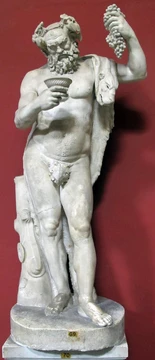
On the right, a drunken silenus sleeps among symbols of vice. In the background, a dark valley with an easy path and a forest suggests losing one’s way without divine light, while a sinking boat in a lake stands for failure. The composition may be inspired by an Albrecht Dürer engraving featuring a similar tree with moral symbols.
More in Silenus
Sources
Compiled from Wikipedia and the sources listed below. Text from Wikipedia is available under CC BY-SA 4.0; this entry is adapted from it.
- Wikipedia: Allegory of Virtue and Vice (Lotto) (CC BY-SA 4.0).
Spotted an error? Know more?
Reader corrections go straight into our review queue. Suggest an edit · How this site is sourced