True Golf Classics: Waialae Country Club
A methodical golf simulation emphasizing realism and strategy.
T&E Soft developed and published this golf simulation, which uses the real-world blueprints of Hawaii's Waialae Country Club. The game launched on different systems at different times. It first appeared as a Super NES launch title, praised for its visuals and gameplay. Later, the 3DO version became the best-selling game in the United States for its platform in November 1994. A separate 1998 Nintendo 64 game, also by T&E Soft, features the same course.
Quick Facts
- Developer
- T&E Soft
- Publisher
- T&E Soft; Sega (Mega Drive)
- Series
- True Golf
- Platforms
- SNES
- NEC PC-9801
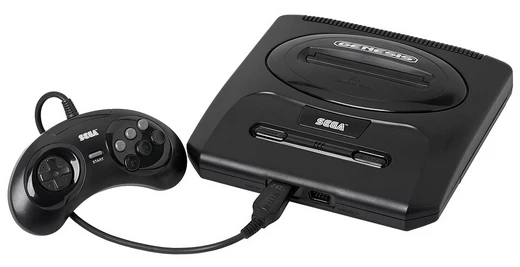
- Sega Mega Drive
- 3DO
- Satellaview
- Genre
- Traditional golf simulation
- Modes
- Single-player, multiplayer
Facts from the source article.
Did You Know?
- T&E Soft was founded in 1982 by brothers Toshiro and Eiji Yokoyama.
- The company was initially known for the action RPG series Hydlide.
- The design philosophy was 'to take you to Oahu, Hawaii, for 18 holes of championship golf action with all the excitement—and surprises of the real game'.
Gameplay
True Golf Classics: Waialae Country Club is a deliberate golf game that prioritizes realism and thoughtful play over arcade action. Its core design relies on a layered shot system that forces players to juggle multiple factors. Each swing is broken into stages of planning, preparation, and action, mirroring how a real golfer approaches a shot. The main interface, called the "Shot Setup" window, walks the player through aiming, picking a club, adjusting their stance, and finally swinging. Two camera views are available: a ground-level perspective and a top-down flyover of the hole, both useful for studying the fairway and hazards. The player sets their aim based on the course layout and on-screen wind indicators. While a caddie suggests a club for the distance, the player can override this and choose any club from their bag. A standout feature for its time is the stance adjustment, which lets players intentionally shape a shot into a draw or a fade, helping them handle doglegs or steer clear of trouble. The swing uses a two-step timing mechanic. First, the player stops a moving power gauge to set the shot's strength relative to the club's maximum distance. Right after, a "Contact Selector" appears over the ball, and a second button press decides the impact point, which can add backspin, topspin, a hook, or a slice. This dual-input process for power and contact was the game's main challenge. On the green, a grid shows contour lines and slope, but it vanishes once the player starts the putting stroke. This forces the player to memorize the green's shape before hitting, mimicking the mental visualization needed in real putting. The game supports up to four players taking turns. Modes include Tournament, Stroke Play, Match Play, and Practice. Players can also customize their golfer, caddie, club set, and personal statistics.
Release
Waialae Country Club did not arrive on store shelves all at once; its releases were spread across several years and different game systems. The most well-known version came out for the Super NES in November 1991, with the Japanese Super Famicom version following nearly a year later on September 18, 1992. On February 25, 1994, Sega published a Japan-only Mega Drive version called New 3D Golf Simulation: Waialae no Kiseki. By this point, the 16-bit era was winding down and technical expectations had risen. This release came just one month after T&E Soft's own Devil's Course 3D Golf for the same system, leading one Sega-16 reviewer to suggest the company was mining its older library for the Mega Drive audience late in the console's life. In 1994, T&E Soft also put out an enhanced edition in North America for the 3DO Interactive Multiplayer, a 32-bit CD-ROM machine. This version was designed to use the 3DO's greater power and the extra space offered by CDs. The game's final form appeared on October 26, 1997, when it was broadcast digitally for the Satellaview, a satellite modem add-on for the Super Famicom in Japan. That release turned the game into episodic, downloadable content, showing it still had a following in Japan six years after its first appearance.
Reception
The game's reception shifted depending on which version was being played, a result of its drawn-out, staggered releases. When it first appeared as a launch title for the SNES, Electronic Gaming Monthly's four critics gave it scores of 7, 6, 8, and 7 out of 10, applauding the realistic feel and range of options while criticizing sluggish screen refreshes and a steep challenge. GamePro called it a "primo golf cart" and a "solid, great-looking game of golf with an excellent selection of options." Nintendo Power rated it 3.675 out of 5 across two reviews from late 1991 and early 1992. Super Play in the UK awarded it an 82%, describing it as a "superb" and "deadly accurate" simulation, though it noted the game lacked the flash of more arcade-style golf titles.
The 3DO version earned strong marks. GameFan's two reviewers gave it 85% and 90%, with one declaring it "the best golf simulation, period." They highlighted the improved visuals, audio, and quicker pace compared to the cartridge editions. Next Generation gave it three stars out of five, remarking that "Waialae is all the more enjoyable for enabling you to sport eighteen holes without having to wear stupid pants and talk merger deals." In the United States, the 3DO release became the top-selling game for that platform in November 1994.
Successor
T&E Soft created Waialae Country Club: True Golf Classics for the Nintendo 64 in 1998, with Nintendo handling publication. This game was a technological step forward from its predecessor rather than a simple update. Its 3D engine came from Masters '98: Haruka Naru Augusta, a Japan-only N64 golf title from the same developer. Despite being newer, the visuals fell short of late-era N64 expectations. IGN's critique described the graphics as a blurry mess full of bitmaps, and labeled the title a belated first-generation release.
More in Sega Genesis Game Library
Spotted an error? Know more?
Reader corrections go straight into our review queue. Suggest an edit · How this site is sourced