Contra: Hard Corps
A run and gun game with branching paths and multiple endings.
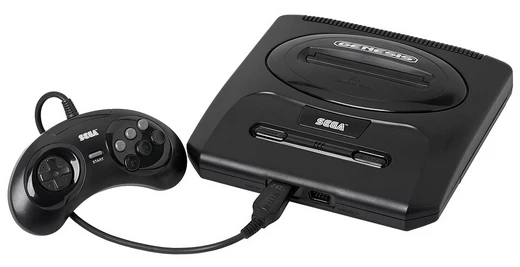
Contra: Hard Corps is a 1994 run and gun game developed and published by Konami for the Sega Genesis, marking the series' debut on a Sega platform. It follows a task force called the Hard Corps five years after the events of Contra III: The Alien Wars, as they confront a terrorist group wielding a stolen alien cell. The game is notable for its branching storyline with multiple endings and is considered a spin-off from the mainline Contra entries.
Quick Facts
- Developer
- Konami
- Director
- Nobuya Nakazato
- Producer
- Tomikazu Kirita
- Artist
- Shinichiro Shimamura, Kazuya Suzuki
- Programmer
- Kenji Miyaoka
- Composer
- Hiroshi Kobayashi
- Series
- Contra
- Released
- September 14, 1994 (NA)
- September 15, 1994 (JP)
- October 11, 1994 (PAL)
Facts from the source article.
Gameplay
The objective of each stage is to reach the end by shooting enemies and defeating the boss at the end. Most stages have the character on foot, but some involve riding a Motoroid, a hoverbike that can transform into an ostrich-like robot. Unlike previous Contra games, all stages in Hard Corps retain a side-view perspective, and the story is advanced through cutscenes. Up to two players can play simultaneously but cannot choose the same character. Controls use the Genesis's three-button or six-button controller: the A button switches weapons, B shoots, and C jumps. Pressing the weapon change button while shooting toggles between free movement while shooting and a stationary eight-direction aim. Players can jump down from platforms, move on walls and ceilings, and perform a sliding technique by holding the directional pad diagonally downward and pressing jump, granting invulnerability and the ability to harm enemies. The player can carry up to four weapons and a supply of bombs. Weapons are obtained from flying capsule pods labeled A, B, C, and D, varying by character. Each player starts with a standard machine gun, upgradeable by picking up the A-type power-up. Losing a life causes the equipped weapon to be lost, but unlike Contra III, the bomb supply remains unchanged.
Plot
Five years after the events of Contra III: The Alien Wars, a new elite squad called the Hard Corps is assembled to deal with leftover alien threats and renegade military groups. The team includes commandos Ray Poward and Sheena Etranzi, the cyborg Brad Fang, and the combat robot Browny. They are sent to protect a city from a terrorist attack, which turns out to be orchestrated by Colonel Bahamut, a former government scientist who has taken a powerful alien cell that can create devastating bio-organic weapons. Early in the mission, the squad encounters Bahamut’s mercenary, Deadeye Joe, and the path forward splits. Depending on the player’s choice, the team might chase Joe on high-speed hoverbikes, battling mechanical spiders and transport ships, or race to save a besieged research facility, fighting on helicopters and assault planes. Other stages take them through junkyards, alien-infested jungles, and industrial zones, each ending with complex multi-phase boss fights. As the story unfolds, the Hard Corps learns Bahamut plans to use the alien cell to seize control of Earth. The squad must make key decisions that change the narrative, such as infiltrating Bahamut’s headquarters, destroying his orbital space station, or attacking the alien nest directly. One route brings back Red Falcon, linking this story to earlier Contra conflicts. The game offers multiple endings based on these choices: the team may destroy the alien cell before it mutates, defeat Bahamut on his space station but die in the explosion, join Bahamut for personal gain, or become trapped in an alternate dimension after a secret battle.
Development
Contra: Hard Corps was built with the Japanese Mega Drive audience in mind, according to development lead Nobuya Nakazato. He pushed back against the idea that Konami was prioritizing Western players. The team focused on making the game worth replaying by including branching paths, stages that felt distinct from one another, and very few repeated enemies. Each character also shifted the game's mood: playing as Ray Powered kept things serious, while Brownie brought a lighter, more comedic tone. Stage design got special attention. The first level was packed with different gameplay elements and set pieces so it wouldn't get boring after multiple runs. The branching routes led to very different experiences, like a military train featuring a giant multi-sprite boss called the Yokozuna Giant Ninja, or an alien lair whose look came from a team trip to the Meguro Parasite Museum. The orbital elevator stage stood out for its mix of absurdity and a more emotional conclusion, and it contained some of Nakazato's favorite music. A secret stage was slipped in late during development, catching management off guard, but they allowed it. Nakazato said the project was driven by the team's love for the Contra series, not just by business goals.
Reception
In Japan, Contra: Hard Corps moved 13,363 units during its debut week and 23,365 copies overall. The December 1994 issue of Micom BASIC Magazine ranked it first in popularity. It earned a 22.6 out of 30 in a Mega Drive Fan poll and an 8.3571 out of 10 in a 1995 reader survey from Japanese Sega Saturn Magazine, placing 55th among Mega Drive titles. Critics generally gave it favorable reviews. GamePro’s Lawrence Neves highlighted its impressive bosses, eye-catching visuals, speaker-testing explosions, simple controls, and intense action. Electronic Gaming Monthly’s editors recommended it for its four selectable characters, intense action, and impressive graphics, though they noted the difficulty could be extremely frustrating. Next Generation called it the ultimate side-scrolling shooter and a beast of a game that won’t be easily defeated.
More in Sega Genesis Game Library
Spotted an error? Know more?
Reader corrections go straight into our review queue. Suggest an edit · How this site is sourced