Scotoplanes
Deep-sea sea cucumbers known as sea pigs.

Scotoplanes is a genus of deep-sea sea cucumbers belonging to the family Elpidiidae, and its members are called sea pigs. The genus includes several species: *Scotoplanes clarki*, *S. globosa*, *S. hanseni*, *S. kurilensis*, and *S. theeli*. In 2024, a bright pink individual of an undescribed species was found in the Clarion–Clipperton zone and nicknamed the "Barbie Pig" after the 2023 film.
These animals reach 4 to 6 inches (10 to 15 centimeters) in length. They are bilaterally symmetrical and have six pairs of tube feet, which are largest in the middle of the body and smallest near the anus. Ten buccal tentacles line the oral cavity, and papillae are present on the back. Like other echinoderms, they share features in their respiratory, vascular, and nervous systems. Their respiratory system is poorly developed, and gas exchange happens through the anus. Their bodies are built to withstand the high pressure of the deep benthic zone; bringing them to the surface causes them to disintegrate. They have a water vascular system, and the dorsal papillae are histologically similar to the tube feet, both containing a large muscular water vascular canal in the center. Hydraulic pressure in these canals drives the vascular system. The nervous system is a network of nerves without ganglia.
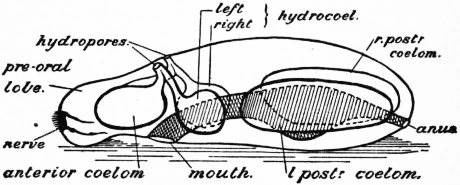
Histologically, sea pigs resemble other Holothuroidea but have some differences. Most holothurians are sexually dioecious and, unlike other echinoderms, have only one gonad. Their water vascular system is similar to other echinoderms, except the madreporite opens into the perivisceral coelom rather than through the external body wall. *Scotoplanes* has a single gonad—an ovary in females or a testis in males. Unlike most elasipodids, both sexes show active gametogenesis, suggesting a distinct reproductive strategy. As detritivores, they feed on organic matter that sinks to the seafloor, gathering and ingesting detritus with their tube feet. Their gut is highly efficient at extracting nutrition from the meager resources available. Male *Scotoplanes* have protozoa inside the cyst cavities of their aboral intestines.
For locomotion, members of Elpidiidae have enlarged, leg-like feet that inflate and deflate using water cavities within the skin, causing the appendages to move.
Quick Facts
- Taxon
- Scotoplanes
Facts from the source article.
Lore & Background
Scotoplanes species include Scotoplanes clarki, Scotoplanes globosa, Scotoplanes hanseni, Scotoplanes kurilensis, and Scotoplanes theeli. In 2024, a bright pink undescribed species was discovered in the Clarion–Clipperton zone, nicknamed the 'Barbie Pig' after the 2023 Barbie film. Members of Scotoplanes have ten buccal tentacles lining the oral cavity and papillae on their dorsum. They share many morphological features with other echinoderms, including a water vascular system and a single gonad (ovary in females, testis in males). Unlike most elasipodids, Scotoplanes exhibits active gametogenesis in both sexes. Their respiratory system is poorly developed, with gas exchange occurring through the anus. Their bodies are adapted to high pressure; bringing them too close to the surface causes disintegration. Male Scotoplanes have protozoa inside the cyst cavities of their aboral intestines.
Reader's Guide
Scotoplanes are deposit feeders that extract organic particles from deep-sea mud, with Scotoplanes globosa showing strong preferences for freshly fallen organic matter such as whale falls, using olfaction to locate food. They move through the top layer of seafloor sediment, disrupting the surface and infauna, but can swim when disturbed. Some species are benthopelagic. Scotoplanes often occur in huge densities, sometimes numbering in the hundreds, and exhibit aggregation behavior for feeding or mating. They host parasitic and commensal organisms, including gastropods, small tanaid crustaceans, and juvenile crabs (Neolithodes diomedeae), which shelter beneath them to reduce predation risk. Their distinctive mitochondrial genomes encode proteins involved in energy production. The genus is significant for its adaptations to deep-sea life, including leg-like tube feet that use dermal cavities for inflation and deflation, and a highly efficient gut that extracts maximum nutrition from meager resources.
Did You Know?
- Scotoplanes have six pairs of tube feet, largest at mid-body and smallest near the anus.
- Gas exchange in Scotoplanes occurs through the anus.
- A bright pink undescribed species discovered in 2024 was nicknamed 'Barbie Pig'.
- Scotoplanes globosa uses olfaction to locate food sources such as whale falls.
More in Sea Cucumbers and Brittle Stars 1-24
Spotted an error? Know more?
Reader corrections go straight into our review queue. Suggest an edit · How this site is sourced