Kitbashing
Creating new models by combining parts from existing kits.
Last updated
Kitbashing, also known as model bashing, is the practice of constructing a new scale model by combining parts taken from commercial kits. These components may be integrated into a custom project or added to another kit. For professional modelmakers, kitbashing is used to create concept models for detailing movie special effects, as commercial kits provide a ready source of identical, mass-produced detailing parts. Hobbyists use kitbashing to save time compared to scratch building an entire model, and to create subjects for which no commercial kit exists.
Quick Facts
- Notable media examples
- Thunderbirds
- Star Trek
- 2001: A Space Odyssey
- Star Wars Episode IV: A New Hope
- Batman Begins (2005 film)
- Notable artists
- Kim Adams (Toronto sculptor), Kris Kuksi (American artist)
- Common genres
- Diecast emergency vehicles (fire apparatuses)
- model railroading
- model rocketry
- radio-controlled aircraft
Facts from the source article.
Lore & Background
Kitbashing has a long history but gained wider public attention through the fine modelwork seen in television series such as Thunderbirds and Star Trek, and films including 2001: A Space Odyssey and Star Wars Episode IV: A New Hope. Many spaceship models for these productions incorporated details from tank, speedboat, and car kits. Another example is the Batmobile from the 2005 film Batman Begins, as featured on the special features disc of the film's DVD.
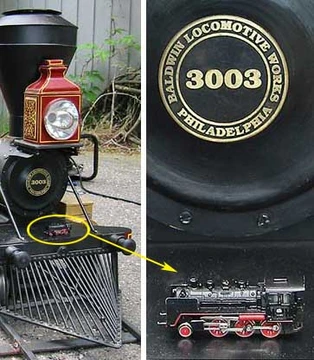
In model railroading, an important aspect of kitbashing is the reconfiguration of structure kits to fit the geometry of a specific space. Walls can be shortened or lengthened, and corner angles changed, to suit a given location on the layout.
Parts may also be used to create a shallow relief model for display against a backdrop. In model rocketry, kitbashing refers simply to using pieces from one kit to build a different model, often to create unusual or complex designs. With radio-controlled aircraft, kitbashing can be applied to kitted aircraft or to almost-ready-to-fly (ARF) aircraft to alter appearance or flight characteristics, and may extend to plans-bashing where construction plans are partially redrawn.
It is common for parts to be cut and filed, leaving gaps that are later filled with putty to hide defects. Textural details known as greebles may be added to enhance a model. Kitbashing has also been used to create works of art; Toronto sculptor Kim Adams has used HO gauge freight cars, containers, detail parts, figures, and scenery to create artistic landscapes, while American artist Kris Kuksi uses kitbashing to detail his maximalist sculptures.
From Screen to Shelf: Kitbashing's Cinematic Rise to Fame
Kitbashing has existed as a craft for a long time, but it was the silver screen and television that truly introduced the technique to a broad audience. Iconic productions like Thunderbirds and Star Trek showcased intricate modelwork that audiences marveled at, unaware that many of the spaceship details were actually borrowed from tank, speedboat, and automobile kits.
The same principle shaped the memorable vessels in 2001: A Space Odyssey and Star Wars Episode IV: A New Hope, where commercial kit components were repurposed to add convincing fine detail to custom-built spacecraft. Decades later, the 2005 film Batman Begins revealed in its DVD special features how the Batmobile itself drew on kitbashing techniques. These high-profile examples demonstrated that the humble practice of pulling parts from one box and grafting them onto another could produce effects that fooled entire audiences, cementing kitbashing's place in popular culture and inspiring a new generation of hobbyists to explore the craft.
The Professional's Toolkit: Concept Models and Prototypes
In professional settings, kitbashing serves as a remarkably efficient method for generating concept models and detailed special-effects pieces for film and television. Because commercial model kits supply an endless supply of identical, mass-produced components, a professional modelmaker can quickly source the fine detailing needed to elevate an existing build without manufacturing every tiny element from scratch. This ready access to pre-made parts dramatically accelerates the design process.
Beyond mere decoration, professionals frequently kitbash to fabricate prototype parts that are subsequently recreated using lightweight materials suited to the demands of on-set use. For the hobbyist working at home, the same principle offers a practical shortcut: rather than spending countless hours scratch-building an entire model from raw materials, a kitbasher can assemble a convincing representation of a subject—whether a real vehicle or a purely imaginary one—for which no commercial kit exists. The technique thus bridges the gap between ambition and available resources, making complex builds accessible to people without industrial fabrication capabilities.
The Craft of Assembly: Cutting, Filling, and Greebling
The physical process of kitbashing is as much about subtraction and modification as it is about addition. A builder might select a component from one kit, cut it to a new profile, and file it down until it fits the contour of a custom project. The resulting gaps and seams are then filled with putty, smoothing over any imperfections so the finished model reads as a single, coherent object rather than a patchwork of borrowed pieces.
To further enhance visual complexity, builders often apply textural details known as greebles—tiny, irregular shapes that suggest mechanical or architectural intricacy without requiring individual fabrication. The end result is a model that appears far more detailed and purposeful than any single commercial kit could deliver on its own. This iterative cycle of cutting, filing, filling, and adding surface detail is what separates a simple parts swap from true kitbashing, transforming mass-produced plastic into something that looks hand-crafted and uniquely designed.
Beyond the Workbench: Genres, Art, and Creative Freedom
Kitbashing is far from a single-activity hobby; it spans a remarkable range of genres and creative expressions. In the world of diecast emergency vehicles, enthusiasts work with models from manufacturers like Code 3 and Corgi, ranging from simple repainting and redecaling to full teardowns with scratch-built components and custom decals. Model railroaders use the technique to reconfigure structure kits, adjusting wall lengths and corner angles to fit specific layout spaces, or even converting rear walls into front-facing flat relief models.
In model rocketry, kitbashing simply means repurposing parts from one kit to construct a different, often more complex, rocket. Radio-controlled aircraft builders apply the same logic to almost-ready-to-fly planes, modifying appearance or flight characteristics, and some even engage in plans-bashing, redrawing construction plans before any physical part is cut. At the artistic end, Toronto sculptor Kim Adams builds landscapes from HO gauge freight cars and scenery, while American artist Kris Kuksi incorporates kitbashed details into his maximalist sculptures, proving the technique transcends pure model-making.
Reader's Guide
Kitbashing holds significance as a bridge between commercial modeling and custom creation, allowing both hobbyists and professionals to produce models that would otherwise require extensive scratch building. In the film and television industry, it enabled the rapid construction of detailed spaceship and vehicle models from readily available parts, contributing to the visual identity of iconic productions. For model railroaders, kitbashing provides a practical method to adapt structure kits to the specific dimensions and angles of a layout, or to create relief models for backdrops. The practice also extends to diecast emergency vehicle modeling, where modifications can range from simple repainting to complete teardowns with scratch-built components and custom decals.
In model rocketry and radio-controlled aircraft, kitbashing allows builders to create unique or complex designs without designing from scratch. The technique has even crossed into fine art, with sculptors like Kim Adams and Kris Kuksi using model parts to construct elaborate landscapes and maximalist sculptures. The addition of greebles—textural details—further enhances the realism or visual complexity of kitbashed models. Overall, kitbashing remains a versatile and enduring method for expanding the possibilities of scale modeling across multiple genres.
More in Scale Models and Railroads
Sources
Compiled from Wikipedia and the sources listed below. Text from Wikipedia is available under CC BY-SA 4.0; this entry is adapted from it.
- Wikipedia: Kitbashing (CC BY-SA 4.0).
Spotted an error? Know more?
Reader corrections go straight into our review queue. Suggest an edit · How this site is sourced