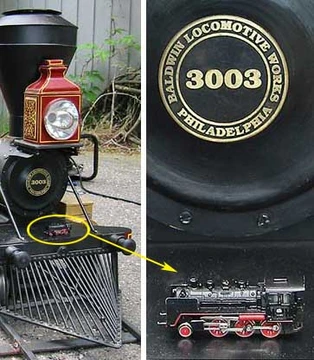
Diorama
A three-dimensional replica of a scene, full-sized or miniature.
Last updated

Julan Shirwod Nueva · CC BY-SA 4.0
A diorama is a three-dimensional replica of a scene, which can be built at full size or as a miniature model. These displays are sometimes housed in glass cases within museums. Hobbyists frequently create dioramas for related interests such as military vehicle modeling, miniature figure modeling, or aircraft modeling. Today, the term generally refers to a partially three-dimensional, full-size replica or scale model of a landscape, often depicting historical events, natural scenes, or cityscapes, and used for education or entertainment.
Quick Facts
- First museum use
- Biological Museum
- Stockholm
- Sweden
- opened 1893
- Common hobby scales
- 1:35, 1:48, 1:87 (HO scale)
- Notable large diorama
- Model of entire state of California built for Panama–Pacific International Exposition of 1915
- Haw par villa dioramas
- Over 150 giant dioramas, opened 1937 in Singapore
Facts from the source article.
Lore & Background
The name 'diorama' was coined by artists Louis Daguerre and Charles Marie Bouton for a theatrical system that used variable lighting to give a translucent painting the illusion of depth and movement. It originated in Paris in 1822 as popular entertainment, an alternative to the Panorama.
The Diorama was a theatrical experience viewed by an audience in a highly specialized theatre; as many as 350 patrons would file in to view a landscape painting that would change its appearance. The show lasted 10 to 15 minutes, after which the entire audience on a massive turntable would rotate to view a second painting. A second diorama in Regent's Park in London opened in 1823.
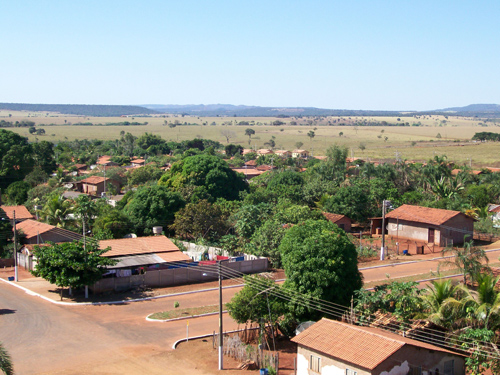
One of the first uses of dioramas in a museum was in Stockholm, Sweden, where the Biological Museum opened in 1893 with several dioramas on three floors. They were implemented by the Grigore Antipa National Museum of Natural History in Bucharest, Romania, and constituted a source of inspiration for many important museums worldwide. In the United States around 1950 and onward, natural history dioramas in museums became less fashionable, leading to many being removed, dismantled, or destroyed.
Miniature dioramas are typically much smaller, using scale models and landscaping to create historical or fictional scenes. An early, exceptionally large example was created between 1830 and 1838 by British Army officer William Siborne, representing the Battle of Waterloo at about 7.45 pm on 18 June 1815; it measures 8.33 by 6 m and used around 70,000 model soldiers. Sheperd Paine, a prominent hobbyist, popularized the modern miniature diorama beginning in the 1970s.
From Theater to Museum: The Birth of the Diorama
The word "diorama" carries a theatrical DNA that most modern viewers never suspect. In 1822, Parisian artists Louis Daguerre and Charles Marie Bouton introduced a spectacle in which audiences of up to 350 patrons filed into a purpose-built theater to watch a large landscape painting whose appearance shifted subtly through carefully manipulated variable lighting.
This translucent canvas, made to suggest depth and motion, was deliberately positioned as an alternative to the already-popular panoramic painting known as the Panorama. The name itself is a Greek compound: dia- meaning "through" combined with horama, meaning "visible image," yielding the sense of a "see-through image." Although the term was formally applied to museum displays only as late as 1902, three-dimensional scene replicas had already been appearing in institutional settings before that date. What began as a fleeting stage illusion in a Parisian theater thus gradually migrated into the permanent collections of museums, transforming a transient performance into a lasting educational object.
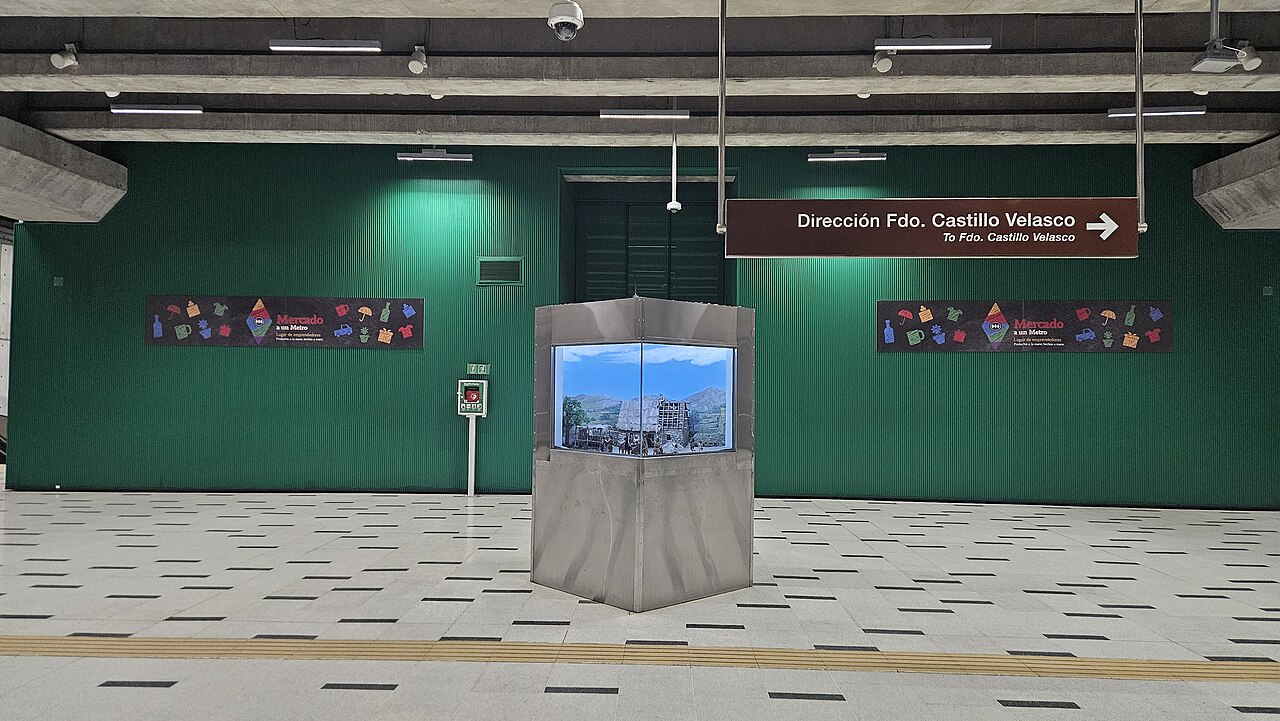
Museum Dioramas: A Global Legacy and a Quiet Decline
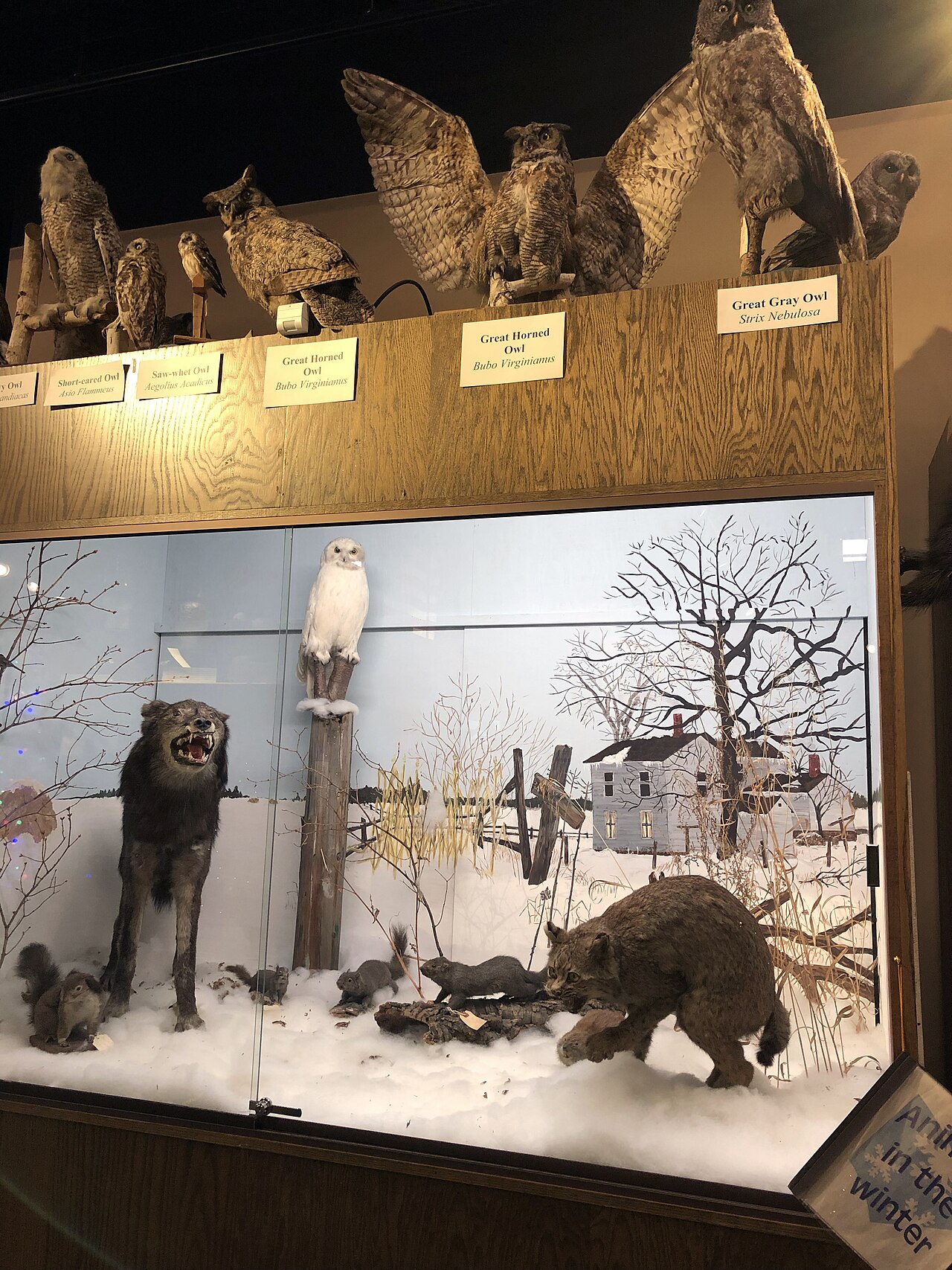
The institutional life of the diorama took a decisive turn in 1893, when Stockholm's Biological Museum opened its doors with dioramas spread across three floors. The Grigore Antipa National Museum of Natural History in Bucharest, Romania, adopted a similar approach, and together these early collections became a wellspring of inspiration for institutions around the world, including the American Museum of Natural History in Manhattan and the Great Oceanographic Museum in Berlin. In modern natural-history museums, the diorama remains a staple: a tilted foreground plane carries carefully scaled three-dimensional objects while a painted backdrop of distant scenery wraps around a continuous curved surface, eliminating distracting corners and seams.

False perspective is employed deliberately, shrinking objects placed farther back so the eye reads a convincing sense of depth within a compact footprint. Yet this tradition was not immune to fashion. In the United States, beginning around 1950, natural-history dioramas fell out of favor, and many were removed, dismantled, or outright destroyed, leaving gaps in collections that had once defined the museum experience.
The Miniature World: From Waterloo to the Hobbyist's Bench
Long before the term became associated with shoebox school projects, dioramas were grand undertakings. Between 1830 and 1838, British Army officer William Siborne constructed an extraordinary representation of the Battle of Waterloo at approximately 7:45 p.m. on 18 June 1815. Measuring 8.33 by 6 metres, the piece incorporated roughly 70,000 model soldiers and now resides in the National Army Museum in London.
The modern miniature diorama as a hobby was popularized by Shepherd Paine beginning in the 1970s, and today the form thrives in scales such as 1:87 (HO), the standard used in Chicago's Museum of Science and Industry railroading display, as well as 1:35 and 1:48 favored by military-vehicle and aircraft modelers. An earlier, more practical tradition belonged to mariners in the nineteenth and early twentieth centuries, who built sailing-ship dioramas rather than free-standing models because the enclosed framework protected the vessel and made it easy to stow beneath a bunk or behind a sea chest. Those antique maritime dioramas have since become prized collector's items.
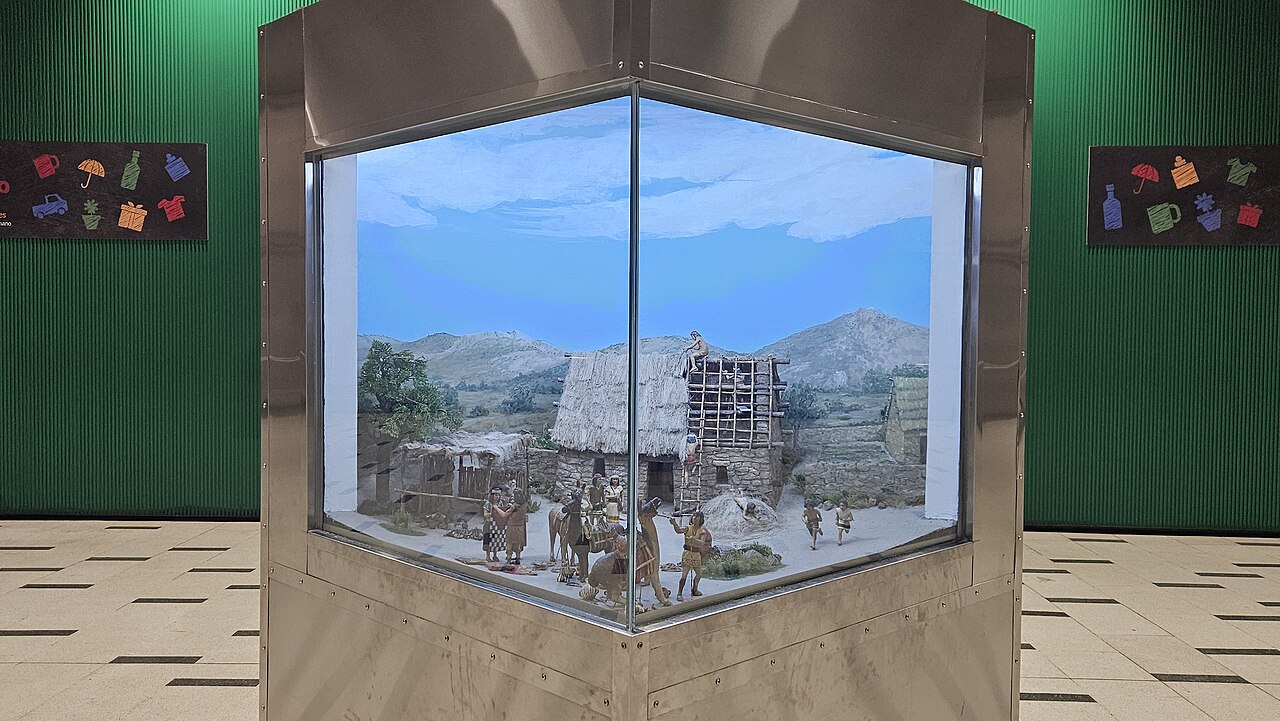
Dioramas in Education and Public Culture
Beyond museum walls, the diorama has become a versatile tool for teaching and cultural storytelling. In American elementary and middle schools, students frequently construct dioramas from a simple shoebox, pairing a trompe-l'œil painted background with two- or three-dimensional foreground models to depict historical events, ecological biomes, or literary scenes. In California, a beloved fourth-grade assignment asks students to build a Spanish mission diorama to explore the region's colonial heritage. On a far larger scale, the Panama-Pacific International Exposition of 1915 featured a model of the entire state of California that was subsequently installed in San Francisco's Ferry Building for extended public viewing.
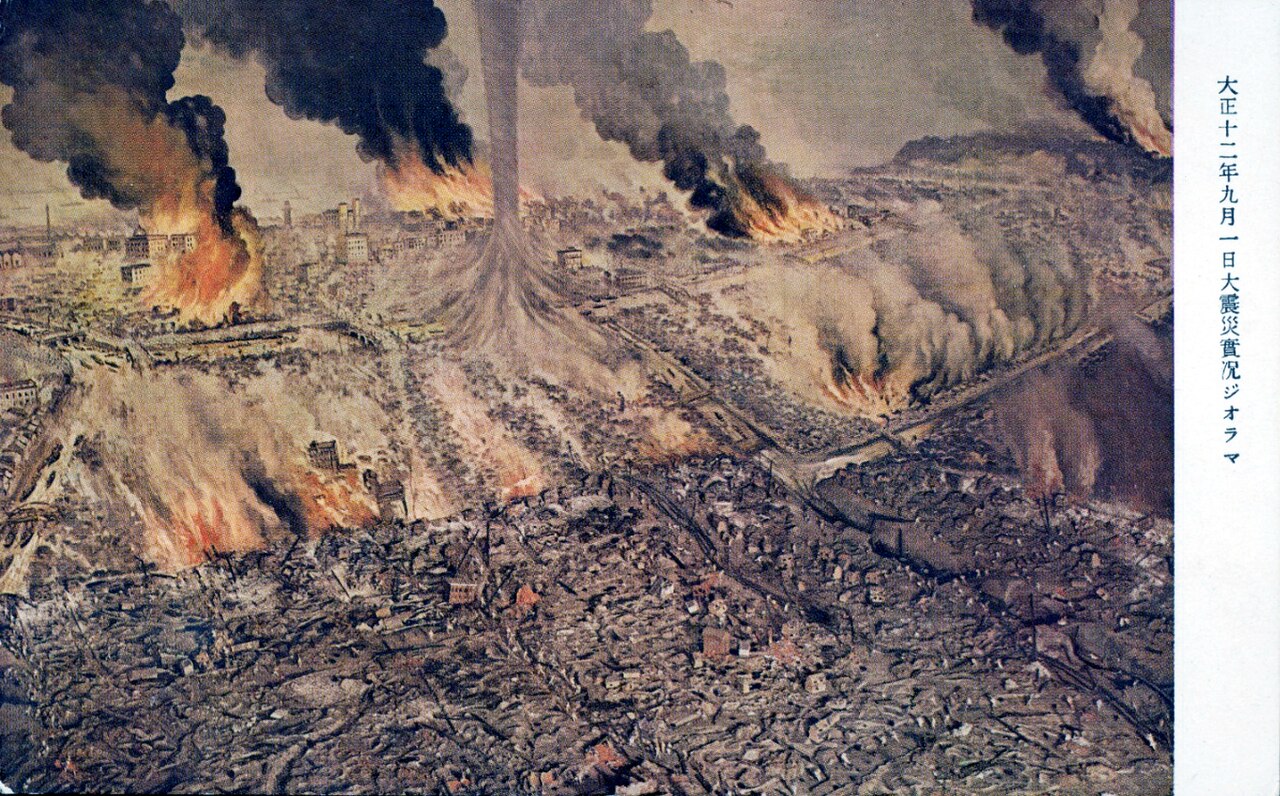
In Singapore, the Burmese-Chinese brothers Aw Boon Haw and Aw Boon Par, developers of Tiger Balm, opened Haw Par Villa in 1937 with commissioned statues and dioramas teaching traditional Chinese values. Today the site holds more than 150 giant dioramas covering Chinese literature, folklore, philosophy, and the religions of Taoism, Buddhism, and Confucianism, with the Ten Courts of Hell serving as its most iconic attraction. During the 1970s and 1980s the park drew an estimated million visitors each year and is now regarded as part of Singapore's cultural heritage.
Reader's Guide
Dioramas serve both educational and entertainment purposes. In museums, they simulate a tilted plane effect with a painted background of distant objects, often using false perspective and a continuous curved surface to present a realistic-appearing view of a large scene in a compact space. A photograph or single-eye view of such a diorama can be especially convincing, as binocular depth perception is not a distraction.
Miniature dioramas are used to represent scenes from historic events, as seen at Norway's Resistance Museum in Oslo. Landscapes built around model railways can also be considered dioramas, though they often compromise scale accuracy for better operating characteristics. Hobbyists build dioramas of historical or quasi-historical events using plastic models of military vehicles, ships, or other equipment, along with scale figures and landscaping.
In the 19th and early 20th century, building dioramas of sailing ships was a popular handcraft of mariners, as the diorama protected the model inside a framework and could be easily stowed. Such antique sailing ship dioramas are now valuable collector's items.
Dioramas are widely used in the American educational system, mostly in elementary and middle schools, often made from a shoebox with a trompe-l'œil background. In California, a popular assignment has fourth graders making a Spanish mission diorama. Haw Par Villa in Singapore, opened in 1937, contains over 150 giant dioramas depicting scenes from Chinese literature, folklore, and religion; the park welcomed at least 1 million annual visitors during the 1970s and 1980s.
Frequently Asked Questions
What is a diorama in scale modeling and railroading?
A diorama is a three-dimensional miniature or full-size reconstruction of a scene—such as a landscape, cityscape, or historical moment—built to give depth and narrative context to a model. In railroading, it typically surrounds a track layout with terrain, structures, and figures to create an immersive environment.
What scales do hobbyists most often use for dioramas?
The most popular working scales are 1:35, 1:48, and 1:87 (HO), though dioramas can be built at virtually any scale from tiny tabletop pieces up to full-size museum installations. The chosen ratio dictates how much detail is feasible and how much floor space the finished piece will occupy.
Why do modelers build a diorama rather than just display a single model?
Placing a train, vehicle, or figure inside a constructed environment adds storytelling, scale reference, and visual depth that a bare showcase cannot provide. The surrounding scenery turns a static object into a scene that educates or entertains the viewer.
More in Scale Models and Railroads
Sources
Compiled from Wikipedia and the sources listed below. Text from Wikipedia is available under CC BY-SA 4.0; this entry is adapted from it.
- Wikipedia: Diorama (CC BY-SA 4.0).
Spotted an error? Know more?
Reader corrections go straight into our review queue. Suggest an edit · How this site is sourced