
Fallout (franchise)
Post-apocalyptic role-playing series set in a retrofuturistic 1950s-inspired world.

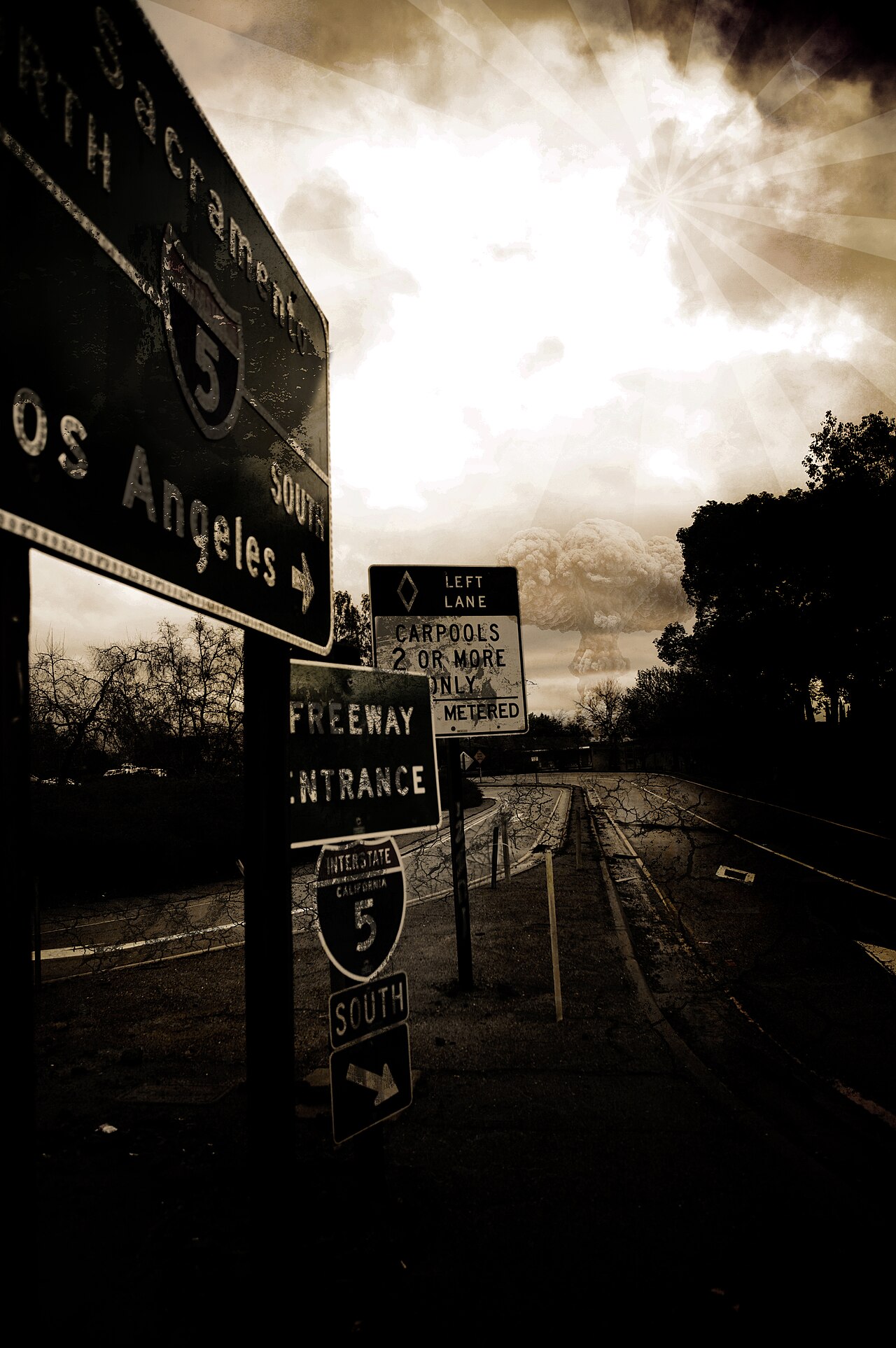
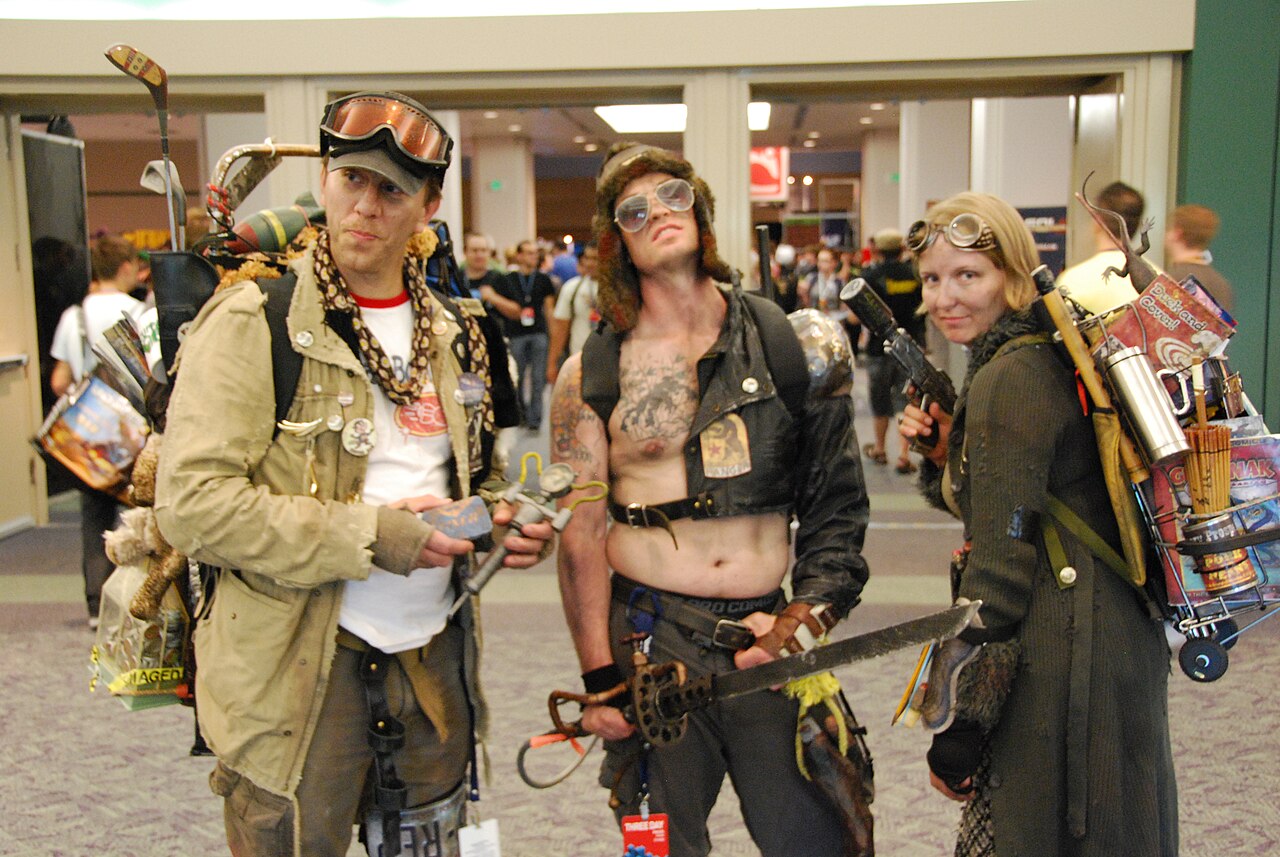
grigoriprime · CC BY-SA 2.0
Fallout is a post-apocalyptic role-playing video game franchise from the United States, originally created by Tim Cain and Leonard Boyarsky at Interplay Entertainment. Its story takes place during the early centuries of the third millennium, centering on the descendants of people who survived a devastating nuclear war between the United States and China—the final outcome of a long struggle over resources that began in the mid-21st century. The series is known for its atompunk retrofuturistic look, drawing heavily on 1950s American culture, with its mix of technological optimism and dread of atomic annihilation. It is considered a spiritual successor to Interplay's earlier 1988 game, *Wasteland*.
The first game, *Fallout*, came out in 1997 from Interplay Productions, followed a year later by *Fallout 2*. Development of the tactical role-playing game *Fallout Tactics: Brotherhood of Steel* was handled by Micro Forté and 14 Degrees East. In 2004, Interplay shut down Black Isle Studios and released *Fallout: Brotherhood of Steel*, an action game with role-playing elements for the PlayStation 2 and Xbox, made without Black Isle's involvement. The third main entry, *Fallout 3*, arrived in 2008 from Bethesda Softworks, and *Fallout: New Vegas*, developed by Obsidian Entertainment, followed in 2010. *Fallout 4* was released in 2015, and *Fallout 76* came out in 2018.
Bethesda Softworks now owns the Fallout intellectual property, having acquired it from Interplay in 2007. As part of the deal, Interplay retained a license to develop a Fallout massively multiplayer online role-playing game (MMORPG) under certain conditions. That project (codenamed 'Project V13') had a playable internal prototype, but a lengthy legal dispute between Bethesda and Interplay halted development and eventually led to its cancellation before it ever reached a public beta stage. Bethesda argued in court that Interplay had not met the terms of the licensing agreement, and the case was resolved in early 2012.
The series' origins trace back to Interplay Productions' *Wasteland* in 1988, which was distributed by Electronic Arts. Interplay founder Brian Fargo wanted to keep using the *Wasteland* setting but could not negotiate the rights back from EA.
Quick Facts
- Title
- Fallout
- Creator
- Tim Cain · Leonard Boyarsky
- Genre
- 1997–2004: · Role-playing · since 2004: · Action role-playing / First-person shooter / Third-person shooter
- Developer
- Interplay Entertainment · Black Isle Studios · Micro Forté · Bethesda Game Studios · Obsidian Entertainment · Fantasy Flight Games · Modiphius Entertainment · Gaea Mobile
- Publisher
- Interplay Entertainment · (1997–2004) · 14 Degrees East · (2001) · Bethesda Softworks · (since 2004)
- First Release Date
- October 10, 1997
- Latest Release Version
- Fallout 76
- Latest Release Date
- November 14, 2018
- Platforms
- DOS · Windows · Mac OS · Mac OS X · Nintendo Switch · Nintendo Switch 2 · PlayStation 2 · PlayStation 3 · PlayStation 4 · PlayStation 5 · Xbox · Xbox 360 · Xbox One · Xbox Series X/S · iOS · Android
Facts from the source article.
Lore & Background
The ideas for Fallout began with Interplay Productions' Wasteland, released in 1988. Interplay founder Brian Fargo wanted to continue using the Wasteland intellectual property but could not negotiate the rights back from Electronic Arts, so he and his team created a new setting and game. Designer Chris Taylor cited inspiration from the novel A Canticle for Leibowitz, the film Mad Max 2, and The City of Lost Children. The first Fallout game was released in 1997, nearly ten years after Wasteland.
The series' first title, Fallout, was developed by Interplay Productions and released in 1997, followed by Fallout 2 in 1998. Fallout Tactics: Brotherhood of Steel was developed by Micro Forté and 14 Degrees East. In 2004, Interplay closed Black Isle Studios and produced Fallout: Brotherhood of Steel for consoles. Bethesda Softworks acquired the Fallout intellectual property from Interplay in 2007. As part of that acquisition, Interplay retained a license to develop a Fallout massively multiplayer online role-playing game (MMORPG) under certain conditions. This project, codenamed 'Project V13', had a playable internal prototype but never reached a public beta stage before its cancellation due to a legal dispute between Bethesda and Interplay.
Reader's Guide
Fallout is significant as a landmark post-apocalyptic role-playing franchise that evolved from the 1988 game Wasteland. Its atompunk retrofuturistic setting, influenced by 1950s American culture and Cold War fears, became a defining aesthetic. The series introduced the SPECIAL character system after a disagreement with GURPS creator Steve Jackson. Fallout 3 marked a major shift to 3D graphics and real-time combat, earning critical acclaim and winning IGN's 2008 Overall Game of the Year Award. The franchise's legal history, including Bethesda's acquisition and the canceled MMORPG, highlights the complexities of intellectual property in the gaming industry. Fallout remains a cultural touchstone, with its themes of nuclear annihilation and technological hope resonating across multiple generations of players.
Did You Know?
- Fallout is regarded as a spiritual successor to Wasteland, a 1988 game also developed by Interplay.
- The SPECIAL system was created after a disagreement with GURPS creator Steve Jackson over violent content.
- A massively multiplayer online role-playing game version of Fallout reached beta stage but was canceled due to a legal battle between Bethesda and Interplay.
Roots in Wasteland and the Birth of a New World
The Fallout franchise traces its creative DNA back to Wasteland, a 1988 title that Interplay Productions developed with Electronic Arts handling distribution. When Interplay pivoted toward becoming a publisher, founder Brian Fargo wanted to reclaim the Wasteland property but found himself unable to negotiate the rights back from Electronic Arts. Rather than abandon the post-apocalyptic vision entirely, Fargo and his team set out to build something new around the elements they valued most from Wasteland. Designer Chris Taylor has pointed to the 1959 novel A Canticle for Leibowitz, the 1981 film Mad Max 2, and the 1995 film The City of Lost Children as key creative wellsprings. The result was a franchise that would not see its first game until nearly a decade after Wasteland's release, arriving in 1997 as a spiritual successor that carried forward the genre's spirit while forging an entirely distinct identity.
A Shifting Aesthetic: Atompunk and Cold War Nostalgia
The Fallout universe is immediately recognizable for its atompunk retrofuturistic visual language, a design philosophy that fuses the optimistic technological promise of 1950s American culture with the ever-present dread of nuclear annihilation. The games are set in the first half of the third millennium, following the descendants of survivors after a mutually destructive nuclear exchange between the United States and China. That cataclysm was the endpoint of a long chain of resource-driven conflicts that began in the middle of the 21st century. The first game, released in October 1997 and set in post-apocalyptic Southern California in the year 2161, drew its atmosphere and artwork directly from post-World War II American culture during the Cold War era. The combination of gleaming vault technology, retro-futuristic design sensibilities, and the shadow of a world-ending war gives the franchise a tonal identity unlike any other in gaming, blending genuine hope for what technology can achieve with the constant reminder of what it can destroy.
Narrative Arcs Across the Main Series
The core narrative of the franchise follows a generational thread through its main entries. In the original 1997 title, the Vault Dweller is sent from Vault 13 into the Wasteland to retrieve a water chip and ultimately confront a mutant faction led by the grotesque entity known as the Master. Eighty years later, Fallout 2 casts the Chosen One, the grandchild of that first protagonist, on a quest to find a Garden of Eden Creation Kit to save the starving village of Arroyo, pitting them against the Enclave, the autocratic remnants of the pre-war U.S. government. A further thirty years on, Fallout 3 introduces the Lone Wanderer, a Vault 101 dweller who flees into the Capital Wasteland around Washington, D.C. to search for their missing father. By Fallout 4, the setting shifts to Boston and the New England Commonwealth, with a voiced protagonist leading the player through that region. Each entry builds on the last while expanding the world.
Studio Transitions, Legal Battles, and the Bethesda Era
The development history of Fallout is marked by significant changes in who holds the creative pen. The first two main-series titles were crafted by Black Isle Studios under Interplay Entertainment, with the tactical spin-off Fallout Tactics handed to Micro Forté and 14 Degrees East. When Interplay shut down Black Isle in 2004, it continued producing the action-oriented Fallout: Brotherhood of Steel for PlayStation 2 and Xbox without that studio's involvement. The landscape shifted dramatically when Bethesda Softworks acquired the Fallout intellectual property. Bethesda then developed Fallout 3 in 2008 using the Gamebryo engine, and licensed the rights to Interplay for a planned MMORPG. That project reached beta testing but was ultimately killed by a prolonged legal dispute in which Bethesda argued Interplay had breached the licensing contract; the case was resolved in early 2012. Bethesda went on to release Fallout 4 in 2015 and Fallout 76 in November 2018, while Obsidian Entertainment delivered Fallout: New Vegas in October 2010.
Gallery

Frequently Asked Questions
Who created the Fallout franchise and when did it debut?
Tim Cain and Leonard Boyarsky developed the original title at Interplay Entertainment, and it first hit shelves in 1997. The series has since been passed to Bethesda Softworks, which published the most recent entry in 2018.
What is the core premise of Fallout's story?
The games follow the descendants of survivors after a total nuclear exchange between the United States and China, a conflict rooted in a mid-21st-century scramble over dwindling resources. Players navigate the first half of the third millennium in a shattered, irradiated America.
What genre and aesthetic define the Fallout series?
It is a post-apocalyptic role-playing franchise built around an atompunk retrofuturistic style that riffs heavily on 1950s American pop culture. The tone blends technological optimism with an undercurrent of dread about atomic annihilation.
Who currently holds the rights to Fallout?
Bethesda Softworks is the present rights holder, having taken over development after Interplay's original run. The franchise's latest release under their stewardship came out in 2018.
Why does Fallout matter to the broader RPG landscape?
It carved out a distinct niche by pairing deep, player-driven role-playing mechanics with dark satire of mid-century American optimism. That combination of humor, nostalgia, and consequential choice set a template that many later post-apocalyptic titles still reference.
More in Satirical video games 1-24
Spotted an error? Know more?
Reader corrections go straight into our review queue. Suggest an edit · How this site is sourced