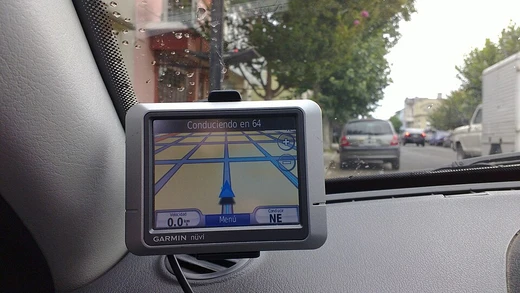
Vehicle tracking system
Hardware and software system for monitoring vehicle location and data.
A vehicle tracking system uses a hardware device, most often a GPS tracking unit, installed in a vehicle, paired with a software platform to watch its location and capture a broad set of operational information in near real-time. This technology is part of fleet digitalization. Its main job is to automatically locate the vehicle, but it also collects data for more advanced uses.
The location and operational data that a tracking system captures comes from telemetry, which feeds into modern telematics and full-featured fleet management platforms. These advanced systems start with tracking data and combine it with other vehicle and business details to offer functions like predictive maintenance, driver behavior scoring, and route optimization. When a fleet uses vehicles from multiple manufacturers, comprehensive solutions are built to gather and handle all that varied data within one system.
Although common in commercial fleets, this technology also appears in consumer services such as carsharing and ride-hailing apps like Uber or Bolt. Modern systems have grown beyond just location monitoring to focus on improving safety, efficiency, and lowering total cost of ownership.
Core components and technology
A vehicle tracking system has three main parts: hardware to collect data, software to interpret and show it, and a network to send it.
Hardware (the tracking unit)
The hardware is a physical device, often called a GPS tracking unit or telematics device, installed inside the vehicle. Its main purpose is to gather data on the vehicle’s location and operational state.
GNSS receiver: This core part finds the vehicle’s location. Often called GPS, modern receivers usually use multiple GNSS satellite systems, including GLONASS, for better accuracy and reliability. Communications module: A cellular (like 4G/5G) or satellite modem sends the collected data from the vehicle to a central server in real time. Processor and memory: An onboard processor runs the device’s functions, while memory stores data, especially when the vehicle is out of network coverage (called store-and-forward). Sensors: Besides location data, an internal accelerometer is standard for detecting events like harsh braking, rapid acceleration, and collisions.
Lore & Background
Vehicle tracking systems integrate three main components: hardware to collect data, software to interpret and display it, and a connectivity network to transmit it. The hardware component, often called a GPS tracking unit or telematics device, contains a GNSS receiver that commonly uses multiple satellite systems including GLONASS, a cellular or satellite modem, an onboard processor and memory, and sensors such as an accelerometer. Some systems connect to the vehicle's internal computer via the CAN bus or OBD-II port to access diagnostic information. In India, SIM-based vehicle tracking is widely deployed for road freight logistics, using mobile network location signals via TRAI-compliant APIs without requiring hardware installation.
The software component processes raw data into usable information. Software platforms are often categorized into two business models: some are sold as a bundled hardware and software package from a single provider, while others are device-agnostic and compatible with hardware from different manufacturers. The backend server receives, processes, and stores data, while frontend applications include web platforms for fleet managers and mobile apps for managers and drivers. Connectivity is typically provided by cellular networks (4G/5G) or satellite communication for remote areas.
The technology is utilized across commercial and private sectors. Common consumer applications include stolen vehicle recovery, usage-based insurance, and OEM telematics services. Governments mandate vehicle tracking for regulatory and compliance purposes in various sectors.
Reader's Guide
Vehicle tracking systems have become a cornerstone of fleet digitalization, enabling near real-time monitoring of location and operational data across commercial fleets and consumer services such as carsharing and ride-hailing. The scope of modern systems has expanded beyond location monitoring to focus on improving safety, efficiency, and reducing the total cost of ownership. Advanced platforms integrate tracking data with other vehicle and business information to provide predictive maintenance, driver behavior analysis, and route optimization. In fleet operations using vehicles from different manufacturers, comprehensive solutions collect and manage varied data in a single system. The global market for commercial vehicle telematics was valued at over $85 billion in 2024 and is projected to grow to more than $150 billion by 2028. Europe and North America are the most mature markets, while significant growth is occurring in Latin America and Southeast Asia. Major international players include Geotab, Gurtam, Verizon Connect, and MiX Telematics. The technology's ability to integrate with other software systems via APIs allows companies to feed vehicle data directly into ERP, accounting, payroll, or maintenance software, streamlining workflows and eliminating manual data entry.
Frequently Asked Questions
What is a vehicle tracking system?
It is a paired hardware-and-software setup in which a GPS tracking unit is physically mounted inside a vehicle while a cloud-based platform monitors the vehicle's position and gathers operational data in near real-time. The technology forms the backbone of modern fleet digitalization.
How does a vehicle tracking system actually work?
The onboard GPS unit continuously transmits location and telemetry signals to a connected software platform. That platform then feeds the stream into telematics and broader fleet-management tools, giving operators a live operational picture of every vehicle in their fleet.
What can a vehicle tracking system do beyond simply showing a vehicle on a map?
In addition to pinpointing position, the system captures a wide range of operational telemetry that powers advanced telematics and full-featured fleet-management analytics. This lets operators assess driver behavior, route efficiency, and vehicle health rather than just watching a dot move across a screen.
How large is the global vehicle tracking market?
As of 2024 the market is valued at over $85 billion, with projections pushing it past $150 billion by 2028. That steep growth curve reflects how deeply tracking hardware and its companion software have become embedded in both commercial and personal vehicle operations.
How many active vehicle tracking units are deployed worldwide?
By the end of 2023, North America reported roughly 30.1 million active units and Europe about 25.5 million, while Latin America is projected to reach 16.6 million and Southeast Asia has surpassed 2.7 million. These figures show that vehicle tracking has become a near-standard component of fleets across every major region.
More in Satellite Navigation and GPS
Spotted an error? Know more?
Reader corrections go straight into our review queue. Suggest an edit · How this site is sourced